

Introduction
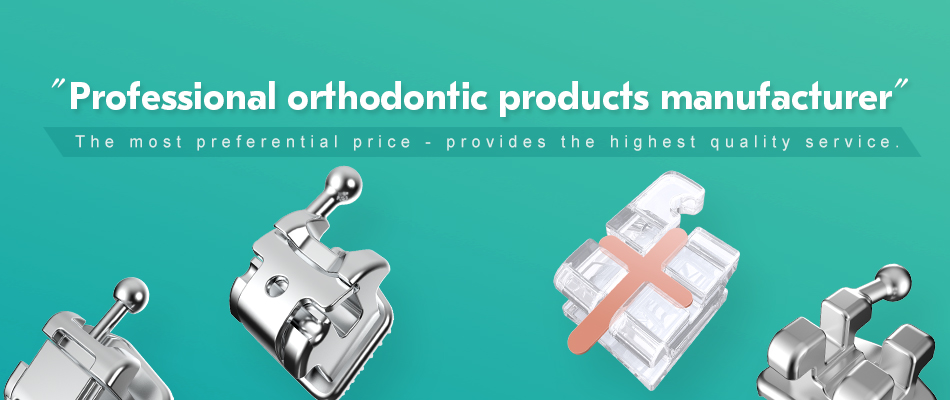
Orthodontic treatment choices in 2026 increasingly come down to how the bracket holds the archwire, because that detail affects friction, force delivery, maintenance, and chair time. This article explains how self-ligating brackets differ from traditional braces, why passive and active designs behave differently, and where claimed benefits are supported by clinical mechanics rather than marketing. You will learn how built-in clips compare with elastic or metal ties, what that means for early alignment and torque control, and which tradeoffs matter most when evaluating treatment efficiency, comfort, and long-term appliance performance.
Self-ligating brackets vs traditional braces: key differences
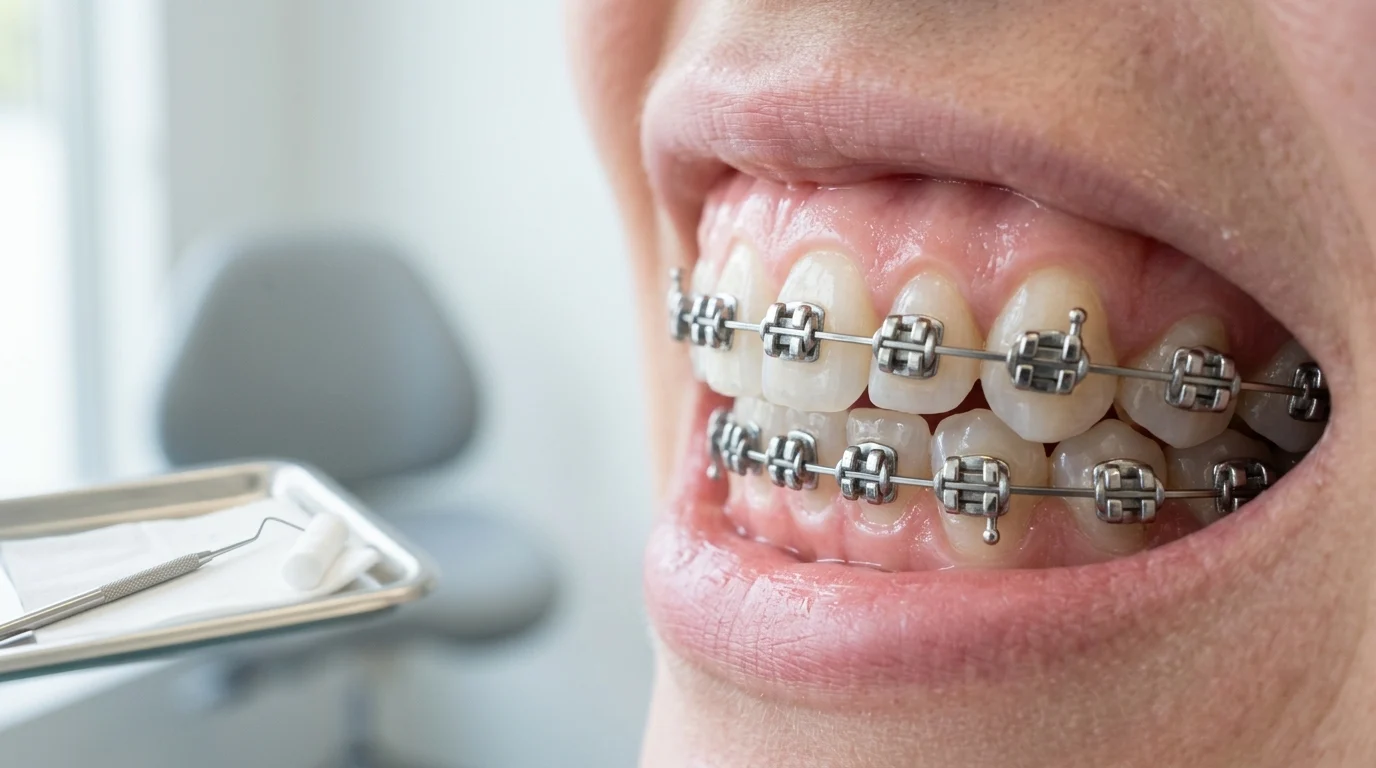
The orthodontic landscape in 2026 continues to see a significant structural shift in appliance selection, heavily weighting the choice between traditional twin brackets and self-ligating brackets (SLB). Traditional systems rely on elastomeric ties or stainless steel ligatures to secure the archwire within the bracket slot. However, clinical data shows that elastomeric ties degrade rapidly in the oral environment, losing 50% to 70% of their initial force within just three to four weeks. In contrast, self-ligating systems utilize a built-in mechanical door or clip to retain the wire, ensuring consistent engagement without the rapid material degradation associated with elastomers.
How passive and active self-ligating brackets differ
Passive and active self-ligating brackets represent two distinct mechanical philosophies within the SLB category. Active self-ligating brackets feature a spring-loaded clip that presses actively against the archwire—particularly when using larger dimension wires such as 0.016″ x 0.022″ or larger—to provide precise rotational and torque control.
Passive self-ligating brackets, conversely, use a rigid sliding door that turns the bracket slot into a simple tube. This design leaves a small clearance, often around 0.002 inches, between the wire and the clip. This clearance drastically reduces friction during the initial leveling and aligning phases of treatment, allowing the archwire to slide freely and resolve crowding with minimal resistance.
How treatment mechanics, wire interaction, and chairside workflow compare
The integration of self-ligating systems fundamentally alters chairside workflows and treatment mechanics. In traditional systems, tying in a full arch with elastomeric ligatures typically requires 5 to 8 minutes of chair time. With self-ligating doors, archwire changes can be completed in 1 to 2 minutes per arch, significantly improving daily clinic throughput.
Furthermore, the absence of elastomeric ties reduces plaque accumulation around the bracket periphery, promoting better oral hygiene and reducing decalcification risks during treatment.
| Feature | Traditional Braces | Active Self-Ligating | Passive Self-Ligating |
|---|---|---|---|
| Ligation Method | Elastomeric / Steel ties | Spring clip pressing on wire | Rigid sliding door |
| Initial Friction | High | Moderate to High | Very Low |
| Wire Change Time | 5–8 minutes per arch | 1–2 minutes per arch | 1–2 minutes per arch |
| Force Degradation | Rapid (50-70% in 4 weeks) | Minimal | Minimal |
Clinical and operational comparison of bracket systems
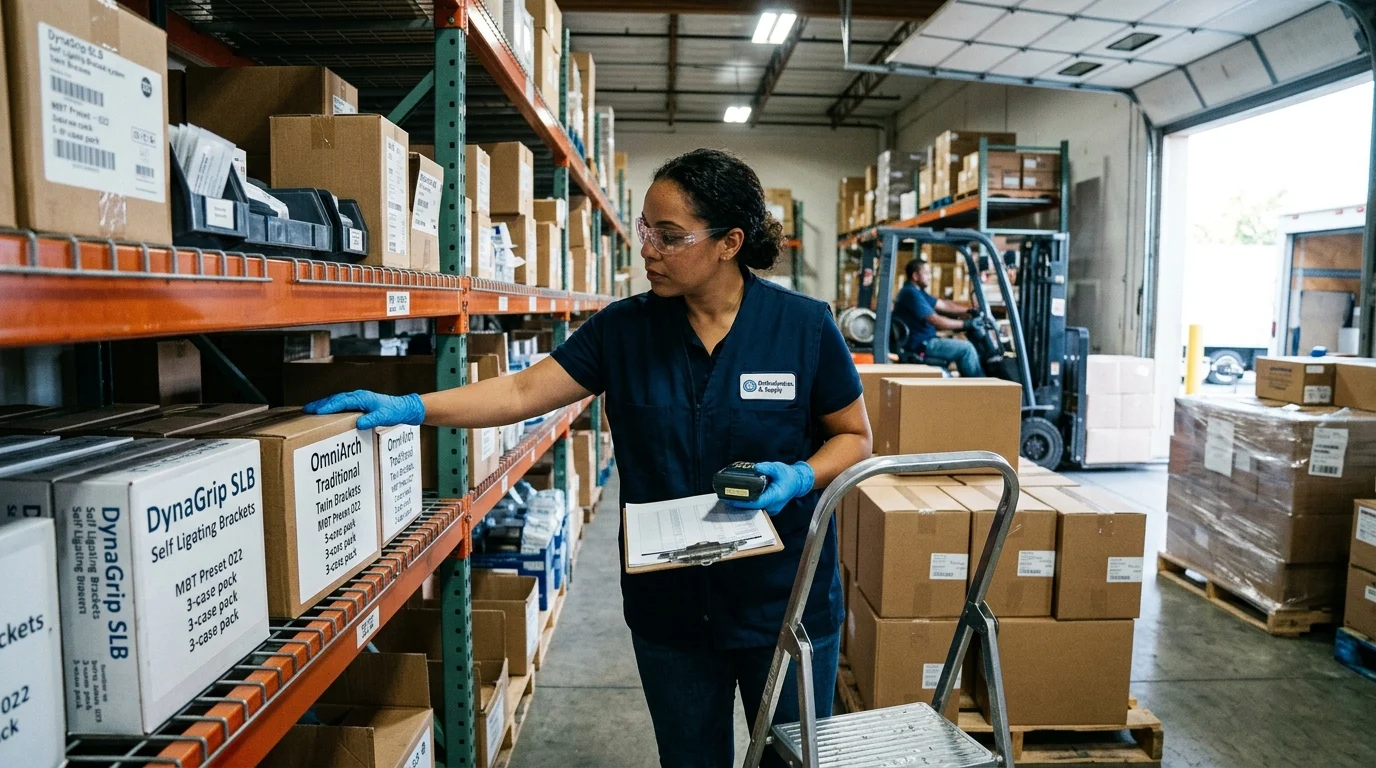
Evaluating the clinical efficacy and operational impact of these orthodontic systems requires analyzing measurable data rather than relying solely on manufacturer claims. Clinics transitioning to self-ligating systems frequently report an average inventory volume reduction of 15% to 20%, primarily achieved by eliminating the need to stock dozens of elastomeric color wheels and various sizes of steel ligatures.
Which metrics belong in a bracket system comparison
A rigorous comparison of bracket systems must evaluate specific clinical and operational metrics. Key performance indicators include the static and kinetic friction coefficients, the mechanical failure rate of the clip mechanism, total treatment duration, and the frequency of emergency visits.
Industry benchmarks suggest targeting a clip failure rate of less than 1.5% over a 24-month treatment period. By tracking these data points, orthodontic practices can accurately assess the true cost-to-benefit ratio of their chosen appliance and identify areas for workflow optimization.
Do self-ligating brackets reduce treatment time, friction, and visit frequency
Clinical evidence indicates that passive self-ligating brackets significantly reduce friction during the first six months of treatment, facilitating rapid initial alignment. Because the built-in clips do not degrade like elastomeric ties, orthodontists can safely extend the interval between patient visits.
Average appointment intervals often increase from the traditional 4 to 6 weeks to 8 to 10 weeks for SLB systems. Over a standard 24-month comprehensive treatment plan, this extended interval can reduce the total number of required appointments by 4 to 7 visits per patient, freeing up valuable schedule capacity.
How case complexity, failure rates, and inventory needs affect outcomes
Case complexity plays a critical role in how these operational metrics manifest. Severe crowding cases benefit immensely from the low-friction mechanics of passive SLBs, whereas extraction cases requiring en-masse retraction often demand the absolute torque control provided by active SLBs or traditional brackets.
Failure rates also impact operational efficiency; if an SLB clip breaks, the entire bracket typically requires replacement, which can disrupt the schedule. Careful management of inventory footprint and tracking clip reliability are essential for maintaining the profitability of SLB adoption.
| Operational Metric | Traditional Braces | Self-Ligating Brackets (SLB) |
|---|---|---|
| Average Visit Interval | 4–6 weeks | 8–10 weeks |
| Total Visits (24 mo.) | 18–24 visits | 12–15 visits |
| Inventory Footprint | High (brackets + ties) | Low (brackets only) |
| Emergency Type | Broken ties, poking wires | Jammed doors, broken clips |
How clinics should evaluate bracket selection
Transitioning to a new bracket system requires a rigorous assessment of manufacturing tolerances, material properties, and supply chain reliability. Quality control is paramount when sourcing orthodontic appliances, as dimensional inaccuracies can lead to unpredictable tooth movement and extended treatment times. Industry standards dictate that the precision of the bracket slot should adhere strictly to ISO 27020 guidelines, maintaining a tolerance of ±0.0005 inches to ensure predictable torque and angulation expression.
How to assess product quality, slot precision, and clip performance
Assessing product quality begins with understanding the manufacturing process. Most high-quality self-ligating brackets are produced using Metal Injection Molding (MIM) or precision CNC machining, which ensures the structural integrity of the complex clip mechanism.
Clip performance is a critical evaluation point; clinics should verify that the bracket door can withstand a minimum of 50 opening and closing cycles without mechanical deformation or loss of retention force. Slot precision must be verified to prevent excessive wire play that could compromise clinical outcomes.
Which regulatory, sterilization, training, and procurement factors matter
Regulatory compliance and supply chain stability are non-negotiable factors in bracket procurement. Practices must verify that the brackets hold appropriate certifications, such as the CE mark, FDA 510(k) clearance, and ISO 13485 certification for medical device manufacturing.
From a procurement standpoint, evaluating the Minimum Order Quantity (MOQ) is essential; direct-from-manufacturer SLBs often require MOQs ranging from 50 to 100 patient kits. Purchasing managers should review product options to ensure the supplier meets strict sterilization packaging and compliance requirements.
What step-by-step process helps practices test self-ligating brackets
Implementing a new bracket system should follow a structured, step-by-step testing process to minimize clinical risk. First, orthodontists should perform bench testing on typodonts to evaluate the tactile feel of the opening and closing instruments.
Second, the clinic should initiate a limited clinical trial involving 5 to 10 non-complex cases to monitor early alignment and clip reliability in the oral environment. Finally, comprehensive staff training must be conducted to ensure clinical assistants are proficient in operating the self-ligating mechanisms before full practice integration.
Choosing the right bracket strategy for clinical and business goals
The final decision between traditional and self-ligating systems rests on a careful alignment of clinical philosophies and practice management objectives. While self-ligating brackets carry a notably higher initial unit cost—often ranging from $15 to $35 per bracket compared to the $2 to $5 cost of traditional twin brackets—the return on investment is typically realized through higher patient throughput, extended appointment intervals, and reduced chair time.
When self-ligating brackets offer a measurable advantage
Self-ligating brackets offer a measurable advantage in high-volume clinics where operational efficiency is paramount. A time savings of 3 to 4 minutes per wire change can translate into the capacity to schedule two to three additional patients per day per clinician.
Furthermore, SLBs are highly advantageous for treating out-of-town patients or those with demanding schedules, as the mechanics safely allow for 10-week intervals between adjustments without a loss of biomechanical efficiency.
How to match bracket selection to case mix and practice priorities
Matching bracket selection to the specific case mix and practice priorities ensures optimal clinical outcomes and financial health. Clinics that treat a high volume of complex extraction cases may prefer traditional or active self-ligating brackets to maintain absolute torque and rotational control during space closure.
Conversely, practices focused on broad arch expansion and non-extraction therapies often favor the low-friction environment of passive self-ligating brackets. Orthodontic practices are encouraged to seek detailed specifications and guidance by utilizing contact resources or learning more about the manufacturer to secure a bracket strategy that perfectly aligns with their operational goals in 2026.
Further reading:
Key Takeaways
- The most important conclusions and rationale for Self ligating brackets
- Specs, compliance, and risk checks worth validating before you commit
- Practical next steps and caveats readers can apply immediately
Frequently Asked Questions
What makes self-ligating brackets different from traditional braces?
Self-ligating brackets use a built-in clip or door instead of elastic ties, so wire engagement stays more consistent and chairside wire changes are typically faster.
Are passive self-ligating brackets better for early alignment?
Often yes. Passive designs create very low friction in the initial leveling phase, which can help crowded teeth align more freely during the first months.
Do self-ligating brackets reduce office visits?
They can. Many SLB cases are scheduled about every 8–10 weeks instead of 4–6 weeks, which may cut total appointments by roughly 4–7 over two years.
Do self-ligating brackets help with oral hygiene?
Usually yes. Without elastic ties, there are fewer plaque-trapping areas around the bracket, which can support cleaner brushing and lower decalcification risk.
Where can clinics source self-ligating brackets for comparison?
Clinics can review self-ligating bracket options and product details directly at DenRotary’s product pages on denrotary.com to compare system features and workflow fit.

Post time: May-31-2026