


Introduction
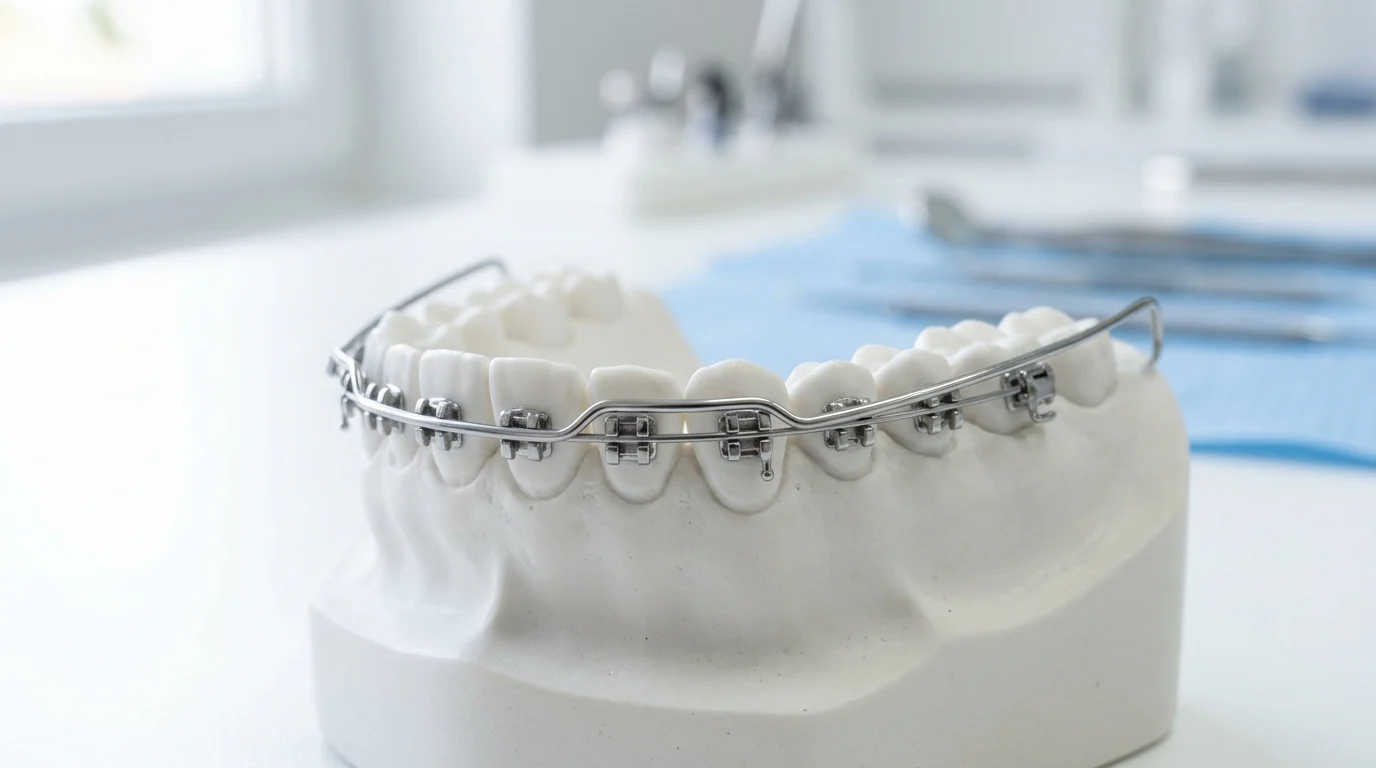
Choosing the right stainless steel arch wire involves more than picking a familiar material. Grade, temper, size, and cross-sectional shape all influence stiffness, bendability, corrosion resistance, and the force delivered during treatment. For orthodontic manufacturers, distributors, and clinicians, these differences affect product performance, treatment control, and consistency in working and finishing stages. This article outlines the main stainless steel arch wire grades, explains how common dimensions relate to mechanical behavior, and shows where each option fits in practice, so readers can compare specifications more confidently and make better sourcing or application decisions.
Why Stainless Steel Arch Wire Selection Matters
Stainless steel arch wire remains a cornerstone of modern orthodontic mechanics, highly valued for its exceptional stiffness, formability, and economic viability. Despite the advent of nickel-titanium (NiTi) and beta-titanium alloys, stainless steel is indispensable during the working and finishing phases of orthodontic treatment. Its high modulus of elasticity, typically around 200 GPa, provides the rigidity necessary to maintain arch form, close extraction spaces, and execute precise tooth movements without unwanted deformation.
For original equipment manufacturers (OEMs) and clinical distributors, understanding the nuanced metallurgical and physical properties of these wires is critical. The selection of specific stainless steel arch wire types directly impacts clinical outcomes, treatment efficiency, and patient comfort. Sourcing the correct specifications ensures that the wire delivers predictable biomechanical forces while mitigating the risk of fracture or corrosion in the aggressive oral environment.
How stainless steel arch wire affects orthodontic force
The primary function of an orthodontic arch wire is to store and release biomechanical energy to induce bone remodeling and subsequent tooth movement. Stainless steel arch wire is characterized by its high yield strength, frequently exceeding 1,500 MPa depending on the temper, which allows it to withstand substantial masticatory forces and complex wire bending without permanent deformation.
Because stainless steel possesses a high load-deflection rate, it delivers relatively high forces over short distances. This makes it unsuitable for the initial leveling and aligning stages where severe crowding exists, as the force levels could cause patient trauma or root resorption. However, during space closure and detailing, this high force delivery and low friction coefficient become highly advantageous, allowing brackets to slide efficiently along the wire with minimal resistance.
How grade, size, temper, and finish influence performance
The interplay of metallurgical grade, cross-sectional size, temper, and surface finish strictly dictates the performance envelope of the arch wire. The alloy grade determines the baseline corrosion resistance and biocompatibility, while the cross-sectional size dictates the exact force magnitude and the degree of control over tooth torque and angulation.
Temper, usually achieved through cold working rather than heat treatment for austenitic stainless steels, defines the wire’s resilience and stiffness. Wires are typically supplied in “spring hard” or “extra spring hard” tempers. Furthermore, surface finish plays a crucial role in clinical efficiency. A highly polished, electropolished surface can reduce sliding friction by up to 30% compared to a standard matte finish, significantly accelerating space closure mechanics and reducing the overall duration of the working phase.
Grades, Sizes, and Mechanical Properties
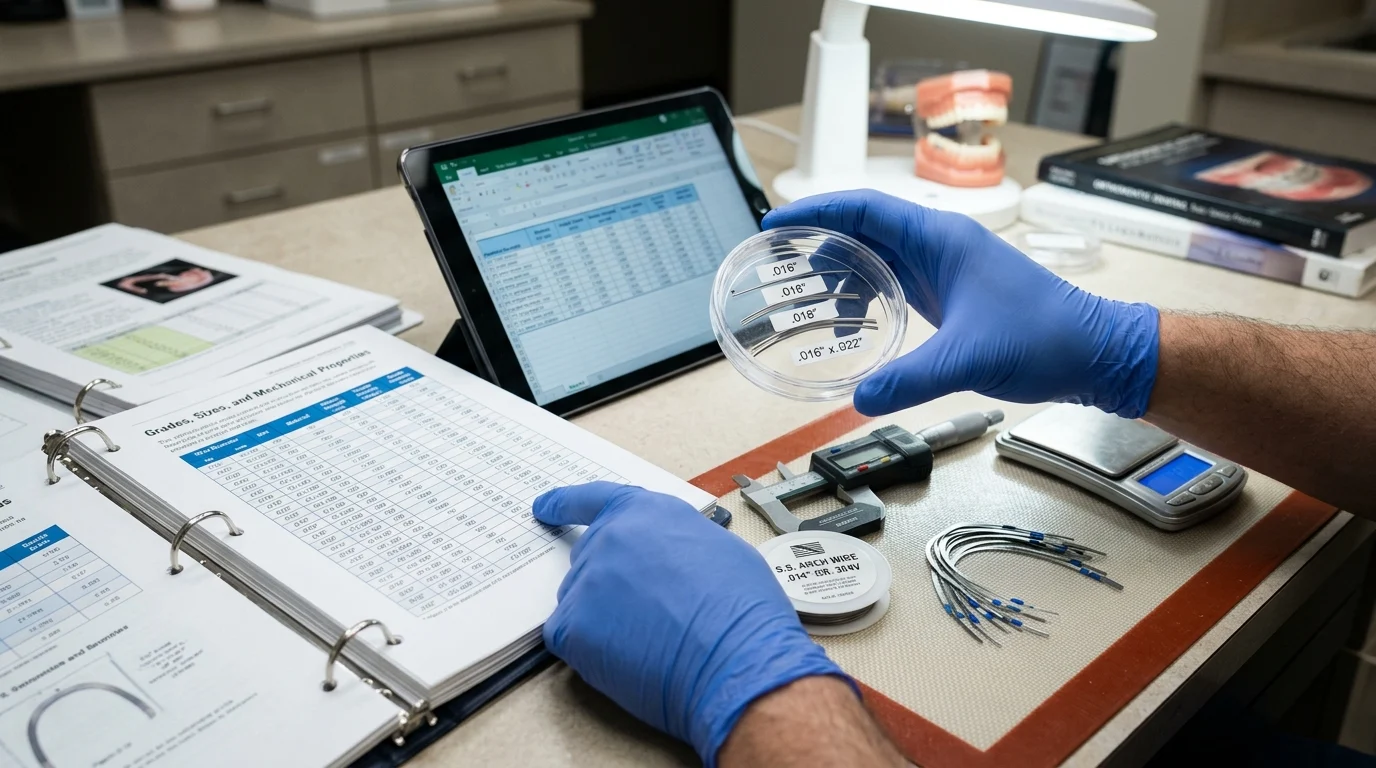
Orthodontic arch wires are manufactured from specific stainless steel alloys, drawn through precision dies to achieve exact dimensional tolerances. The mechanical properties of these wires are a direct result of their chemical composition, the degree of cold working applied during the drawing process, and the final geometric shape.
Common stainless steel arch wire grades
Austenitic stainless steels, primarily the 300 series, are the industry standard for orthodontic applications. Grade 304V (Vacuum Arc Remelted) is the most prevalent alloy used in high-quality arch wires. The vacuum melting process significantly reduces non-metallic inclusions, resulting in superior surface integrity, enhanced fatigue life, and high tensile strength (often ranging from 250,000 to 300,000 PSI).
Grade 316L is another common alternative, featuring a lower carbon content and the addition of molybdenum. While it generally exhibits slightly lower tensile strength than 304V, 316L offers superior pitting corrosion resistance, making it highly suitable for patients with specific sensitivities or highly acidic oral environments. Both grades rely on a passive chromium oxide layer to prevent degradation during the typical 4- to 8-week intraoral placement cycle.
Round vs square vs rectangular arch wires
Arch wires are drawn into three primary geometries, each serving distinct clinical functions. Round wires, typically ranging from 0.014 to 0.020 inches in diameter, offer low friction and are utilized for initial leveling, sliding mechanics, and mild space closure. Their symmetrical cross-section allows them to rotate freely within the bracket slot.
Square wires (e.g., 0.016 x 0.016 inches) provide early three-dimensional control, beginning to engage the walls of the bracket slot to influence tooth torque. Rectangular wires, which range from 0.016 x 0.022 inches up to 0.021 x 0.025 inches, are the ultimate finishing tools. They fully engage the bracket slot, allowing orthodontists to express the built-in prescription of the bracket, controlling root inclination and final tooth positioning with high precision.
Key property comparisons for selection
When selecting an alloy and geometry for inventory or clinical use, buyers must evaluate the trade-offs between stiffness, formability, and biocompatibility. The table below outlines key mechanical properties across common medical-grade wire alloys to aid in specification.
| Material / Grade | Modulus of Elasticity (GPa) | Typical Tensile Strength (MPa) | Primary Orthodontic Application |
|---|---|---|---|
| Stainless Steel 304V | ~200 | 1,700 – 2,100 | Working/Finishing, Space Closure |
| Stainless Steel 316L | ~195 | 1,400 – 1,800 | High Corrosion Resistance Needs |
| Nickel-Titanium (NiTi) | ~30 – 40 | 1,000 – 1,400 | Initial Leveling and Aligning |
| Beta-Titanium (TMA) | ~60 – 70 | 1,200 – 1,400 | Intermediate Detailing, Wire Bending |
Matching Arch Wire Types to Clinical and OEM Needs
Aligning arch wire specifications with both clinical objectives and OEM manufacturing capabilities is essential for optimizing supply chains and ensuring clinical satisfaction. Different phases of orthodontic treatment demand specific biomechanical properties, and understanding these requirements allows buyers to curate highly effective product portfolios.
Best uses for different stainless steel arch wires
Stainless steel wires are predominantly deployed during the working and finishing phases of comprehensive orthodontic treatment. Because of their excellent formability, they are the material of choice when clinicians need to bend custom loops, offsets, or compensating curves into the wire. A premium 304V stainless steel arch wire can withstand severe 90-degree bends without fracturing, a critical requirement for detailing.
Furthermore, stainless steel is the preferred choice for sliding mechanics. When closing extraction spaces using elastomeric chains or closed-coil springs, the low surface friction of a highly polished stainless steel wire allows the bracket to glide smoothly. Rectangular stainless steel wires are also universally applied as stabilizing arches when orthognathic surgery is performed, as their absolute rigidity splints the dentition securely.
Trade-offs in performance, cost, and handling
Balancing clinical efficacy with procurement budgets requires an analysis of trade-offs. Standard 304V stainless steel arch wires are highly economical, with bulk procurement costs typically ranging from $0.30 to $0.80 per unit. However, specialized variations, such as aesthetic tooth-colored coated wires or multi-stranded stainless steel cables, can push unit costs above $2.50.
While aesthetic coatings improve patient acceptance, they often increase the friction coefficient and can degrade over a 6-week clinical cycle, shedding particles and exposing the underlying metal. Buyers must weigh the demand for cosmetic appeal against the slight reduction in sliding efficiency. The table below highlights the relationship between wire dimensions, clinical utility, and relative handling characteristics.
| Wire Dimension (Inches) | Cross-Section | Clinical Phase | Relative Stiffness | Friction Profile |
|---|---|---|---|---|
| 0.014 – 0.016 | Round | Early Working | Low | Very Low |
| 0.018 – 0.020 | Round | Sliding Mechanics | Moderate | Low |
| 0.016 x 0.016 | Square | Torque Introduction | Moderate-High | Moderate |
| 0.019 x 0.025 | Rectangular | Final Detailing | Very High | High (Slot Bound) |
What Buyers Should Check When Sourcing
Procuring medical-grade stainless steel arch wire demands rigorous vetting of manufacturing processes and supply chain logistics. Because these devices are placed directly into the human body for extended periods, regulatory compliance, material traceability, and strict quality control are non-negotiable.
Quality indicators, certifications, and test methods
Reliable suppliers must adhere to recognized international standards, such as ASTM F138 for 316L stainless steel or ASTM A313 for 302/304 spring wire. Quality indicators extend beyond chemical composition to include surface topography and dimensional accuracy. Premium wire should exhibit a surface roughness (Ra) of less than 0.1 µm, which is verifiable via profilometry or scanning electron microscopy (SEM) reports provided by the manufacturer.
Additionally, suppliers should perform routine mechanical testing, including tensile strength verification and bend-fracture testing, to ensure the wire temper is consistent from batch to batch. Certifications of Analysis (CoA) must accompany every shipment, detailing the exact heat lot of the raw material to ensure full traceability backward to the original steel mill.
Packaging, sterilization, traceability, and MOQs
Logistics and packaging play a pivotal role in the final landed cost and clinical presentation of the product. Standard orthodontic arch wires are typically packaged in envelopes of 10 to 100 wires. For OEMs, Minimum Order Quantities (MOQs) generally range from 5,000 to 20,000 pieces per specific size and arch form.
If the market demands sterile delivery, buyers must source wires compatible with Gamma irradiation or Ethylene Oxide (EtO) sterilization. Individual medical-grade pouch packaging, complete with CE or FDA UDI (Unique Device Identification) barcodes, can add $0.15 to $0.25 per unit to the manufacturing cost but is increasingly required in strictly regulated markets.
Supplier qualification process
A robust supplier qualification process begins with verifying the manufacturer’s Quality Management System (QMS). ISO 13485 certification is mandatory for any facility producing orthodontic arch wires. Buyers should conduct comprehensive audits, either virtually or on-site, focusing on the manufacturer’s drawing dies, electropolishing lines, and quality control checkpoints.
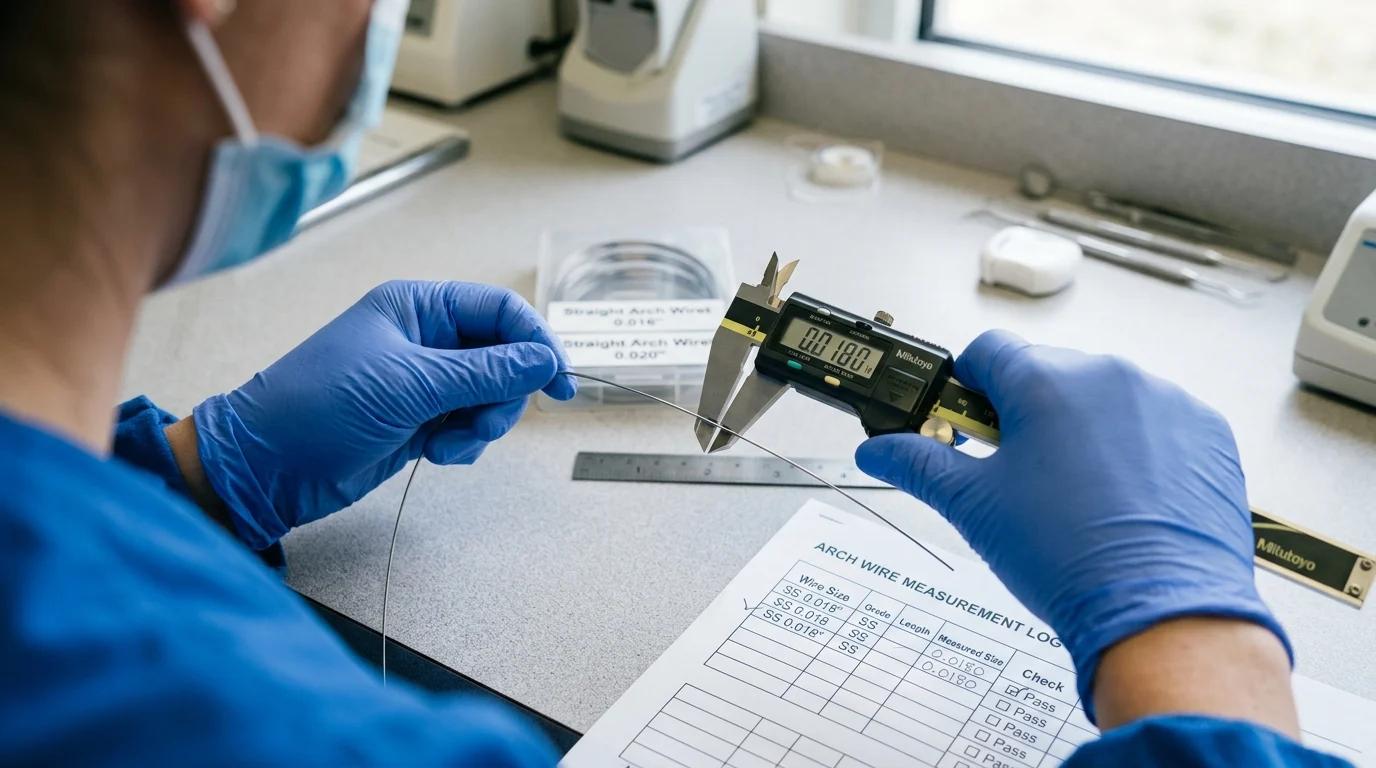
It is critical to establish an Acceptable Quality Limit (AQL) for incoming inspections. An AQL of 0.65 or tighter is recommended for dimensional checks (e.g., ensuring a 0.019″ x 0.025″ wire does not deviate more than the allowed tolerance) and visual inspections for surface blemishes or burrs at the wire ends.
How to Choose the Right Stainless Steel Arch Wire
Strategic sourcing of stainless steel arch wires requires a systematic approach to ensure that the chosen products meet both the exacting standards of orthodontic professionals and the commercial realities of the medical device market. A structured decision-making process minimizes the risk of supply chain disruptions and product failures.
Selection criteria for consistent decisions
Establishing strict selection criteria centers on dimensional tolerance, material purity, and arch form consistency. Strict dimensional tolerances—typically ±0.0005 inches—are critical; a wire that is oversized will not engage the bracket slot, while an undersized wire will result in a loss of torque control, extending treatment times.
Arch form consistency is equally vital. Whether specifying a natural, ovoid, or tapered arch form, the supplier must utilize precision CNC forming equipment to ensure that every wire perfectly matches the master template. Variations in arch form between batches can induce unintended transverse tooth movements, complicating the clinical finishing phase. Buyers should also verify that the packaged wires have a documented shelf life of at least 3 to 5 years under standard warehouse conditions without risk of surface oxidation.
Final decision framework
A comprehensive decision framework synthesizes biomechanical requirements, regulatory compliance, and total cost of ownership (TCO). Procurement teams must evaluate the base cost of the wire against the supplier’s historical defect rate, which should ideally remain below 0.5% for precision medical wires.
Furthermore, standard lead times for high-volume custom wire orders typically span 6 to 8 weeks. Buyers must factor these lead times into their inventory forecasting to prevent stockouts of high-velocity sizes (such as 0.016″ round and 0.019″ x 0.025″ rectangular). By prioritizing suppliers who offer transparent material sourcing, validated manufacturing tolerances, and scalable production capacities, buyers can secure a reliable pipeline of high-performance stainless steel arch wires.
Key Takeaways
- The most important conclusions and rationale for stainless steel arch wire
- Specs, compliance, and risk checks worth validating before you commit
- Practical next steps and caveats readers can apply immediately
Frequently Asked Questions
What stainless steel grades are most common for arch wires?
304V is the standard for high strength and fatigue life, while 316L offers better corrosion resistance in acidic oral conditions. Choose based on clinical needs and sourcing specs.
When are stainless steel arch wires usually used in treatment?
They are mainly used in working and finishing stages, especially for space closure, detailing, and torque control after initial alignment is completed.
How do round and rectangular stainless steel arch wires differ?
Round wires reduce friction and are better for sliding mechanics. Rectangular wires provide stronger torque and angulation control for finishing and detailed tooth positioning.
Why does surface finish matter for stainless steel arch wire?
A polished or electropolished finish lowers sliding friction, improves bracket-wire interaction, and can help make space closure more efficient in clinical use.
Can Denrotary supply stainless steel arch wires for OEM or distributor orders?
Yes. Denrotary manufactures orthodontic products and supports global OEM and distribution needs with medical-grade production, broad arch wire options, and CE, FDA, and ISO13485 standards.

Post time: May-19-2026