

Introduction
China’s leading orthodontic manufacturers offer more than lower unit costs: they provide a tightly integrated supply chain that supports faster production, steadier material access, and easier scaling across brackets, archwires, aligners, and related components. For buyers, distributors, and dental brands, these advantages affect lead times, inventory risk, pricing flexibility, and product consistency as much as they affect margins. This article examines how established manufacturing clusters, supplier networks, and expanding technical capabilities in China translate into practical sourcing benefits, helping readers assess where the strongest operational advantages come from and what they mean for long-term procurement decisions.
Why Chinese Orthodontic Manufacturers Matter
The global orthodontic supplies market relies heavily on the manufacturing infrastructure established in China. As demand for clear aligners, traditional brackets, and advanced archwires accelerates, Chinese facilities have transitioned from peripheral component suppliers to central nodes of global production. This shift is driven by a maturing industrial base that combines high-volume output with increasingly sophisticated metallurgical and polymer engineering.
For dental brands, distributors, and clinical networks, leveraging these manufacturing hubs is no longer merely a cost-reduction strategy. It is a critical supply chain advantage that dictates market responsiveness, margin control, and product scalability.
Cost and value advantages
The primary driver for sourcing orthodontic supplies from China remains significant cost arbitrage, but the definition of value has evolved. Buyers typically realize 30% to 50% reductions in unit costs compared to domestic production in North America or Western Europe. However, the true value advantage lies in supply chain consolidation.
Chinese industrial hubs, particularly in Guangdong and Zhejiang provinces, offer localized access to raw materials such as medical-grade stainless steel, nickel-titanium (NiTi) alloys, and polyurethane (PU) sheets. This proximity reduces inbound freight costs and minimizes material stockouts, allowing manufacturers to maintain aggressive pricing without sacrificing production continuity.
Key product categories and supply models
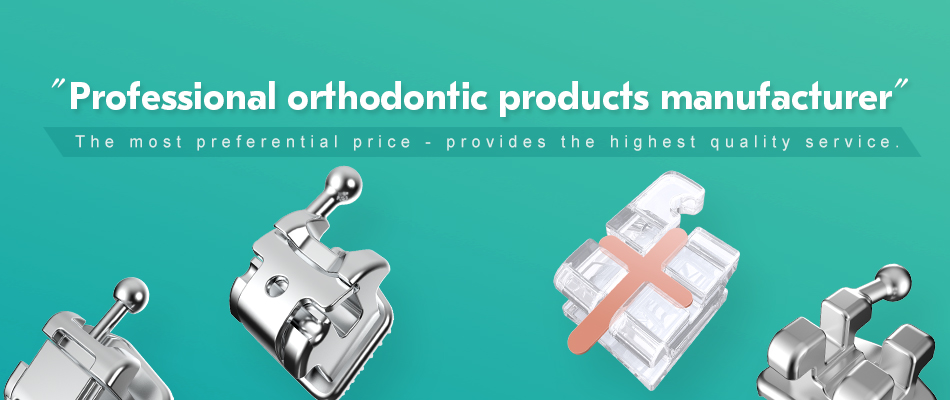
The output from these facilities spans the entire spectrum of orthodontic needs. Production lines are generally segmented into metal injection molding (MIM) for brackets, wire extrusion and forming for archwires, and thermoforming plastics for aligner systems.
| Product Category | Primary Material | Typical Production Method | Standard MOQ Range |
|---|---|---|---|
| Traditional Brackets | 17-4 PH Stainless Steel | Metal Injection Molding (MIM) | 5,000 – 10,000 sets |
| Archwires | NiTi / CuNiTi / Stainless Steel | Extrusion & CNC Bending | 1,000 – 5,000 pieces |
| Aligner Sheets | PETG / TPU | Extrusion & Calendering | 500 – 1,000 kg |
| Elastomerics | Medical-grade Polyurethane | Injection Molding | 10,000 – 50,000 packs |
By engaging suppliers capable of handling multiple categories, global brands can utilize mixed-container shipping models. This reduces the administrative burden of managing fragmented vendor networks and lowers total landed costs.
What Sets Leading Chinese Orthodontic Manufacturers Apart
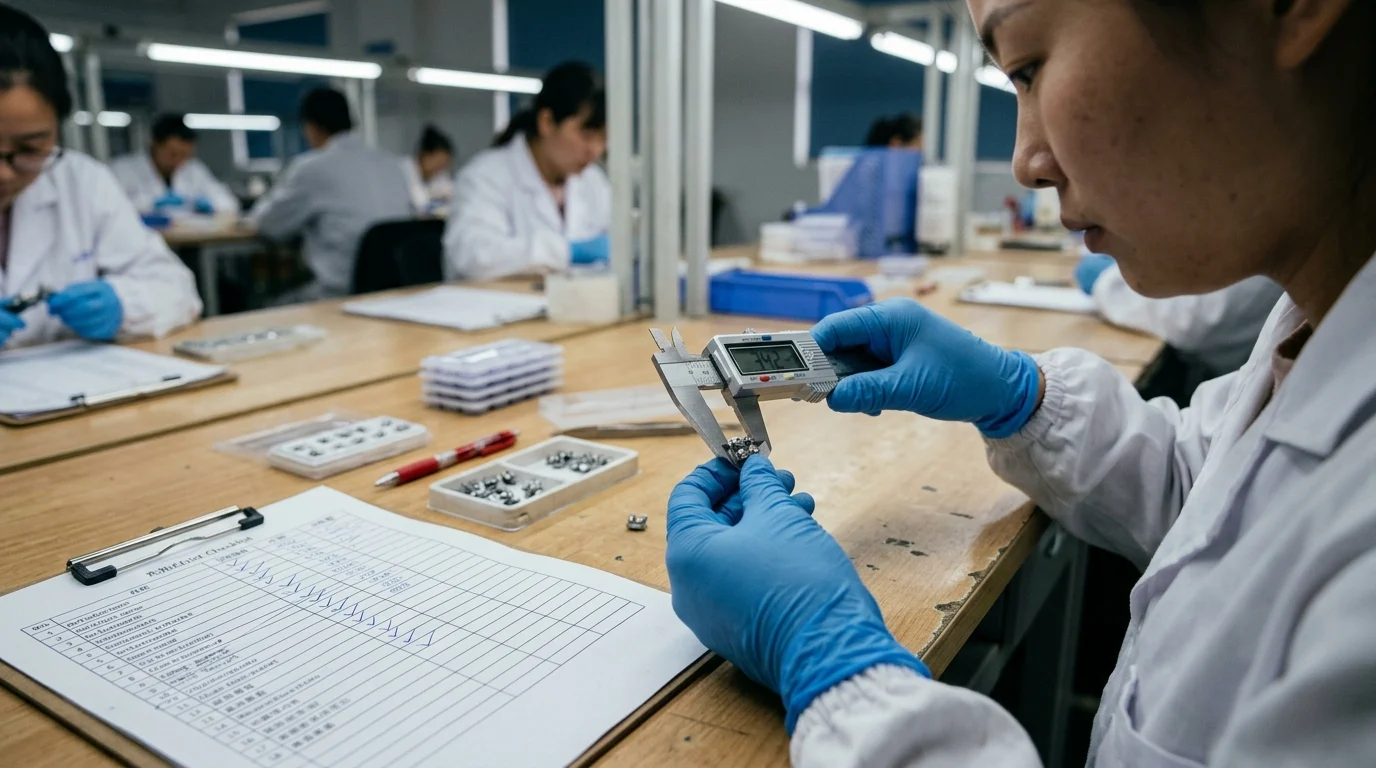
While baseline cost advantages attract initial sourcing inquiries, the retention of global accounts is driven by advanced manufacturing capabilities. Leading Chinese orthodontic manufacturers have heavily capitalized their facilities, integrating automation and precision engineering to meet the exacting tolerances required by modern clinical orthodontics.
This technological maturation distinguishes top-tier facilities from legacy workshops, enabling them to execute complex geometries for self-ligating brackets and customized lingual systems.
Core capabilities beyond low cost
The core differentiator for leading manufacturers is their mastery of Metal Injection Molding (MIM) and Computer Numerical Control (CNC) machining. High-end facilities consistently achieve slot tolerances of ±0.01 mm, a critical specification for ensuring accurate torque and angulation expression in straight-wire appliances.
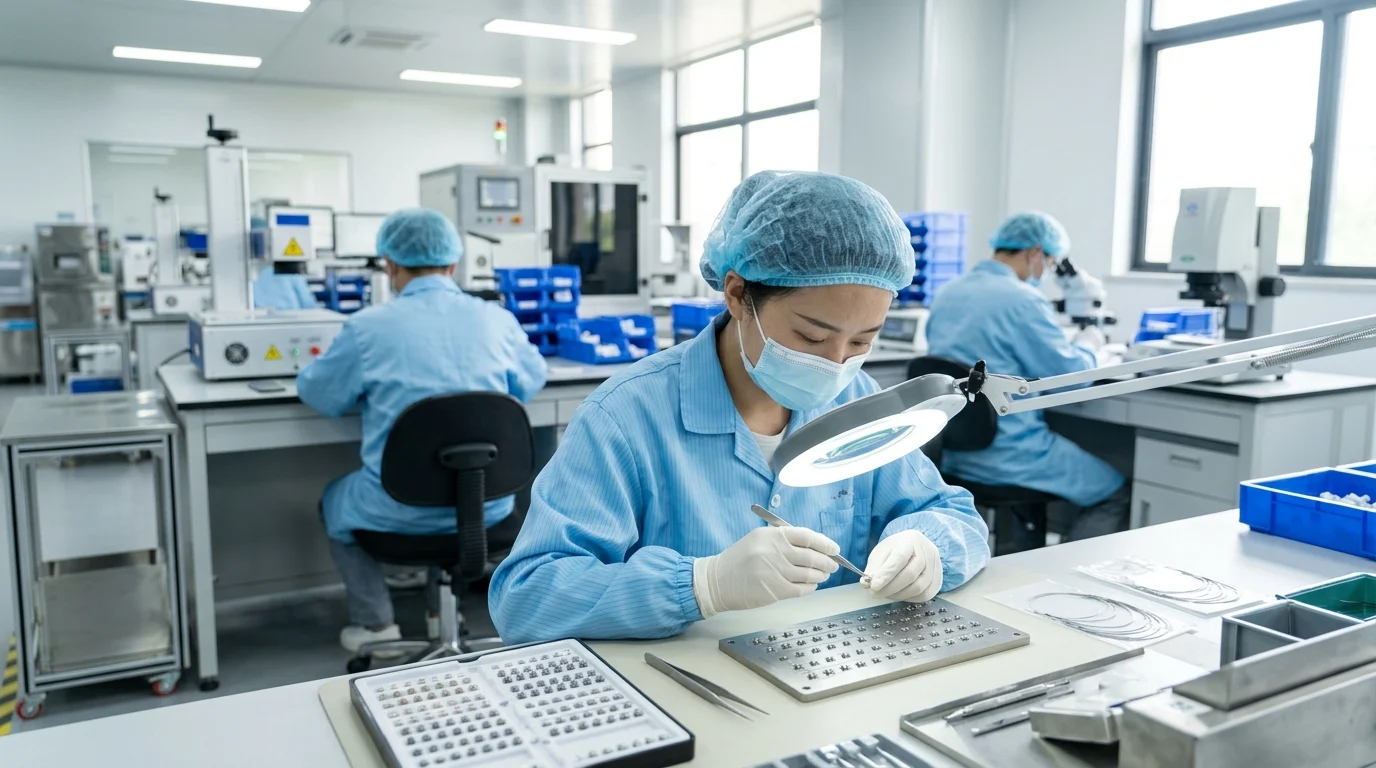
Furthermore, advanced manufacturers invest 8% to 10% of their annual revenue into research and development. This capital allocation funds the implementation of laser-welding robotics, automated optical inspection (AOI) systems for defect detection, and specialized surface treatment protocols that enhance the biocompatibility and sliding mechanics of orthodontic wires.
OEM, ODM, and private label options
Flexibility in production models allows Chinese manufacturers to serve diverse market tiers. Original Equipment Manufacturing (OEM) remains dominant for established brands requiring proprietary bracket prescriptions or unique clear aligner trim lines. Initiating OEM production typically requires a tooling lead time of 30 to 45 days for new injection molds.
Conversely, Original Design Manufacturing (ODM) and private labeling offer rapid market entry for emerging distributors. Manufacturers maintain extensive catalogs of pre-engineered, clinically validated designs, such as standard Roth or MBT prescription brackets. Private label clients can bypass tooling costs entirely, achieving market-ready inventory in as little as 14 to 21 days.
How Chinese Orthodontic Manufacturers Strengthen Supply Chains
A resilient orthodontic supply chain requires predictability. Chinese manufacturers strengthen global distribution networks by establishing rigorous quality control frameworks and optimizing export logistics.
The ability to consistently navigate the intersection of medical device compliance and international freight dynamics ensures that clinical end-users rarely experience stockouts or quality-induced product recalls.
Quality systems and regulatory documentation
Orthodontic products are classified as medical devices, necessitating strict adherence to international regulatory frameworks. Leading Chinese suppliers maintain ISO 13485:2016 certification as a baseline, ensuring quality management systems are calibrated for medical manufacturing.
Top-tier facilities go further, maintaining active FDA 510(k) clearances and CE marks compliant with the EU Medical Device Regulation (MDR). By utilizing advanced statistical process control (SPC), these manufacturers consistently maintain defect rates below 0.5%. This comprehensive documentation drastically accelerates customs clearance and regulatory registration for importers in heavily regulated jurisdictions.
Lead times, inventory, and export logistics
Inventory management and logistics execution are equally vital. Leading manufacturers operate with sophisticated ERP systems, allowing them to balance raw material reserves against forecasted global demand. Standard production lead times for recurring orders generally range from 15 to 25 days.
For export logistics, suppliers frequently offer hybrid shipping strategies. High-margin, low-weight items like NiTi archwires and self-ligating brackets are typically expedited via air freight, reaching North American or European hubs in 5 to 7 days. Bulkier items, such as aligner thermoforming sheets or large-volume elastomeric orders, are routed via ocean freight, optimizing freight-to-value ratios over a 30- to 40-day transit window.
How to Evaluate Chinese Orthodontic Manufacturers
The proliferation of medical device manufacturers in China presents a highly fragmented vendor landscape. Identifying a reliable long-term partner requires a structured evaluation process that moves beyond initial price quotes.
Importers must execute comprehensive due diligence to separate specialized orthodontic producers from generalist metalworks or trading companies acting as intermediaries.
Essential supplier comparison criteria
Effective supplier evaluation hinges on verifying core operational metrics. Buyers should prioritize manufacturers with dedicated, in-house tooling capabilities, as this drastically reduces turnaround times for product iterations. A facility’s production capacity must align with the buyer’s growth projections; a specialized supplier should easily demonstrate the capacity to output upwards of 500,000 bracket sets or 2 million archwires monthly.
Additionally, buyers must audit the supplier’s cleanroom infrastructure. For products involving direct clinical application or sterile packaging, verified Class 100,000 (ISO Class 8) cleanrooms are a mandatory evaluation criterion.
Cost, quality, and risk trade-offs
Procurement teams must navigate the inherent trade-offs between unit cost, clinical quality, and supply chain risk. Aggressively pursuing the lowest possible price often results in degraded material integrity, such as brackets with high nickel leaching or archwires with inconsistent transition temperatures.
| Supplier Tier | Target Buyer | Typical Certifications | Cost Premium vs Base | Risk Profile |
|---|---|---|---|---|
| Tier 1 (Premium) | Global Brands / OEMs | ISO 13485, FDA, CE (MDR) | +15% to +25% | Very Low (High consistency, full traceability) |
| Tier 2 (Mid-Market) | Regional Distributors | ISO 13485, CE (Legacy) | Baseline (0%) | Moderate (Requires strict incoming QC) |
| Tier 3 (Budget) | Spot Buyers | ISO 9001 only | -10% to -20% | High (Inconsistent tolerances, regulatory risk) |
Engaging Tier 1 suppliers incurs a slight cost premium but mitigates the catastrophic financial and reputational risks associated with clinical failures or regulatory embargoes.
How Importers and Brands Can Choose the Right Supplier
Finalizing a partnership with a Chinese orthodontic manufacturer is a phased process. Successful importers utilize systematic qualification frameworks to validate supplier claims and secure long-term commercial alignment.
This methodical approach ensures that the transition from initial sample evaluation to high-volume commercial production is seamless and contractually protected.
Supplier qualification steps
The qualification process begins with a detailed Request for Quotation (RFQ) that specifies material grades, dimensional tolerances, and packaging requirements. Following the RFQ, buyers must initiate a rigorous sampling phase. It is standard practice to request 50 to 100 sample units for clinical simulation testing, evaluating factors such as bracket base shear bond strength and wire resilience.
If samples pass physical testing, a factory audit—either conducted in-person or via a certified third-party auditor—is essential. The audit should focus on raw material traceability, calibration logs of CNC machinery, and the operational status of internal testing laboratories.
Final selection criteria
Final selection should be based on a combination of technical competence and commercial flexibility. Scalability is paramount; the chosen supplier must demonstrate the financial stability to absorb increased order volumes without extending lead times.
Furthermore, intellectual property protection and favorable financial terms define a mature supplier relationship. Buyers should insist on robust NNN (Non-Disclosure, Non-Use, Non-Circumvention) agreements enforceable under Chinese jurisdiction. Finally, standard payment terms should be negotiated to balance risk, typically structured as a 30% T/T deposit upon order confirmation, with the remaining 70% balance tied to successful pre-shipment quality inspections.
Key Takeaways
- The most important conclusions and rationale for Orthodontic Manufacturers in China
- Specs, compliance, and risk checks worth validating before you commit
- Practical next steps and caveats readers can apply immediately
Frequently Asked Questions
Why source orthodontic products from China?
Chinese manufacturers often cut unit costs by 30%–50% while offering broad product ranges, helping buyers consolidate sourcing and reduce total landed cost.
What products can Denrotary supply in one order?
Denrotary can supply brackets, buccal tubes, arch wires, power chains, elastics, pliers, molar bands, lingual buttons, retainers, and related accessories.
How does Denrotary support stable supply?
Denrotary uses modern workshops, German equipment, 3 automatic bracket lines, and weekly output around 10,000 pieces to improve consistency and reduce stockout risk.
What quality standards should buyers check?
Verify medical-grade materials, slot precision, bonding strength, and certifications such as CE, FDA, and ISO13485 before confirming an orthodontic supplier.
Can Denrotary handle private label or OEM orthodontic orders?
Yes. Denrotary supports broad catalog sourcing and can discuss OEM or private-label needs for distributors seeking faster market entry with dependable manufacturing.

Post time: May-26-2026