

Introduction
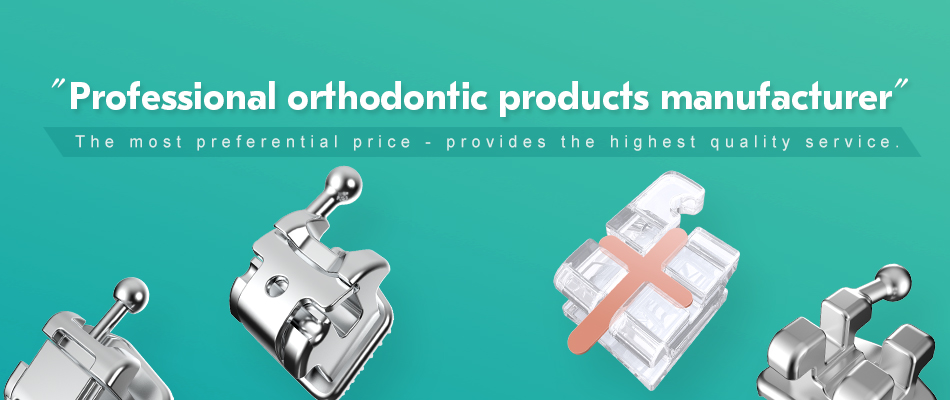
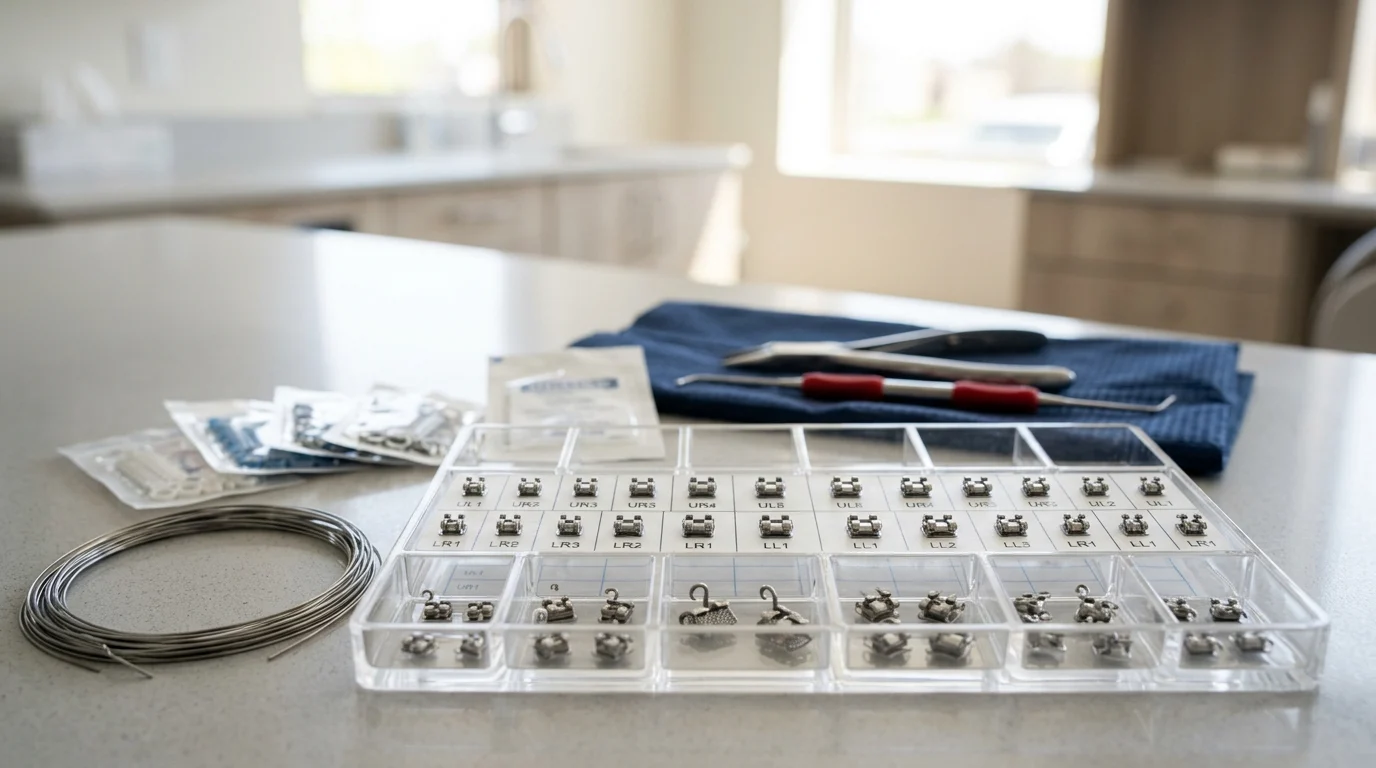
China has become a key sourcing base for orthodontic brackets as manufacturers combine large-scale production, improving precision, and broader compliance with international quality expectations. For buyers, distributors, and dental brands, the challenge is no longer simply finding low-cost products, but identifying suppliers that offer consistent bracket accuracy, reliable materials, regulatory support, and scalable OEM or private-label capabilities. This overview highlights 10 notable orthodontic bracket manufacturers in China and explains what sets them apart, helping readers compare options more efficiently before moving into detailed supplier profiles, production strengths, and sourcing considerations.
Why China matters for orthodontic bracket sourcing
The global dental supply chain has increasingly centralized in Asia, making China a primary hub for medical device manufacturing. For procurement teams, identifying reliable orthodontic bracket suppliers is a strategic priority that balances clinical efficacy with commercial viability. China’s manufacturing ecosystem has evolved significantly from producing low-cost, entry-level consumables to engineering high-precision dental devices that meet stringent international regulatory standards.
This transition is supported by heavily integrated domestic supply chains that cluster raw material sourcing, advanced metallurgy, and specialized tooling within specific industrial zones. Consequently, buyers looking to source orthodontic brackets can leverage these ecosystems to secure products that rival Western brands in quality while maintaining substantial commercial advantages.
How Chinese manufacturers compete on cost
Chinese manufacturers maintain a competitive edge primarily through economies of scale and the adoption of advanced manufacturing techniques like Metal Injection Molding (MIM) and 5-axis CNC machining. By keeping these capital-intensive processes in-house, top-tier factories can reduce production costs by 30% to 50% compared to North American or European counterparts.
Furthermore, these cost efficiencies do not require massive volume commitments. While large global distributors might order hundreds of thousands of units annually, many flexible manufacturers offer Minimum Order Quantities (MOQs) starting between 500 and 1,000 sets per prescription. This allows mid-sized dental distributors to access factory-direct pricing without excessive inventory holding costs.
What buyers should expect from supplier rankings
When reviewing industry rankings or top 10 lists, procurement professionals must look beyond surface-level marketing. Legitimate rankings reflect verifiable metrics such as total production capacity, the breadth of export certifications, and sustained R&D investment. A highly ranked supplier typically operates automated production lines capable of maintaining defect rates below 0.5%.
Buyers should expect these top-tier suppliers to demonstrate robust quality management systems. Rankings often favor companies that have successfully transitioned from standard conventional brackets to complex, self-ligating systems, serving as an indicator of a facility’s engineering maturity, precision tooling capabilities, and overall financial stability.
Top orthodontic bracket suppliers in China
Navigating the dense landscape of Chinese dental manufacturers requires a systematic approach to categorization. While specific company rankings fluctuate based on quarterly export volumes and market share, the most capable orthodontic bracket suppliers consistently cluster in established medical manufacturing hubs such as Hangzhou, Shenzhen, and Shanghai.
These hubs provide access to skilled metallurgical engineers and specialized testing laboratories, enabling top suppliers to maintain broad product portfolios that cater to diverse clinical philosophies.
How to profile each supplier
Profiling a supplier involves auditing their physical and operational footprint. A Tier 1 manufacturer typically operates out of a facility exceeding 10,000 square meters and boasts an annual output capacity of over 5 million bracket sets.
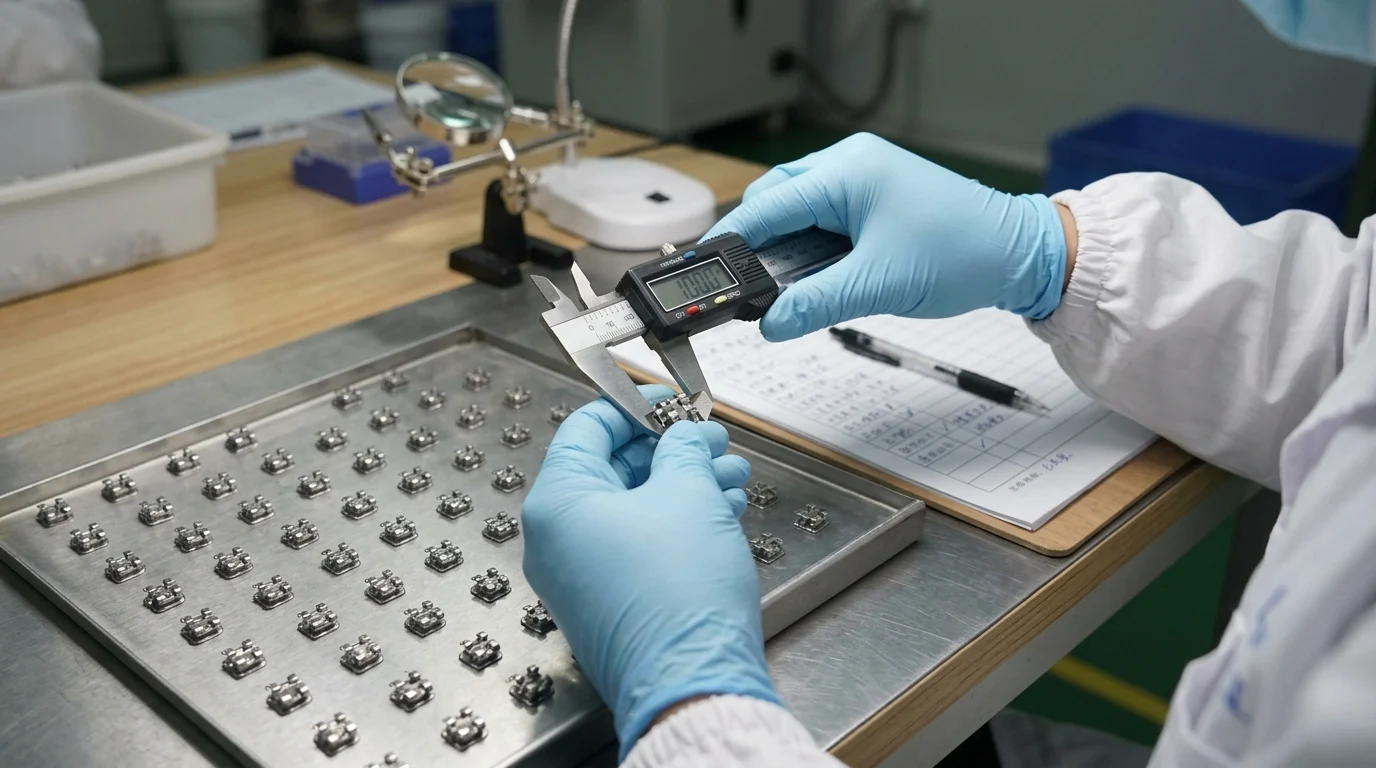
Beyond sheer size, profiling should focus on their core technological competencies. Facilities utilizing advanced laser welding for base attachment and automated optical inspection (AOI) systems present a much lower risk profile than those relying on manual assembly and visual checks.
What a comparison table should include
To objectively evaluate the top 10 manufacturers, procurement teams must utilize structured comparison tables that highlight operational capabilities rather than just unit pricing.
| Supplier Tier | Annual Capacity (Sets) | Standard MOQ | Core Certifications | Avg. Lead Time |
|---|---|---|---|---|
| Tier 1 (Enterprise) | 5,000,000+ | 5,000 | FDA, CE (MDR), ISO 13485 | 15–25 days |
| Tier 2 (Mid-Market) | 1,000,000 – 5,000,000 | 1,000 | CE, ISO 13485 | 20–30 days |
| Tier 3 (Boutique/Niche) | < 1,000,000 | 500 | ISO 13485 | 30–45 days |
A comprehensive table ensures buyers match their own scale with the appropriate supplier tier, preventing scenarios where a small distributor is deprioritized by an enterprise-level manufacturer.
How bracket types differ by application
The capabilities of top suppliers are most evident in how they handle different bracket applications. Conventional twin brackets, typically manufactured from 17-4 PH stainless steel, represent the baseline of production. However, the true test of a manufacturer lies in their execution of self-ligating brackets.
Self-ligating clips require precision tolerances of ±0.002mm to ensure consistent opening and closing forces over a 24-month treatment cycle. Additionally, the shift toward aesthetic dentistry requires evaluating a supplier’s ceramic offerings, specifically their use of polycrystalline alumina. Buyers can explore how specific products align with Roth, MBT, or Edgewise prescriptions to ensure full clinical compatibility.
Key criteria for evaluating bracket suppliers
Sourcing Class II medical devices necessitates a rigorous vetting process that prioritizes clinical safety and mechanical reliability over initial unit cost. Evaluating orthodontic bracket suppliers requires a deep dive into their metallurgical standards, regulatory adherence, and the hidden logistical costs that impact the final bottom line.
A supplier’s ability to consistently meet these criteria separates long-term strategic partners from transactional vendors.
How to assess material quality and slot precision
The fundamental performance of an orthodontic bracket relies heavily on material composition and slot precision. Industry-standard metal brackets must be cast or milled from 17-4 PH (precipitation-hardening) stainless steel, which offers the optimal balance of high tensile strength and corrosion resistance in the oral environment.
Slot precision is equally critical. Whether manufacturing 0.018″ or 0.022″ slots, the supplier must maintain strict dimensional tolerances (ideally within ±0.0005 inches). Oversized slots lead to a loss of torque expression, while undersized slots cause binding and excessive friction, severely compromising clinical outcomes.
Which compliance and traceability factors matter
Compliance is a non-negotiable metric. Every legitimate supplier must hold an active ISO 13485:2016 certification, which dictates the quality management system requirements for medical devices. For global distribution, verifying the authenticity of CE marks (under the new MDR regulations) and FDA 510(k) clearances is mandatory.
Traceability serves as the backbone of this compliance. Suppliers must demonstrate the ability to track materials from raw steel ingots to finished batches. The best manufacturers implement laser-etched lot numbers on the bracket bases or packaging, ensuring full recall readiness and mitigating liability risks.
What costs affect total landed price
The ex-works (EXW) or Free on Board (FOB) unit price represents only a fraction of the total landed cost. Buyers must model out the entire logistical chain, including packaging, sterilization (if required), and freight.
Customs duties significantly impact profitability. Depending on the importing country, orthodontic appliances (typically classified under HS Code 9021.10) may incur import tariffs ranging from 4.5% to 6.5%. When combined with fluctuating air freight rates for high-value, low-weight medical cargo, understanding these variables is essential for accurate margin forecasting.
How to source and qualify suppliers
Successfully transitioning from identifying potential orthodontic bracket suppliers to establishing a reliable supply chain requires a formalized sourcing methodology. Relying on digital storefronts or email correspondence alone is insufficient for medical device procurement.
Buyers must implement a multi-stage qualification process that rigorously tests both the physical product and the operational integrity of the manufacturing facility.
What supplier selection steps buyers should follow
The selection sequence should begin with a comprehensive Request for Information (RFI) to filter out trading companies masquerading as direct manufacturers. This is followed by a Request for Quotation (RFQ) that details specific prescriptions, base types, and packaging requirements.
Once the commercial terms align, buyers should formalize the testing phase. Initiating dialogue through a dedicated contact us portal allows procurement teams to request specific engineering samples, technical data sheets, and material safety declarations before committing to pilot orders.
How to audit samples and verify factory capability
Sample auditing must be highly analytical. For base retention, brackets should feature an 80-gauge mesh base; laboratory testing must verify that the base yields a shear bond strength exceeding 15 MPa to prevent clinical debonding. For self-ligating models, engineers should test the clip mechanism for fatigue across at least 100 opening and closing cycles.
Verifying factory capability extends to physical or third-party audits. A critical metric to assess during an audit is the ratio of Quality Assurance (QA) personnel to general assembly workers. In a high-functioning medical device facility, QA staff should represent at least 10% to 15% of the total production workforce, ensuring comprehensive in-line and final product inspections.
How to choose the right supplier
The culmination of the sourcing process is selecting a supplier that aligns perfectly with the buyer’s specific market positioning, financial constraints, and growth trajectory. There is no universally perfect manufacturer; rather, the optimal choice depends on matching supplier capabilities with organizational needs.
Establishing a data-driven framework removes emotional bias from the procurement process and ensures long-term supply chain stability.
Which supplier types fit different buyer needs
Different buyer profiles dictate different supplier requirements. A regional clinical chain looking for off-the-shelf, standard brackets will benefit most from Tier 2 suppliers that offer low MOQs and rapid fulfillment of standard Roth or MBT prescriptions.
Conversely, a global dental brand seeking to launch a proprietary, patented bracket design requires an OEM/ODM partner. These enterprise-level buyers need Tier 1 suppliers with extensive in-house R&D, rapid prototyping capabilities, and the willingness to sign strict Non-Disclosure Agreements (NDAs) to protect intellectual property.
What decision framework to use
To finalize the decision, procurement managers should implement a weighted decision matrix. This framework assigns a numerical value to critical performance indicators, ensuring a balanced evaluation.
| Evaluation Criteria | Weight | Minimum Acceptable Threshold |
|---|---|---|
| Quality & Precision | 40% | 98% First Pass Yield rate; ISO 13485 |
| Total Landed Cost | 25% | Within 5% of target margin profile |
| Production Capacity | 20% | Can scale to 50,000 sets/month |
| Communication/Support | 15% | 24-hour response time; English fluency |
By applying this framework, buyers can mathematically justify their supplier selection, ensuring that the chosen partner is capable of sustaining consistent quality, scaling with market demand, and maintaining strict regulatory compliance throughout the lifecycle of the product.
Further reading:
Key Takeaways
- The most important conclusions and rationale for orthodontic bracket suppliers
- Specs, compliance, and risk checks worth validating before you commit
- Practical next steps and caveats readers can apply immediately
Frequently Asked Questions
Why should buyers source orthodontic brackets from China?
China offers lower factory-direct pricing, mature dental supply clusters, and broad product options, often with quality levels comparable to Western brands.
What MOQ is typical for Chinese orthodontic bracket suppliers?
Many flexible factories accept 500 to 1,000 sets per prescription, while larger Tier 1 suppliers may prefer 5,000 sets or more.
Which certifications should I verify before choosing a bracket supplier?
Check for ISO 13485 first, then CE and FDA if your market requires them. Ask for current certificates and product-specific compliance documents.
How can I compare orthodontic bracket manufacturers effectively?
Review capacity, MOQ, lead time, certifications, defect rate, and whether they use MIM, CNC, laser welding, or AOI instead of manual inspection.
Can DenRotary help evaluate or source orthodontic bracket suppliers?
Yes. DenRotary’s product and company pages can help you review bracket options, manufacturing capabilities, and supplier-fit factors before requesting details.

Post time: Jun-08-2026