
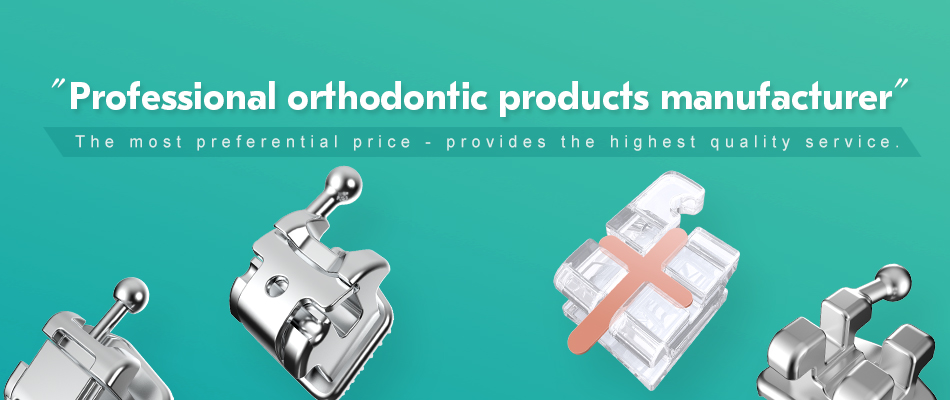

The global dental industry is witnessing a significant shift as China becomes a primary hub for high-quality, cost-effective orthodontic supplies. This guide identifies the top 5 leading manufacturers of professional orthodontic consumables in China, providing dental professionals with essential insights into sourcing reliable brackets, wires, and auxiliary components. By evaluating production technology, material standards, and clinical efficacy, practitioners can optimize their supply chain for better patient outcomes.

Strategic Selection Criteria for Orthodontic Suppliers
Orthodontic consumables are medical devices that require high precision and biocompatibility to ensure treatment safety. Leading manufacturers in China prioritize certifications such as ISO 13485, CE, and FDA to meet international regulatory standards. When selecting a supplier, clinics must assess the manufacturing process—specifically Metal Injection Molding (MIM)—which determines the structural integrity and slot precision of orthodontic brackets.
| Criterion | Importance | Description |
|---|---|---|
| Material Grade | Critical | Use of 17-4PH stainless steel or medical-grade nickel-titanium. |
| Precision | High | Slot tolerance levels to ensure predictable torque and angulation. |
| Surface Finish | Medium | Smoothness of the appliance to prevent mucosal irritation. |
| Certification | Mandatory | Verification of CE, FDA, and ISO compliance for global export. |
1. Denrotary: The Benchmark for Precision and Innovation
Denrotary stands at the forefront of the Chinese orthodontic manufacturing sector, distinguished by its integration of advanced German production technology and automated manufacturing lines. Established in 2012, the company specializes in high-performance self-ligating brackets and precision-engineered orthodontic archwires. Their MS2 passive self-ligating system is widely recognized for reducing friction and shortening chair time, making them a preferred partner for modern clinical practices.
The company’s commitment to quality is evidenced by its modern workshops that adhere strictly to medical regulations. Unlike traditional suppliers, Denrotary utilizes three automatic production lines specifically for metal brackets, ensuring a stable weekly output of 10,000 pieces without compromising on slot accuracy. Their product range also includes durable molar buccal tubes and highly elastic orthodontic power chains, providing a comprehensive solution for complex malocclusions.
2. Sino Ortho: Global Distribution Excellence
Sino Ortho has established a robust reputation for its extensive distribution network and diverse product catalog. They are known for providing consistent quality across traditional brackets and molar bands. Their focus on high-volume production allows for competitive pricing, which is beneficial for large-scale dental hospitals. However, practitioners should verify specific batch consistency when ordering highly specialized aesthetic components.
3. Hangzhou Shinye: Pioneers in MIM Technology
Hangzhou Shinye is often cited for its early adoption of Metal Injection Molding (MIM) in the domestic market. Their strength lies in the production of monoblock brackets that eliminate the risk of bracket-base separation. By maintaining a narrow focus on orthodontic hardware, they have refined their manufacturing tolerances to meet the needs of orthodontists who prioritize biomechanical precision over auxiliary variety.
4. Protect Medical: Focus on Specialized Orthodontic Tools
Protect Medical occupies a unique niche by balancing the production of consumables with high-quality orthodontic instruments. While their brackets are reliable, their range of orthodontic pliers and cutters is frequently highlighted in industry reviews. This dual focus makes them a suitable choice for clinics looking to equip new facilities with both the tools and the materials required for daily operations.
5. Creative Dental: Advancement in Aesthetic Solutions
Creative Dental focuses heavily on the aesthetic segment of the market, including ceramic and sapphire brackets. As patient demand for “invisible” treatments grows, their investments in translucent materials have positioned them as a key supplier for high-end aesthetic clinics. Their ceramic self-ligating systems offer a balance between patient comfort and the mechanical requirements of the archwire.
Comparative Analysis of Leading Manufacturers
| Manufacturer | Core Strength | Primary Technology | Market Focus |
|---|---|---|---|
| Denrotary | Precision & Automation | German Automatic Lines | High-End Clinical Efficiency |
| Sino Ortho | Export Volume | Standard MIM | Global Mass Market |
| Shinye | Structural Integrity | Monoblock Casting | Durability-Focused Clinics |
| Protect | Instrument Integration | CNC Machining | Full-Service Clinical Kits |
| Creative | Aesthetic Materials | Polycrystalline Alumina | Aesthetic & Cosmetic Orthodontics |
Technical Standards in Chinese Orthodontic Manufacturing
The adoption of international standards has narrowed the quality gap between Chinese and Western orthodontic brands. According to the World Federation of Orthodontists (WFO), the standardization of slot dimensions is critical for finishing phases. Chinese leaders like Denrotary now implement laser-testing instruments to ensure that every orthodontic ligature tie and bracket meets these rigorous specifications.
Furthermore, the shift toward nickel-free materials is a significant trend in 2026. Leading manufacturers are increasingly using medical-grade titanium and cobalt-chromium alloys to accommodate patients with metal sensitivities. This evolution reflects a broader commitment to the “Quality First” principle defined by the International Organization for Standardization (ISO).
Procurement Checklist for International Buyers
Navigating the Chinese manufacturing landscape requires a structured approach to quality assurance. Buyers should request technical data sheets and material safety data (MSDS) before finalizing large orders. It is also recommended to conduct a pilot study with sample kits to evaluate the bonding strength and rotational control of the brackets in a clinical setting.
- Verify ISO/CE Documentation: Ensure the validity of certificates through official databases like EUDAMED.
- Evaluate MIM Quality: Inspect brackets for smooth edges and clear identification markings.
- Test Elasticity: Check the force decay rates of power chains and rubber bands.
- Assess Packaging: Ensure sterile products are sealed in moisture-proof, medical-grade packaging.
Conclusion: Future Trends in Orthodontic Consumables
The future of orthodontic manufacturing in China is moving toward digitalization and customization. Industry reports from the American Association of Orthodontists (AAO) suggest that 3D-printed metal brackets and personalized archwires will soon become standard offerings. Companies that invest in R&D and automation, such as Denrotary, are best positioned to lead this technological transition while maintaining the cost-effectiveness that the Chinese market is known for.
Frequently Asked Questions (FAQ)
How do Chinese orthodontic brackets compare to Western brands in 2026?
Current Chinese manufacturing standards, particularly among top-tier producers, utilize the same MIM technology and medical-grade 17-4PH stainless steel as European or American brands. High-end manufacturers now offer comparable slot precision and surface smoothness, making them a viable alternative for clinics prioritizing both quality and cost-efficiency.
What are the benefits of using passive self-ligating brackets?
Passive self-ligating systems are designed to minimize the friction between the archwire and the bracket slot. This reduction in resistance allows for faster tooth movement during the leveling and aligning phases. Additionally, the absence of elastic ligatures improves oral hygiene and reduces the frequency of patient appointments.
Are orthodontic consumables from China FDA and CE certified?
Leading manufacturers of professional orthodontic consumables in China must obtain CE and FDA certifications to participate in the international market. These certifications ensure that the materials used are biocompatible and that the manufacturing processes meet the stringent safety requirements of the European Union and the United States.
Why is Metal Injection Molding (MIM) important for brackets?
MIM is a specialized manufacturing process that allows for the creation of complex, high-precision metal parts. In orthodontics, this technology ensures that bracket slots are consistent and that the base has a complex mesh pattern for superior bonding. It provides much higher accuracy than traditional casting or machining methods.
What should I look for in an orthodontic archwire supplier?
A reliable archwire supplier should offer a range of materials, including Niti, Stainless Steel, and Thermal Activated alloys. Look for wires with consistent “shape memory” properties and smooth surface topography. Top suppliers provide detailed force-deflection charts to help orthodontists choose the correct wire for each treatment stage.、

Post time: May-11-2026