

Introduction
Choosing an orthodontic brackets factory is not just about price or product range; it directly affects regulatory risk, product consistency, and clinical outcomes. This article reviews seven CE-certified manufacturers and explains why CE status matters when evaluating suppliers for European and global markets. You will see how certification relates to MDR compliance, traceability, quality management, and export readiness, along with practical points for comparing factories beyond marketing claims. The goal is to help distributors, importers, and dental procurement teams narrow their options with a clearer view of which suppliers are positioned to deliver compliant, reliable bracket production at scale.
Why choose a CE-certified orthodontic brackets factory
Sourcing orthodontic supplies requires balancing clinical efficacy with stringent regulatory compliance. Partnering with a CE-certified manufacturer ensures that the products meet the rigorous safety and performance standards mandated by the European Economic Area (EEA), which is globally recognized as a benchmark for medical device quality.
For distributors and clinical networks, importing non-certified brackets introduces severe legal and financial risks, including customs seizures and clinical liability. A CE mark serves as a non-negotiable baseline for market entry, ensuring that the factory adheres to validated manufacturing protocols.
CE certification and MDR compliance
The landscape of European medical device compliance recently shifted from the Medical Device Directive (MDD) to the stricter Medical Device Regulation (MDR 2017/745). Orthodontic brackets are typically classified as Class IIa medical devices under this framework. This classification requires manufacturers to provide comprehensive clinical evaluation reports, post-market surveillance data, and robust traceability systems.
Suppliers who have successfully transitioned to MDR compliance demonstrate a high level of operational maturity. They must maintain Unique Device Identification (UDI) systems, ensuring that every batch of brackets can be tracked from raw material sourcing to clinical application, thereby significantly reducing the risk of product recalls.
Quality systems and manufacturing controls
A valid CE mark is inextricably linked to a factory’s quality management system, most notably ISO 13485:2016 certification. This standard dictates that the facility must maintain strict environmental controls, often utilizing ISO Class 8 cleanrooms for packaging to prevent particulate contamination.
Leading factories implement automated optical inspection (AOI) systems and statistical process control (SPC) to maintain defect rates below 0.5%. These controls are critical for orthodontic brackets, where minor deviations in slot dimensions can alter torque and angulation, directly impacting patient treatment times.
Commercial factors for supplier selection
Beyond clinical safety, selecting a CE-certified supplier influences commercial viability. Certified factories typically operate with established supply chains, offering predictable production schedules. Lead times for standard CE-certified brackets generally range from 15 to 45 days, depending on order volume and customization requirements.
Buyers must also consider Minimum Order Quantities (MOQs). While premium domestic suppliers may accommodate smaller batches, overseas OEM factories typically require an MOQ of 500 to 1,000 sets to offset the overhead costs associated with compliant private-label packaging and documentation.
How to compare orthodontic brackets factories
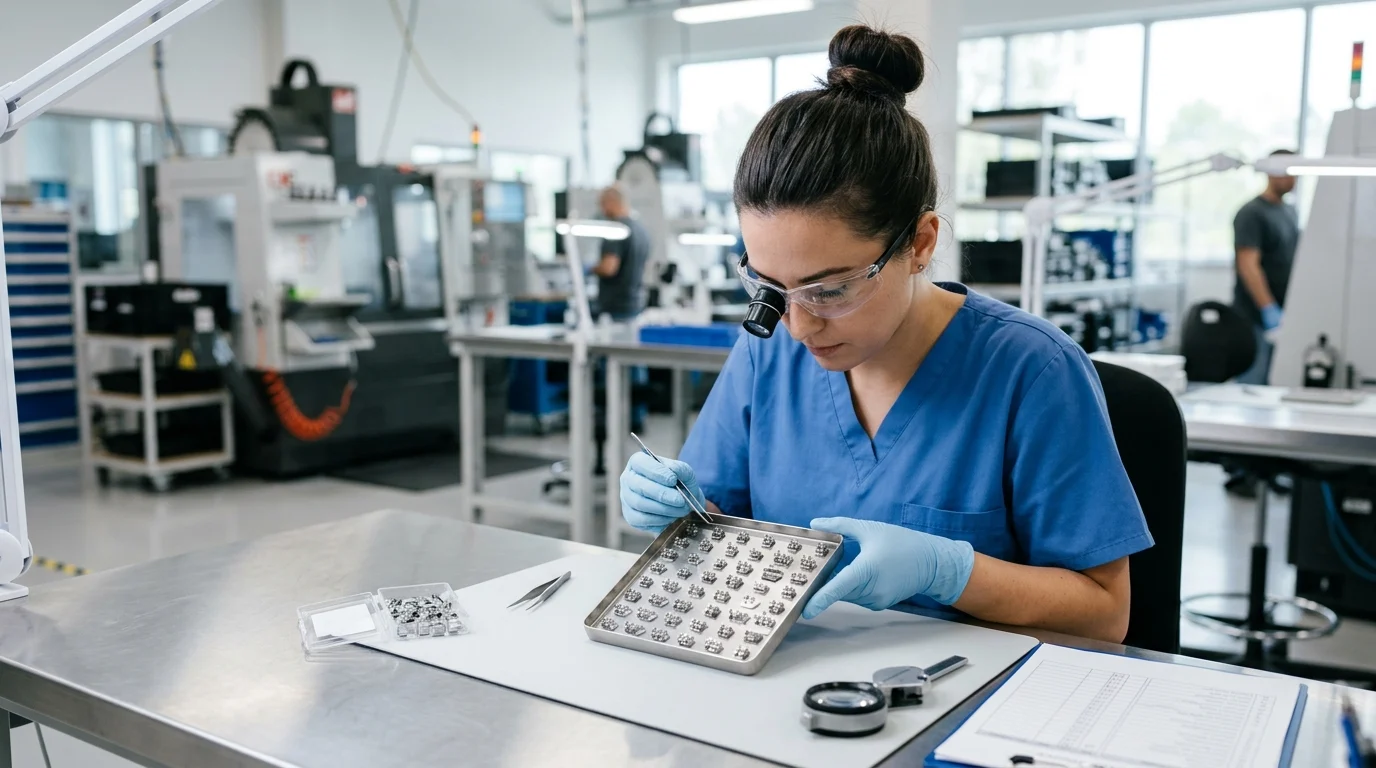
Evaluating potential manufacturing partners requires looking beyond the basic CE mark to assess technical capabilities, material science, and production scale. A thorough comparison ensures the selected supplier can consistently deliver brackets that meet specific clinical prescriptions and biomechanical demands.
Product specifications and bracket performance
The core of any orthodontic bracket is its prescription, most commonly Roth, MBT, or Edgewise systems. High-quality factories must demonstrate the ability to manufacture these systems with exacting precision. The critical dimensions—specifically torque, angulation, and in-out values—must align perfectly with clinical expectations.
Industry standards dictate that slot dimension tolerances must not exceed ±0.001 to ±0.002 inches. Substandard manufacturing can lead to “slot play,” where the archwire does not fully engage the bracket, resulting in a 10% to 20% loss of effective torque expression and prolonged orthodontic treatment.
Materials, slot accuracy, and base design
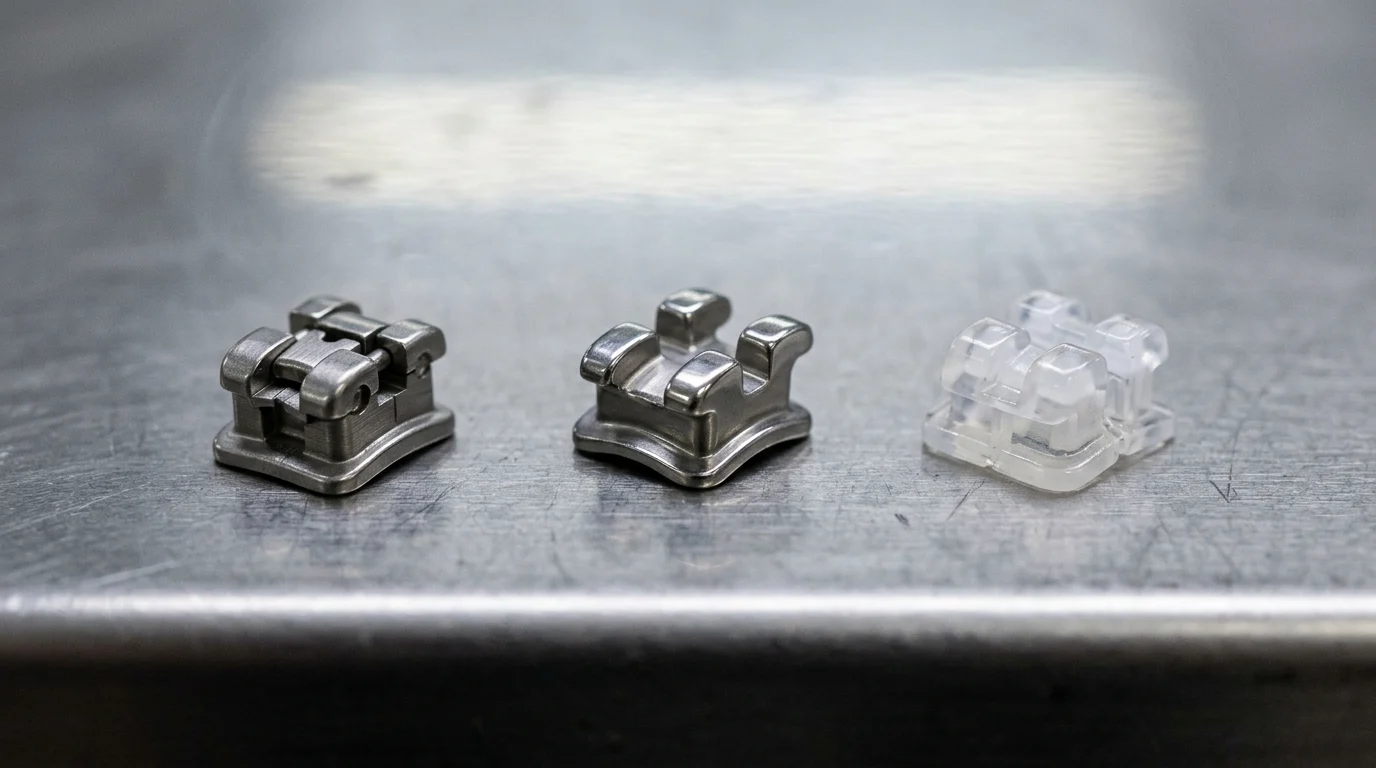
Material selection and base design are primary differentiators among suppliers. Most premium brackets are manufactured from 17-4 PH (precipitation-hardening) stainless steel, which offers superior yield strength compared to standard 316L stainless steel, preventing deformation under heavy wire ligation.
The bracket base is equally critical for clinical success. Top-tier factories utilize 80-gauge mesh bases, often treated with sandblasting or laser-etching, to maximize surface area. This design targets a shear bond strength of 10 to 15 MPa, which is the optimal range to withstand masticatory forces without damaging the enamel during debonding.
| Feature | Metal Injection Molding (MIM) | CNC Milling |
|---|---|---|
| Manufacturing Precision | High (ideal for complex geometries) | Very High (tightest slot tolerances) |
| Cost Efficiency at Scale | High (lower per-unit cost) | Moderate (higher machining time) |
| Primary Material Used | 17-4 PH Stainless Steel | 316L or 17-4 PH Stainless Steel |
| Surface Finish | Smooth, rounded patient-facing edges | Sharp, highly defined slot walls |
Capacity, certifications, and lead times
A factory’s production capacity directly impacts its ability to scale alongside your business. Major global manufacturers often boast output volumes exceeding 500,000 sets per month, utilizing advanced Metal Injection Molding (MIM) furnaces to maintain consistency across massive batches.
When comparing factories, buyers must align the supplier’s capacity with their own inventory turnover rates. A factory with massive capacity but a 60-day lead time may be less suitable for a regional distributor requiring agile, 20-day turnarounds for specialized self-ligating brackets.
Top 7 CE-certified orthodontic brackets factories
The global market features a mix of established multinational corporations and specialized OEM/ODM manufacturers. Understanding the hierarchy of these suppliers helps buyers identify the right balance of brand prestige, clinical innovation, and unit economics.
Supplier comparison by product range and quality
The industry’s top echelon includes highly recognized brands and specialized manufacturing powerhouses. Leading the market are companies like Ormco, 3M Unitek, and American Orthodontics, known for pioneering proprietary systems. European stalwarts like Forestadent and Dentaurum provide precision-engineered alternatives, while Japanese manufacturer TOMY excels in advanced metallurgical applications.
For businesses seeking private-label manufacturing, evaluating an orthodontic brackets factory catalog reveals the breadth of OEM capabilities, from traditional twin brackets to complex passive self-ligating systems designed for high-volume distribution.
Best options for value and premium sourcing
Sourcing strategies generally split between premium branded procurement and value-driven OEM partnerships. Premium manufacturers (e.g., 3M, Ormco) invest heavily in clinical marketing, with bracket sets commanding wholesale prices of $15.00 to $30.00 or more. These are ideal for clinics prioritizing brand-name recognition.
Conversely, high-quality OEM factories provide exceptional value for distributors and DSOs (Dental Support Organizations). By eliminating marketing overhead, these factories can supply CE-certified, MIM-manufactured bracket sets at a cost band of $3.00 to $8.00 per set, allowing for significant retail markups.
| Factory / Brand | Regional HQ | Primary Market Focus | Typical Bracket Price Band |
|---|---|---|---|
| Ormco | USA | Premium Clinical | $15.00 – $30.00+ |
| 3M Unitek | USA | Premium Clinical | $15.00 – $30.00+ |
| American Orthodontics | USA | Premium Clinical | $12.00 – $25.00 |
| Denrotary | China | Value / OEM Sourcing | $3.00 – $8.00 |
| Forestadent | Germany | Mid-to-Premium | $10.00 – $20.00 |
| Dentaurum | Germany | Mid-to-Premium | $10.00 – $20.00 |
| TOMY | Japan | Specialized / OEM | $8.00 – $15.00 |
Ranking by compliance, scale, and support
Ranking these top suppliers requires analyzing their commitment to ongoing compliance and operational scale. The highest-ranking factories reinvest approximately 5% to 8% of their annual revenue into research and development, ensuring their product lines evolve alongside digital dentistry trends.
Furthermore, top-tier factories maintain comprehensive technical support teams. This infrastructure is vital for distributors who require rapid technical documentation to register products in secondary global markets outside the EEA.
How to verify a CE-certified orthodontic brackets factory
Identifying a reputable supplier is only the first step; rigorous verification is essential to ensure the factory’s claims align with reality. Counterfeit certifications and exaggerated production capabilities are common pitfalls that can be avoided through structured vetting.
Due diligence and document review
Initial due diligence must focus on regulatory documentation. Buyers should request the factory’s Declaration of Conformity (DoC) and verify the accompanying CE certificate. A legitimate CE mark for a Class IIa device will always be accompanied by a 4-digit Notified Body identification number (e.g., CE 0123).
Distributors must cross-reference these credentials using the European database on medical devices (EUDAMED) or by contacting the Notified Body directly. Additionally, validating the expiration dates on the supplier’s ISO 13485 and FDA establishment registrations provides a clear picture of their regulatory standing.
Factory audits and sample evaluation
Document verification should always be followed by physical product evaluation. Requesting a sample batch of 50 to 100 brackets allows for independent testing of slot friction, wing structural integrity, and the opening/closing mechanisms of self-ligating clips.
If an on-site audit is not feasible, buyers should arrange a virtual factory tour. Reviewing the background of an orthodontic brackets factory through live video inspections of their MIM furnaces, CNC machining centers, and cleanroom packaging lines confirms their actual manufacturing footprint versus outsourced assembly.
Pricing, logistics, and after-sales support
Financial and logistical verification ensures the partnership is commercially viable. Buyers must clarify Incoterms, comparing FOB (Free on Board) versus EXW (Ex Works) pricing to understand the true landed cost. Standard air freight for bracket shipments typically requires 5 to 7 days of transit time.
Finally, scrutinize the factory’s after-sales support and warranty terms. The industry standard for defective medical devices is a 1:1 replacement policy within 30 to 60 days of batch failure identification. A supplier’s willingness to commit to these terms in writing is a strong indicator of their quality confidence.
How to choose the best long-term supplier
Securing a long-term manufacturing partner is a strategic decision that shapes a distributor’s profitability and a clinician’s treatment outcomes. The ideal supplier acts as an extension of your own business, adapting to market shifts and volume scaling.
Match supplier strengths to your business model
The first step in final selection is aligning the factory’s core competencies with your business model. A large-scale dental distributor requires a factory capable of high-volume production, aggressive pricing, and custom private-label packaging, typically necessitating an MOQ of 1,000+ sets per SKU.
In contrast, a specialized orthodontic buying group may prioritize a supplier that excels in low-volume, high-mix production. These buyers might accept higher per-unit costs in exchange for lower MOQs (e.g., 200 sets) and the ability to co-develop proprietary bracket prescriptions or aesthetic ceramic lines.
Build a shortlist and decision framework
To finalize the decision, buyers should implement a weighted scoring matrix. A standard framework might allocate 40% to Quality and Compliance (CE/ISO), 30% to Unit Pricing, 20% to Lead Times and Capacity, and 10% to Communication and Support.
Testing a supplier’s communication is critical before signing long-term contracts. Reaching out to an orthodontic brackets factory with technical queries during the evaluation phase helps gauge their responsiveness. A competent global supplier should consistently provide comprehensive, English-fluent responses within a 24-hour window, indicating a reliable infrastructure for future troubleshooting.
Further reading:
Key Takeaways
- The most important conclusions and rationale for orthodontic brackets factory
- Specs, compliance, and risk checks worth validating before you commit
- Practical next steps and caveats readers can apply immediately
Frequently Asked Questions
Why should I choose a CE-certified orthodontic brackets factory?
It reduces import and liability risks and confirms the brackets meet recognized European safety and performance standards for market entry.
What certifications should I verify besides the CE mark?
Ask for MDR 2017/745 compliance evidence, ISO 13485:2016 certification, and batch traceability or UDI documentation.
What slot tolerance is acceptable for orthodontic brackets?
A reliable factory should control slot dimensions within about ±0.001 to ±0.002 inches to limit slot play and torque loss.
Which bracket material is commonly preferred for OEM production?
17-4 PH stainless steel is widely preferred because it offers higher strength and better deformation resistance than standard 316L.
What lead time and MOQ are typical when ordering from Denrotary or similar factories?
Standard CE-certified brackets usually ship in 15 to 45 days, with common OEM MOQs around 500 to 1,000 sets depending on customization.

Post time: Jun-12-2026