

Introduction
Orthodontic inventory decisions affect more than shelf organization—they shape treatment continuity, chair time, and operating costs. For clinics sourcing from a dental consumables factory in China, the key is knowing which orthodontic items must always be available and how those choices support consistent daily workflows. This article outlines the core consumables every dental clinic should stock, from high-turnover essentials to procedure-specific auxiliaries, while highlighting how supply reliability, treatment mix, and procurement planning influence smarter purchasing. By the end, readers will have a clearer framework for building a practical, resilient orthodontic stock strategy.
Why clinics should review orthodontic stock strategy
Orthodontic practices operate in a high-volume, precision-dependent environment where supply chain efficiency directly impacts clinical profitability. Relying on outdated inventory models often leads to stockouts of critical archwires or brackets, disrupting patient scheduling and inflating overhead costs.
Establishing a resilient procurement framework requires a comprehensive analysis of daily clinical operations. By moving away from reactive purchasing and toward a data-driven stock strategy, practice owners can protect their margins against global supply chain volatility while ensuring seamless patient care.
Treatment mix, case turnover, and chairside efficiency
Clinics handling an average of 40 to 60 patient visits per day must calibrate their inventory to match their specific treatment mix. A demographic shift toward clear aligner therapy requires different auxiliary stocks—such as specialized attachment composites, chewies, and interproximal reduction (IPR) strips—compared to traditional fixed appliance caseloads.
Optimizing chairside efficiency depends entirely on having the right materials immediately accessible. Standardizing tray setups and maintaining strict par levels in the operatory can reduce the average appointment time by 5 to 8 minutes per patient, significantly increasing the daily throughput capacity of the clinic.
Cost, lead times, and supply continuity pressures
Global supply chain volatility has exposed the fragility of just-in-time inventory systems for dental practices. Sourcing directly from a dental consumables factory China can reduce unit costs by 30% to 45% compared to purchasing through domestic distributors, but this strategy requires adjusting for extended shipping timelines.
Standard sea freight lead times can range from 21 to 35 days, necessitating strategic inventory buffering. Clinics must balance the cost-saving benefits of bulk international procurement against the working capital required to hold 60 to 90 days of safety stock, ensuring continuous supply without locking up excessive operating funds.
Essential orthodontic consumables to keep in stock
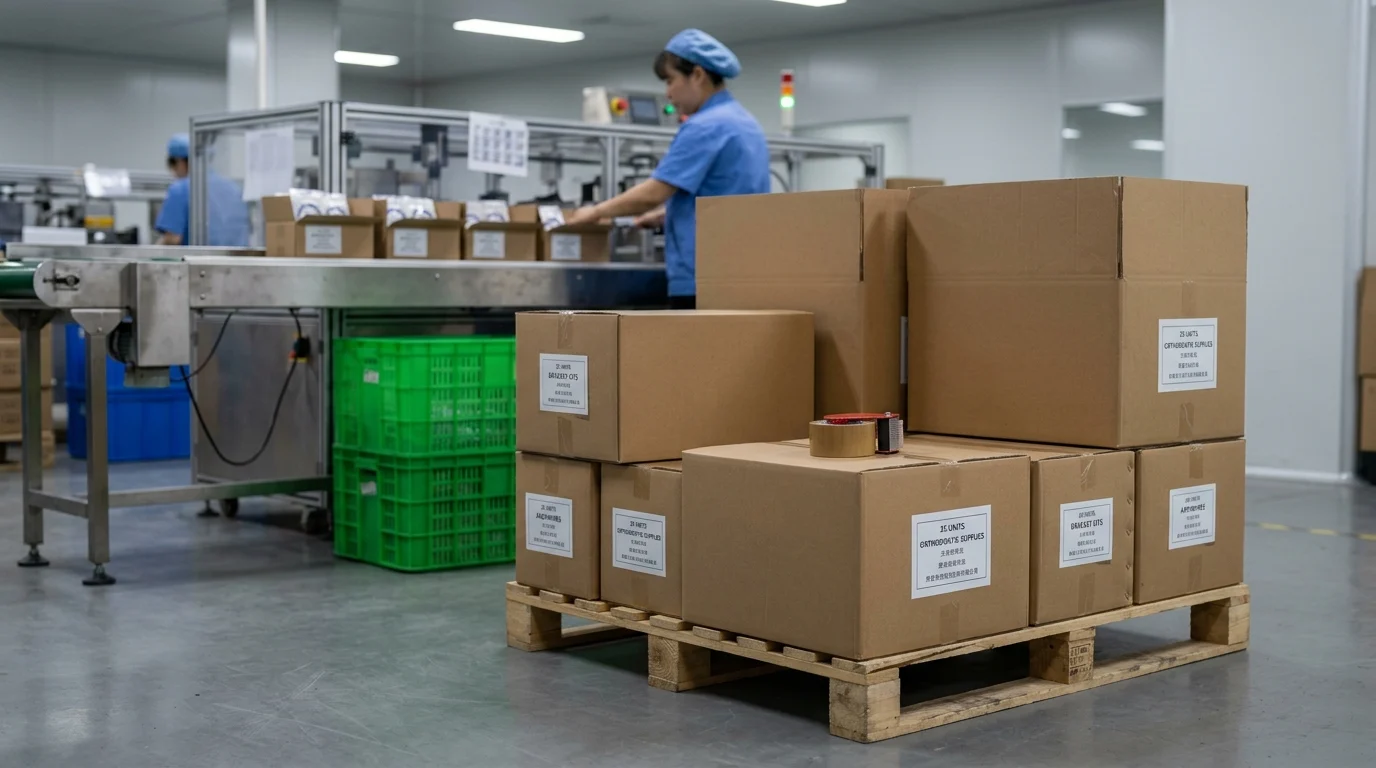
A robust inventory strategy categorizes orthodontic consumables by usage frequency and clinical criticality. Maintaining a standardized formulary prevents the proliferation of redundant SKUs, simplifies procurement, and reduces the risk of materials expiring before use.
Bracket bonding and attachment materials
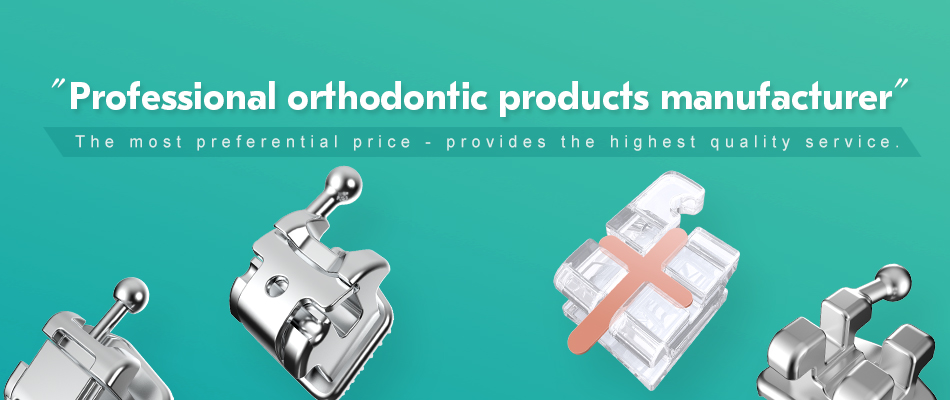
The foundation of fixed orthodontic therapy relies on high-quality brackets, bonding agents, and etchants. Clinics typically consume between 200 and 300 brackets per month per full-time orthodontist, making bulk procurement of standardized prescriptions (e.g., MBT or Roth) a financial necessity.
Selecting light-cure adhesives with optimal viscosity is equally critical; materials must prevent bracket drift before polymerization to ensure accurate torque and angulation expression. Clinical protocols should dictate the stocking of both standard composite resins and specialized moisture-tolerant primers for challenging bonding environments.
Wires, elastomerics, ligatures, and adhesives
Archwires dictate the biomechanical progression of treatment, necessitating a comprehensive stock of Nickel-Titanium (NiTi), stainless steel, and beta-titanium variants across multiple dimensions. Because treatment staging relies on specific wire sequences, stockouts here immediately delay patient progress.
Elastomeric ligatures and power chains experience rapid degradation in the oral cavity due to moisture and temperature fluctuations. High-elastomer-memory products are essential for maintaining continuous force levels. Practices should maintain a minimum 60-day supply of these high-turnover items to account for their frequent replacement during adjustment visits.
Comparison table for key consumable categories
The following table outlines the expected consumption and critical specifications for primary orthodontic consumables to guide inventory planning.
| Consumable Category | Primary Material/Type | Est. Monthly Consumption (Per Dr.) | Critical Specifications |
|---|---|---|---|
| Brackets | MIM Stainless Steel, Ceramic | 200–300 units | Torque tolerance ±1°, Base retention >10 MPa |
| Archwires | CuNiTi, TMA, Stainless Steel | 150–200 units | Transformation temp (NiTi) 27°C–35°C |
| Elastomerics | Medical-grade Polyurethane | 500–800 modules | Force decay <40% over 4 weeks |
| Adhesives | Light-cure Composite Resin | 15–20 syringes (4g) | Shear bond strength 15–20 MPa |
How to assess quality, compliance, and traceability
Clinical efficacy and patient safety demand rigorous vetting of consumable materials. Regulatory compliance and verifiable manufacturing standards serve as the baseline for evaluating any potential supplier, especially when importing internationally.
Product classifications and buyer definitions
Orthodontic consumables generally fall under Class IIa or Class IIb medical device classifications depending on the jurisdiction, such as under the EU Medical Device Regulation (MDR) or US FDA guidelines. These classifications dictate the level of regulatory scrutiny applied to the manufacturing process.
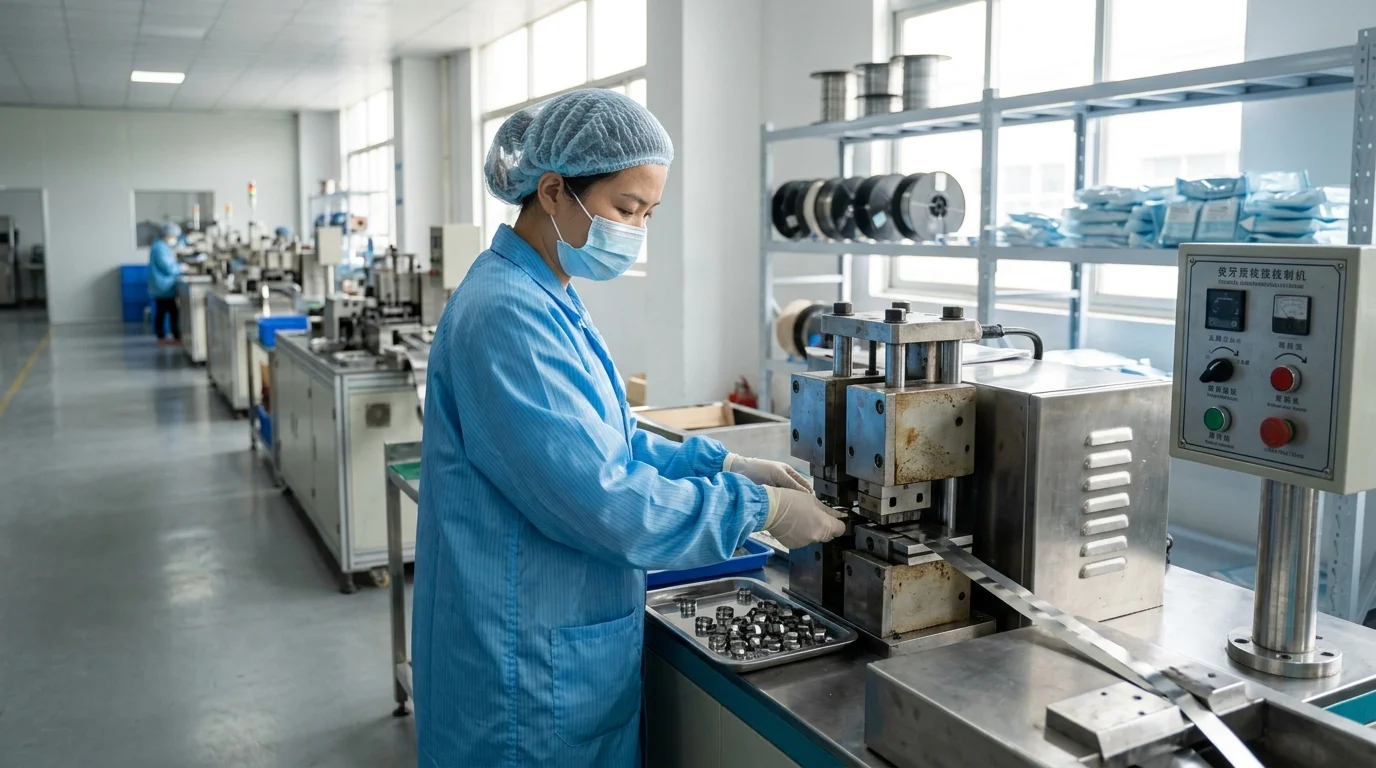
Buyers must differentiate between OEM (Original Equipment Manufacturer) and ODM (Original Design Manufacturer) capabilities when engaging a dental consumables factory China. Understanding these definitions ensures the facility holds the appropriate design controls and is not merely assembling components sourced from unverified third parties.
Required documentation and ISO standards
Reputable manufacturers must provide current ISO 13485:2016 certifications, detailing comprehensive quality management systems specific to medical devices. CE mark certificates, FDA 510(k) clearances, and detailed Material Safety Data Sheets (MSDS) are non-negotiable prerequisites for clinical use.
Batch traceability must be maintained down to the individual patient level to manage potential recalls safely. This requires suppliers to implement robust lot-numbering protocols on all primary and secondary packaging, ensuring every bracket or wire can be traced back to its original raw material heat lot.
Premium, mid-tier, and private-label performance trade-offs
The market offers distinct tiers of consumables, each presenting different financial and clinical propositions. Premium brands often command a 50% to 80% price premium, which is justified by extensive clinical validation, proprietary base designs, and ultra-tight manufacturing tolerances—often ensuring slot dimension accuracy within 0.0005 inches.
Mid-tier and private-label alternatives offer significant cost reductions that can drastically improve practice overhead. However, buyers must conduct rigorous in-house testing to verify that base retention strength, wire resiliency, and bracket slot friction meet acceptable clinical thresholds before committing to a full practice transition.
Sourcing, inventory, and logistics best practices
Transitioning from ad-hoc ordering to a structured procurement pipeline stabilizes clinical operations and protects profit margins. Effective logistics management requires proactive data forecasting, stringent supplier validation, and a clear understanding of international freight parameters.
Minimum stock levels and monthly forecasting
Implementing a dynamic reorder point (ROP) system prevents both stockouts and excessive capital tie-up. Clinics should calculate ROP using the formula: (Average Daily Usage × Lead Time in Days) + Safety Stock.
For example, if a clinic uses 20 archwires daily and the supplier lead time is 14 days, the baseline requirement is 280 units. Maintaining a safety stock of 100 units dictates a firm reorder point of 380 units. Monthly forecasting should adjust these figures based on seasonal patient intake variations, such as the summer rush.
Supplier qualification and sample validation
Before committing to high-volume minimum order quantities (MOQs)—which often range from 5,000 to 10,000 units for customized elastomeric products—clinics must execute a structured sample validation phase.
This phase involves controlled clinical trials of 50 to 100 sample units to evaluate real-world performance metrics. Procurement managers should track specific failure rates, ensuring that adhesive bond failure or bracket debonding remains below the standard 3% to 5% clinical benchmark before approving a widespread rollout.
Shipping, customs, and storage requirements
Cross-border logistics demand close attention to incoterms and temperature controls. Certain adhesives and elastomeric materials degrade rapidly when exposed to temperatures exceeding 25°C (77°F) during transit.
| Logistics Parameter | Air Freight | Sea Freight |
|---|---|---|
| Typical Lead Time | 5–10 Days | 25–40 Days |
| Estimated Cost | $6.00 – $12.00 per kg | $0.50 – $2.00 per kg |
| Best Suited For | High-value, urgent, or temperature-sensitive items (Adhesives, specialty brackets) | High-volume, heavy, and stable items (Alginate, bulk wire, stone) |
| Temperature Control | Standard climate control (Cold chain available) | Requires insulated or reefer containers for sensitive goods |
Final criteria for choosing orthodontic consumables suppliers
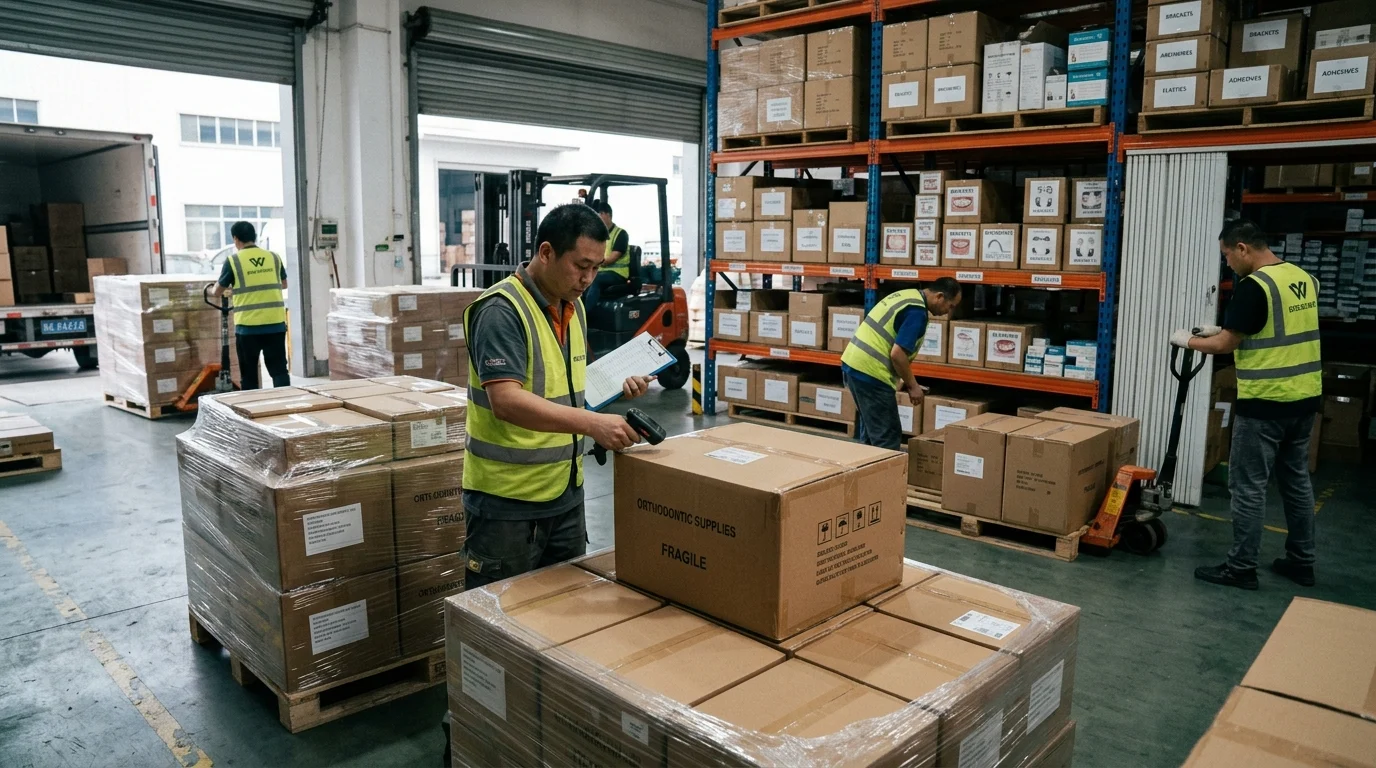
The ultimate supplier selection transcends mere unit cost analysis. A sustainable partnership integrates clinical preferences with reliable procurement frameworks tailored to the specific scale, cash flow, and storage capacity of the dental enterprise.
Balancing price, consistency, and clinician preference
Clinician adoption is critical; forcing a switch to a lower-cost bracket system that increases wire-bending time or extends treatment duration will quickly negate any procurement savings. Procurement managers must weigh the 20% to 30% potential savings of factory-direct sourcing against the consistency and ease of use of the product.
Defect rates must be contractually capped, typically at less than 1.5% of total volume, with clear return merchandise authorization (RMA) policies established for non-conforming batches. A supplier’s willingness to replace defective goods swiftly is a primary indicator of long-term reliability.
Procurement models for single-site and multi-site clinics
Single-site practices often benefit from hybrid procurement models, utilizing domestic distributors for volatile, short-shelf-life items while importing bulk staples like molar bands and NiTi archwires directly to maximize savings without overwhelming storage rooms.
Conversely, Dental Support Organizations (DSOs) and multi-site clinics can leverage central warehousing. By consolidating orders, multi-site networks can easily meet the $10,000 to $20,000 minimum order values required for optimal factory pricing tiers, efficiently distributing inventory across their clinical network while standardizing care quality.
Key Takeaways
- The most important conclusions and rationale for dental consumables factory China
- Specs, compliance, and risk checks worth validating before you commit
- Practical next steps and caveats readers can apply immediately
Frequently Asked Questions
What orthodontic consumables should a clinic never run out of?
Keep core brackets, buccal tubes, arch wires, elastics, power chains, ligature ties, and bonding materials at all times. These items drive routine adjustments and bonding appointments.
How much safety stock should clinics keep when sourcing from a dental consumables factory in China?
Plan 60 to 90 days of safety stock. This helps cover 21 to 35 day sea freight lead times and reduces treatment delays from stockouts.
What should buyers check before choosing an orthodontic manufacturer like Denrotary?
Verify CE, FDA, and ISO13485 credentials, product traceability, material specs, and manufacturing consistency. Also confirm stable output capacity for repeat orders.
Which Denrotary products are best for high-turnover orthodontic clinics?
Self-ligating brackets, monoblock buccal tubes, arch wires, and latex-free power chains are practical choices. They support fast chairside workflows and frequent replenishment needs.
Why buy directly from a dental consumables factory in China instead of local distributors?
Direct factory sourcing can cut unit costs by about 30% to 45%. It works best when clinics standardize SKUs and forecast demand accurately.
Post time: Apr-22-2026