

Introduction
Choosing an orthodontic elastic supplier affects far more than routine purchasing. Product consistency, force accuracy, latex quality, and packaging reliability all influence treatment predictability, patient compliance, and day-to-day clinic efficiency. This overview highlights leading orthodontic elastics manufacturers for dental clinics and explains the criteria that matter most when comparing them, from quality control and certifications to SKU range, private labeling, and supply stability. By the end, readers will have a clearer basis for evaluating suppliers that support both clinical performance and operational needs.
Why the right orthodontic elastic supplier matters
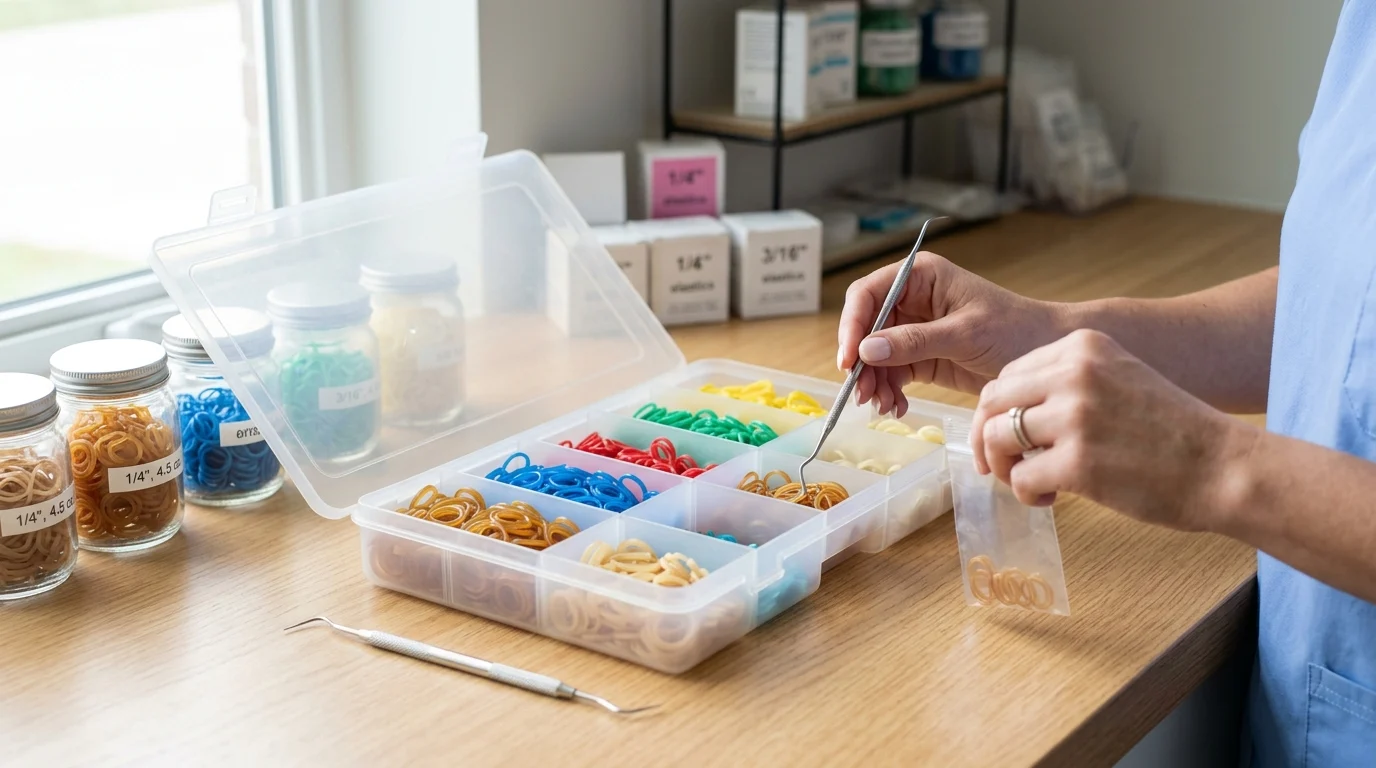
Orthodontic elastics, including intraoral bands and ligatures, are fundamental components in corrective dentistry, providing the necessary directional forces to align jaws and teeth. Because these materials are used daily by patients and practitioners alike, selecting a reliable orthodontic elastic supplier is a critical operational decision for any dental clinic.
A clinic’s choice of manufacturer directly impacts clinical outcomes, overhead costs, and inventory stability. Partnering with a manufacturer that adheres to strict production tolerances ensures that treatment plans progress as expected, while poor-quality elastics can lead to extended treatment times and patient dissatisfaction.
Product consistency and patient compliance
The primary function of an orthodontic elastic is to deliver a specific, continuous force—typically measured in ounces (e.g., 2.5 oz, 3.5 oz, 4.5 oz, and 6.5 oz). If a manufacturing batch deviates by more than 10% to 15% from its labeled force rating, the biological response of the periodontal ligament is altered, leading to unpredictable tooth movement.
Patient compliance is notoriously fragile in orthodontic treatments. If elastics frequently snap during application or lose their elasticity within hours, patients are less likely to wear them as prescribed. High-quality manufacturing minimizes these defects, ensuring the bands remain intact and functional between patient changes.
Chairside efficiency and treatment outcomes
In a high-volume clinical setting, chairside efficiency is paramount. Orthodontists and dental assistants rely on ligatures and chains that stretch without breaking and hold their shape during application. A defect rate exceeding 2% out of the packaging can cause significant delays during routine adjustments.
Consistent elasticity also translates to predictable treatment timelines. When force degradation occurs at a uniform, tested rate, orthodontists can accurately schedule follow-up appointments, maximizing clinic throughput and improving overall treatment outcomes.
Commercial and supply risks
Beyond clinical performance, the commercial reliability of a supplier dictates the operational health of a practice. A mid-sized orthodontic clinic can consume upwards of 50,000 elastics per month. Any interruption in the supply chain can immediately bottleneck daily operations.
Supply stockouts often force clinics to purchase emergency inventory at premium prices or substitute with unverified brands, which introduces clinical variables. Establishing a robust partnership with a primary manufacturer mitigates these risks, securing guaranteed lead times and stabilized pricing structures even during broader market disruptions.
How to compare orthodontic elastic suppliers
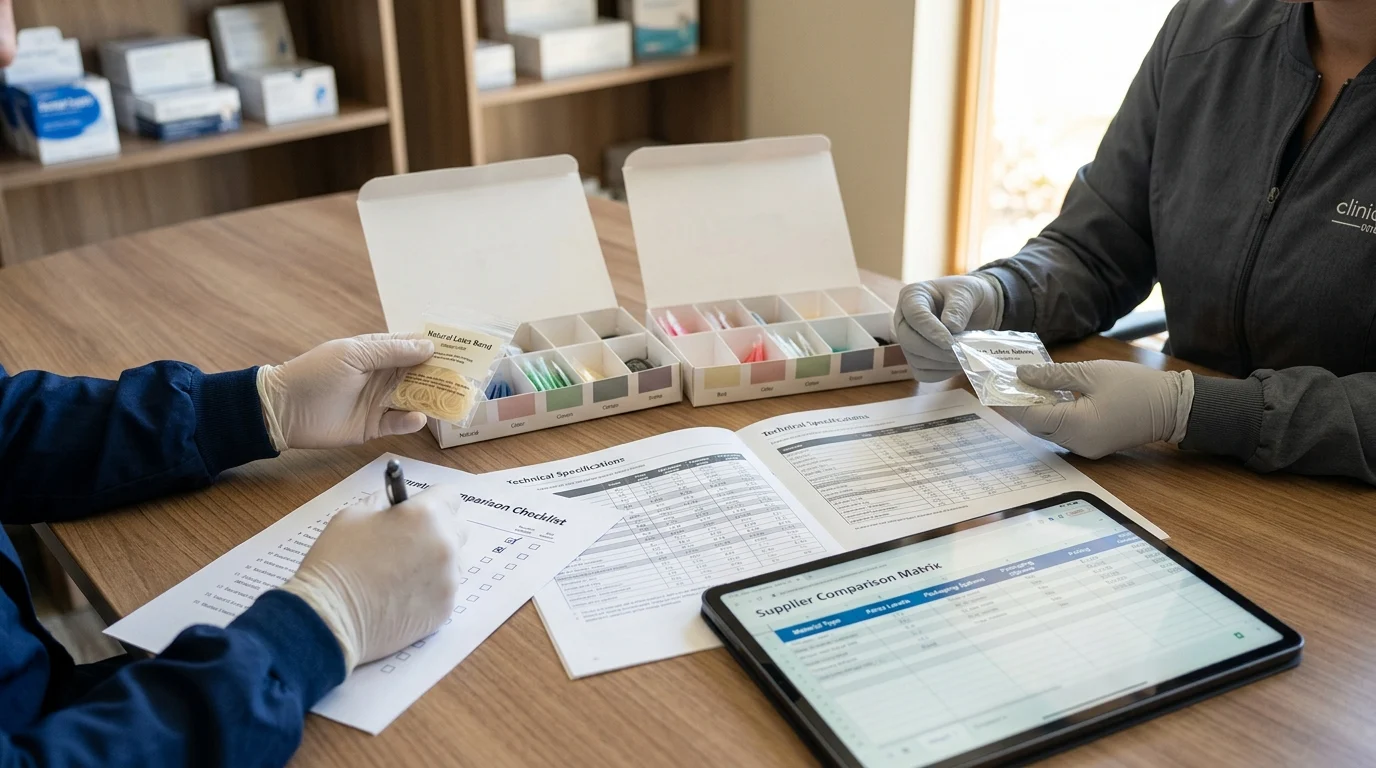
Evaluating potential manufacturing partners requires a methodical approach that goes beyond basic pricing. Clinics must scrutinize technical specifications, material options, and the logistical support structures that a supplier can provide.
A comprehensive comparison ensures that the selected vendor can meet the specific clinical preferences of the practice while scaling alongside the clinic’s growth.
Key product specifications
Orthodontic elastics are generally manufactured from surgical-grade natural rubber latex or synthetic polyurethane (latex-free). Suppliers must provide exact specifications regarding inner diameters—commonly ranging from 1/8 inch to 5/16 inch—and corresponding force levels.
Wall thickness and cut precision are equally important. Poorly cut bands with jagged edges create stress concentrations, leading to premature snapping. High-tier suppliers utilize precision die-cutting machinery to ensure a smooth, uniform profile across millions of units.
| Specification | Natural Rubber Latex | Polyurethane (Latex-Free) |
|---|---|---|
| Force Decay | Low (Maintains force longer) | Moderate (Requires more frequent changing) |
| Biocompatibility | Risk of latex allergy | Hypoallergenic (Safe for all patients) |
| Tear Resistance | High | Medium |
| Moisture Absorption | Very Low | Slight absorption in oral environment |
Service and support factors
Service parameters dictate the day-to-day ease of working with a supplier. Clinics must evaluate Minimum Order Quantities (MOQs); while direct manufacturers may require MOQs of 1,000 bags per size, specialized dental distributors might allow orders of just 50 bags.
Lead times are another crucial factor. Domestic suppliers may offer 3-to-7-day delivery, whereas overseas manufacturers might require 30 to 45 days. Clinics must also assess the supplier’s return policies and willingness to replace defective batches without administrative friction.
Using a comparison table
To objectify the selection process, procurement managers should utilize a weighted comparison matrix. This involves scoring suppliers on factors such as unit cost, ISO certifications, material variety, and historical on-time delivery rates.
By reviewing the available products and plotting them on a comparison table, clinics can visually identify which supplier offers the best balance of clinical precision and operational flexibility.
Compliance and quality standards to verify
Because orthodontic elastics remain in the oral cavity for extended periods, they are classified as medical devices and are subject to stringent regulatory oversight. Verifying a supplier’s adherence to international quality standards is non-negotiable.
Ignoring compliance checks exposes the clinic to legal liabilities and puts patient health at risk due to potential toxicity or severe allergic reactions.
Material safety and biocompatibility
Orthodontic elastics must pass rigorous biocompatibility testing, primarily governed by the ISO 10993 standard. This ensures that the materials do not leach harmful chemicals or induce cytotoxicity, sensitization, or oral mucosal irritation.
For latex products, manufacturers must strictly control extractable protein levels to minimize the risk of anaphylaxis. Latex-free alternatives must be formulated from medical-grade polymers free of plasticizers like BPA or phthalates, which are restricted in many jurisdictions.
Certifications and traceability
A reputable manufacturer should hold an active ISO 13485 certification, which is the internationally recognized quality management standard for medical devices. Additionally, products sold in specific regions must carry appropriate clearances, such as FDA Class II registration in the United States or CE marking in Europe.
Traceability is equally critical. Every batch of elastics must be stamped with a unique lot number. In the event of a product recall or a cluster of clinical failures, traceability allows the clinic and the manufacturer to isolate the defective batch, typically within a 24-to-48-hour window.
Shelf life and packaging controls
Orthodontic elastics are sensitive to environmental factors and degrade over time. The industry standard shelf life for natural latex elastics is roughly 18 to 36 months when stored in a climate-controlled environment between 15°C and 25°C.
Suppliers must utilize opaque, airtight packaging to shield the elastics from ultraviolet (UV) light and ozone, both of which accelerate polymer cross-linking degradation. Clinics should reject shipments that arrive in damaged, transparent, or unsealed packaging, as the integrity of the force levels will likely be compromised.
Sourcing and supply management for dental clinics
Effective sourcing bridges the gap between manufacturing output and clinical application. Developing a streamlined supply management strategy reduces overhead costs and prevents the clinical disruptions associated with inventory shortages.
Whether a clinic operates a single chair or functions as a massive network, understanding the logistics of procurement is essential for maintaining a profitable practice.
Direct manufacturers vs distributors
Purchasing directly from a manufacturer often yields cost savings of 15% to 30% compared to retail pricing. However, this route generally requires bulk purchasing, tying up capital in inventory. Direct relationships are highly beneficial for large clinics with predictable consumption rates.
Conversely, dental distributors act as intermediaries, allowing clinics to consolidate orders for elastics, brackets, and wires into a single shipment. While the per-unit cost is higher, the flexibility of lower MOQs and the convenience of next-day shipping make distributors attractive for smaller practices.
Supplier qualification and sample testing
Before committing to a long-term contract, clinics should request sample packs from short-listed suppliers. These samples must undergo rigorous in-house testing to verify manufacturer claims.
A standard clinical test involves stretching the elastic to three times its resting inner diameter for 24 hours. Upon release, the permanent deformation should not exceed 10%. Furthermore, clinicians should evaluate the tactile feel, color stability, and ease of placement using standard orthodontic forceps.
Freight, warehousing, and inventory planning
While orthodontic elastics are lightweight, they are often shipped in high volumes. Clinics must account for freight costs, import duties (if sourcing internationally), and warehousing requirements when calculating the total landed cost.
Implementing a Min/Max inventory system ensures a steady supply. A best practice is to maintain a rolling 3-month buffer stock to absorb any sudden spikes in patient volume or unexpected shipping delays.
| Inventory Strategy | Order Frequency | Buffer Stock Maintained | Ideal Supplier Type |
|---|---|---|---|
| Just-in-Time (JIT) | Weekly / Bi-weekly | 2 to 4 weeks | Local Distributor |
| Bulk Purchasing | Quarterly / Bi-annually | 3 to 6 months | Direct Manufacturer |
| Hybrid Approach | Monthly | 2 months | Regional Wholesaler |
How to choose the best supplier for your clinic
Selecting the final supplier is a strategic decision that aligns the manufacturer’s capabilities with the specific operational blueprint of the dental clinic.
By carefully mapping clinic requirements to supplier profiles, practice managers can establish long-term partnerships that drive both clinical excellence and financial efficiency.
Matching supplier types to clinic needs
A solo practitioner with one or two chairs has vastly different needs compared to a Dental Service Organization (DSO) managing 20 or more locations. Small clinics prioritize flexibility, fast shipping, and low MOQs, making domestic distributors the ideal fit.
DSOs, on the other hand, have the leverage to negotiate annual supply contracts for 1,000,000 or more pieces. These organizations require direct manufacturers capable of custom packaging, centralized billing, and guaranteed price locks over a 12-to-24-month period.
Final decision criteria
The final decision rests on a holistic evaluation of product consistency, regulatory compliance, and logistical reliability. Cost should only be considered after a supplier has met the clinic’s stringent quality thresholds.
Once a suitable manufacturer has been identified and samples have been validated, procurement officers should contact the supplier to formalize a Service Level Agreement (SLA). This agreement should clearly outline delivery schedules, quality guarantees, and terms for managing defective inventory, ensuring a seamless integration into the clinic’s daily workflow.
Further reading:
Key Takeaways
- The most important conclusions and rationale for orthodontic elastic supplier
- Specs, compliance, and risk checks worth validating before you commit
- Practical next steps and caveats readers can apply immediately
Frequently Asked Questions
What should a clinic check first when choosing an orthodontic elastic supplier?
Start with force accuracy, material options, defect rate, and lead time. Ask for tested force ratings, ISO-related quality details, and replacement terms for defective batches.
How can DenRotary help clinics source orthodontic elastics more reliably?
DenRotary offers dental product sourcing support, product range information, and direct contact for ordering or batch questions. Review product specs and confirm delivery timelines before purchasing.
Should a clinic choose latex or latex-free orthodontic elastics?
Use latex for stronger tear resistance and steadier force when appropriate. Choose latex-free polyurethane for patients with latex sensitivity or when a hypoallergenic option is required.
What defect rate is acceptable for orthodontic elastics in daily practice?
Clinics should aim for a packaging defect rate below 2%. Higher failure rates can slow chairside work, increase waste, and reduce patient compliance.
How much inventory should a clinic keep for orthodontic elastics?
Keep at least 30 to 45 days of core sizes and force levels, especially if buying overseas. Add safety stock if monthly usage is high or supplier lead times fluctuate.

Post time: Jun-09-2026