

Introduction
Orthodontic elastomeric ligatures may be small, but they directly affect chairside efficiency, archwire retention, and the consistency of force delivery throughout treatment. Because material quality, elasticity, color stability, and manufacturing reliability can vary significantly between suppliers, choosing the right producer matters for both clinical outcomes and procurement planning. This overview highlights leading elastomeric ligature manufacturers, with attention to product performance, quality standards, and supply capabilities, so readers can better compare options and identify partners suited to orthodontic practices, private-label programs, or distribution needs.
Strategic importance of elastomeric ligatures in orthodontics
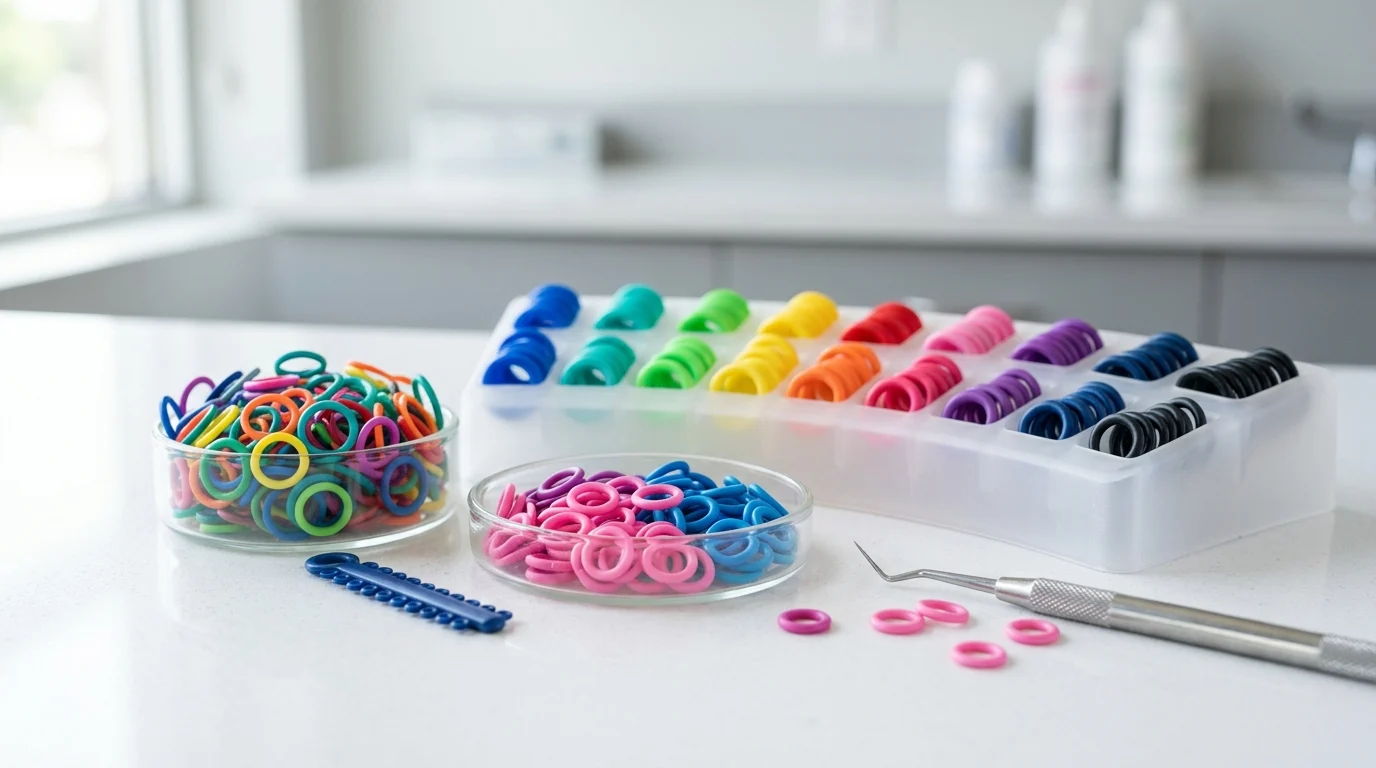
Elastomeric ligatures are fundamental components in fixed orthodontic appliances, serving the critical function of securing the archwire within the bracket slot. While seemingly simple, these small polyurethane rings play an outsized role in generating the biomechanical forces necessary for controlled tooth movement.
Selecting the right manufacturing partner for these consumables dictates not only clinical efficacy but also operational efficiency for orthodontic practices and supply chain stability for dental distributors.
Impact on treatment workflow
The efficiency of an orthodontic clinic relies heavily on predictable chairside workflows. High-quality elastomeric ligatures are designed to stretch easily over bracket tie-wings without tearing, significantly reducing the time orthodontists and assistants spend on wire ligation. In a typical practice seeing 40 to 60 patients daily, saving just one minute per patient during archwire changes yields substantial operational bandwidth.
Furthermore, the clinical performance of these ligatures directly impacts treatment progression. Elastomerics naturally experience force decay in the oral environment, typically losing 50 to 70 percent of their initial force within the first 24 hours of application. Clinicians depend on reliable manufacturers to provide products that maintain sufficient residual force over the standard 4 to 6-week appointment interval.
Demand and market drivers
The global orthodontic supplies market continues to expand, driven by a growing adult demographic seeking aesthetic dental corrections and rising disposable incomes in emerging markets. This expansion fuels the demand for high-volume, reliable consumable manufacturing.
Market drivers also include the aesthetic preferences of patients. Teenagers frequently request vibrant, fade-resistant colors, while adult patients typically prefer clear or silver variants that resist staining from coffee or curry. To understand the breadth of market demands and how top-tier suppliers position themselves, buyers can review the organizational histories of established elastomeric ligatures manufacturers, which highlight the evolution from basic latex bands to advanced synthetic polymers.
How to evaluate elastomeric ligature suppliers
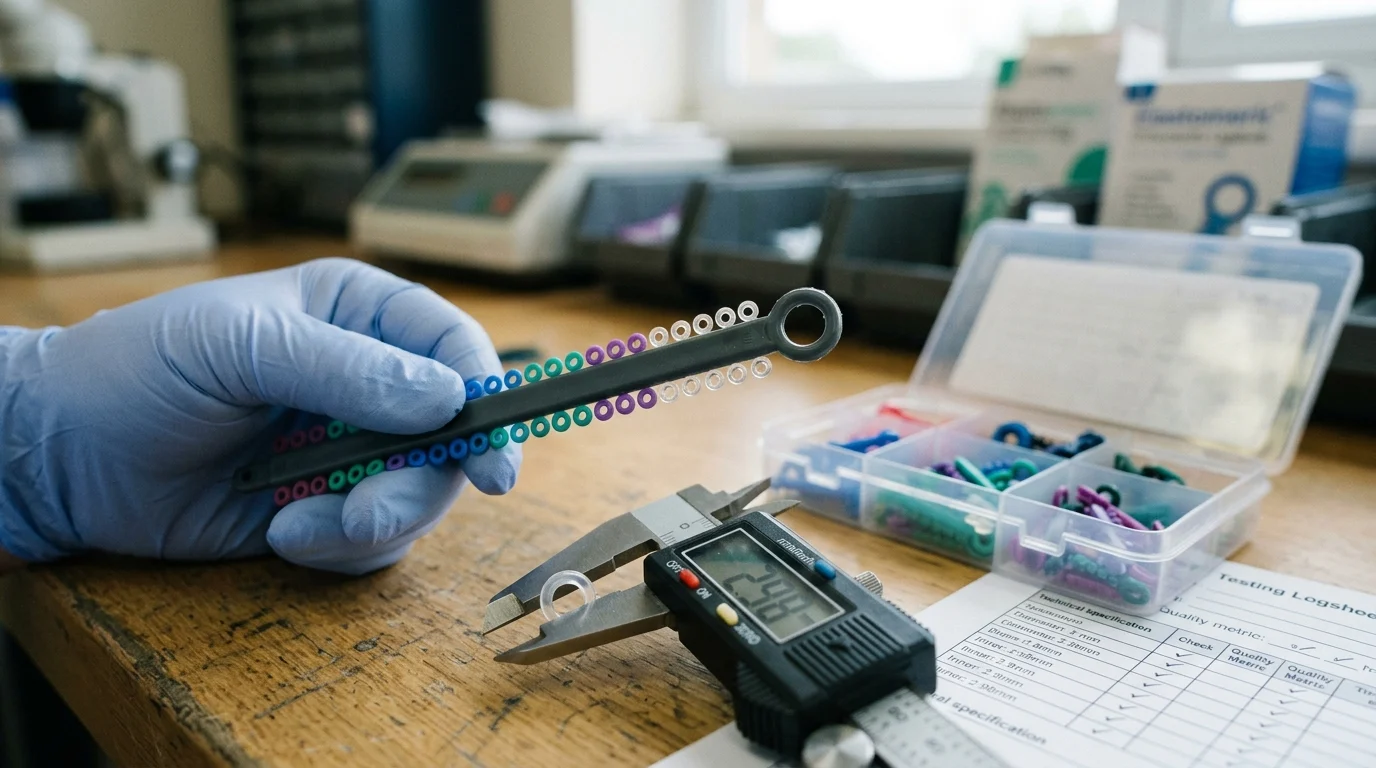
Evaluating potential manufacturing partners requires a deep dive into their material science capabilities and production infrastructure. Buyers must look beyond surface-level pricing to understand the technical specifications that differentiate premium clinical supplies from subpar alternatives.
Key material and performance specifications
Modern ligatures are predominantly manufactured from medical-grade polyurethane rather than natural latex, eliminating the risk of allergic reactions while offering superior elasticity. The dimensional accuracy of these products is paramount. Industry-standard inner diameters typically range from 0.115 to 0.120 inches, with outer diameters engineered to approximately 0.170 inches.
Variance in these micro-dimensions can lead to inconsistent seating of the archwire. A rigorous supplier will demonstrate tight tolerances, ensuring that every batch maintains the exact cross-sectional thickness required for predictable force delivery.
Comparing quality and manufacturer capabilities
The hallmark of a top-tier manufacturer is the precision of their injection molding process. High-quality production facilities utilize advanced hot-runner molds to produce flash-free ligatures. Flash, or excess plastic at the parting line of the mold, can irritate the patient’s oral mucosa and harbor plaque.
When comparing manufacturers, buyers should assess the supplier’s tooling maintenance schedules and automated optical inspection systems. Facilities that implement inline camera inspections are better equipped to catch deformities before the products are packaged and shipped.
Premium vs standard product trade-offs
Purchasing managers frequently face the dilemma of choosing between premium and standard product lines. Premium ligatures utilize advanced polymer blends that resist moisture absorption and degradation from salivary enzymes, whereas standard options may degrade faster, requiring more frequent clinical interventions.
| Specification | Premium Ligatures | Standard Ligatures |
|---|---|---|
| Material Grade | Advanced polyurethane blend | Standard synthetic elastomer |
| Estimated Cost per 1,000 Units | $12.00 – $18.00 | $4.00 – $8.00 |
| Force Retention (at 28 Days) | > 45 percent | < 30 percent |
| Color Stability | High (stain resistant) | Low (prone to rapid yellowing) |
Understanding these trade-offs allows clinics and distributors to align their purchasing strategies with their target market, balancing upfront cost savings against long-term clinical reliability.
Compliance and manufacturing quality controls
Because orthodontic ligatures remain in the oral cavity for extended periods, they are strictly regulated as medical devices. Partnering with a manufacturer that adheres to stringent quality control and international compliance standards is non-negotiable for risk mitigation.
Regulatory and documentation requirements
Depending on the target market, manufacturers must hold specific certifications. In the United States, elastomeric ligatures are generally classified as Class I or Class II medical devices requiring FDA registration. For the European market, compliance with the Medical Device Regulation (MDR EU 2017/745) is mandatory.
Buyers should demand comprehensive documentation, including Declarations of Conformity and ISO 13485 certification, which validates the manufacturer’s quality management system. Examining a supplier’s catalog of elastomeric ligatures can provide insight into their compliance labeling and the breadth of their approved regulatory profiles.
Sterilization, traceability, and biocompatibility
Biocompatibility is critical for any intraoral product. Manufacturers must conduct rigorous testing, such as ISO 10993-5 for cytotoxicity and ISO 10993-10 for sensitization, to ensure the polymers do not leach harmful chemicals into the patient’s saliva.
Additionally, traceability protocols must be embedded in the production process. Top manufacturers assign unique lot numbers to every batch, linking the final product back to the raw polymer resin used. Properly manufactured and packaged ligatures typically feature a validated shelf life of 36 months, provided they are stored away from direct ultraviolet light and extreme temperatures.
Sourcing strategies for distributors, clinics, and OEM buyers
Developing a robust supply chain requires a tailored sourcing strategy that accounts for the buyer’s operational scale. Whether acting as a regional distributor, a large Dental Service Organization (DSO), or an OEM brand, understanding the logistical parameters of a supplier is essential.
Supplier qualification steps
The qualification process should begin with a comprehensive factory audit, whether conducted virtually or via a third-party inspection agency. Following the audit, buyers must request sample batches for clinical validation.
A standard qualification protocol involves testing 20 to 50 sample packs across various clinics to evaluate stretch resistance, color stability, and ease of use. Only after passing these clinical trials should a buyer move to negotiate long-term supply agreements.
Pricing, shipping, and inventory planning
Inventory planning is heavily influenced by a manufacturer’s Minimum Order Quantities (MOQs) and production lead times. Factory-direct orders often require MOQs ranging from 10,000 to 50,000 packs to justify custom production runs, especially for private-label branding.
Standard lead times for bulk manufacturing typically span 4 to 8 weeks. Distributors must factor these timelines, alongside international shipping and customs clearance durations, into their safety stock calculations to prevent stockouts of popular colors like clear, silver, and black.
Direct factory vs distributor vs OEM sourcing
Buyers must choose a sourcing model that aligns with their capital constraints and customization requirements. Direct factory sourcing offers the lowest per-unit cost but demands high upfront capital. Distributors provide agility, while OEM contracts allow for brand differentiation.
| Sourcing Model | Typical MOQ | Average Lead Time | Customization Level |
|---|---|---|---|
| Direct Factory | 10,000+ packs | 6-8 weeks | High (OEM/ODM branding) |
| Regional Distributor | 100+ packs | 1-2 weeks | None (Off-the-shelf) |
| Contract OEM | 25,000+ packs | 8-12 weeks | Very High (Custom molds and colors) |
To explore the best fulfillment model for specific volume requirements, procurement teams should directly engage with the supplier’s sales engineers. Initiating discussions regarding elastomeric ligatures logistics early in the process ensures alignment on shipping terms and inventory staging.
Decision framework for final supplier selection
The final stage of procurement involves synthesizing the collected data into a cohesive decision framework. Selecting a manufacturer is a long-term commitment, and the chosen partner must align with both current needs and future growth trajectories.
Matching suppliers to buyer needs
A supplier’s capabilities must match the buyer’s strategic goals. A solo orthodontic clinic prioritizes fast delivery and low MOQs, making domestic distributors the ideal choice. Conversely, a multi-national DSO or a dental supply brand benefits from the economies of scale provided by direct factory partnerships.
Evaluating the manufacturer’s product roadmap is also beneficial. Suppliers investing in eco-friendly elastomers or antimicrobial formulations can provide buyers with a competitive edge in an increasingly saturated market.
Criteria to reduce switching risk
Transitioning to a new manufacturer carries inherent risks, including potential clinical pushback if the new ligatures feel different during application. To mitigate this, buyers should implement a phased rollout, introducing the new products alongside the legacy supplies.
Contractual safeguards are equally important. Procurement agreements should define acceptable quality limits (AQL), establishing strict defect rate thresholds. A reliable manufacturer will confidently agree to a defect rate threshold of less than 0.5 percent, ensuring that the vast majority of delivered ligatures perform flawlessly in the clinical setting.
Further reading:
Key Takeaways
- The most important conclusions and rationale for elastomeric ligatures
- Specs, compliance, and risk checks worth validating before you commit
- Practical next steps and caveats readers can apply immediately
Frequently Asked Questions
What should I check first when comparing elastomeric ligature manufacturers?
Start with medical-grade polyurethane, dimensional consistency, force retention, and flash-free molding. Also verify quality inspections, regulatory compliance, and batch traceability before comparing price.
Why does force retention matter for elastomeric ligatures?
Ligatures lose force quickly in the mouth. Better force retention helps maintain archwire engagement over typical 4 to 6-week visits, reducing inconsistent tooth movement and extra chairside adjustments.
How can I tell if a ligature supplier offers reliable quality control?
Ask about inline optical inspection, tooling maintenance, lot testing, and tolerance control. Reliable suppliers should provide consistent batch data and documentation for each production run.
Are premium elastomeric ligatures worth the higher cost?
Usually yes for clinics prioritizing durability, stain resistance, and fewer replacements. Premium options often keep force longer and look better, which can improve workflow and patient satisfaction.
Can DenRotary help with sourcing orthodontic elastomeric ligatures?
Yes. DenRotary supplies orthodontic consumables and can support product selection, bulk purchasing, and manufacturer evaluation for clinics and distributors seeking dependable elastomeric ligatures.

Post time: Jun-14-2026