

Introduction
Choosing an orthodontic wire factory is about more than unit price: it affects product consistency, clinical performance, customization options, and long-term supply stability. For dental brands, distributors, and private-label programs, OEM capability is often the deciding factor between a generic catalog product and a differentiated archwire line with clear market value. This article outlines what sets leading manufacturers apart, from material control and coating processes to MOQ flexibility, quality systems, and export experience. By the end, readers will have a practical framework for comparing factories and identifying partners that can support both reliable production and brand-specific specifications.
Why the Right Orthodontic Wire Factory Matters
Selecting a highly capable orthodontic wire factory is a critical decision for dental supply brands, distributors, and large clinical networks. The quality of the archwire directly influences clinical outcomes, patient comfort, and the overall reputation of the brand supplying the materials. A strategic manufacturing partnership ensures that clinical products meet rigorous biomechanical standards while maintaining commercial viability.
OEM Capabilities and Product Differentiation
Original Equipment Manufacturer (OEM) capabilities allow dental brands to create proprietary archwire specifications rather than relying on standard, off-the-shelf products. An advanced factory can customize arch forms, adjust transformation temperatures for thermally activated wires, and apply specialized aesthetic coatings like rhodium or Teflon. Typical Minimum Order Quantities (MOQs) for highly customized OEM runs range from 5,000 to 10,000 units per specification, enabling brands to differentiate their product lines in a crowded market.
Margin Impact and Supply Reliability
Direct factory sourcing significantly alters the financial landscape for dental distributors. By bypassing intermediaries, brands can improve gross margins by 20% to 35%, depending on the volume and alloy type. Furthermore, partnering directly with the source enhances supply chain reliability. A robust factory partnership reduces lead times from an industry average of 60 to 90 days down to 30 to 45 days, minimizing the risk of stockouts for high-velocity items like standard 0.014″ and 0.016″ Nickel Titanium (NiTi) wires.
Market Trends Shaping Supplier Evaluation
The orthodontic market is currently shaped by a rising demand for aesthetic and highly efficient biomechanical solutions. Sales of tooth-colored and coated archwires are growing at an estimated 8% Compound Annual Growth Rate (CAGR). Consequently, evaluating a supplier now requires looking beyond basic stainless steel production to assess their capacity for handling advanced, aesthetic-focused materials and complex hybrid alloys without compromising the wire’s sliding mechanics or friction coefficients.
Orthodontic Wire Factory Capabilities
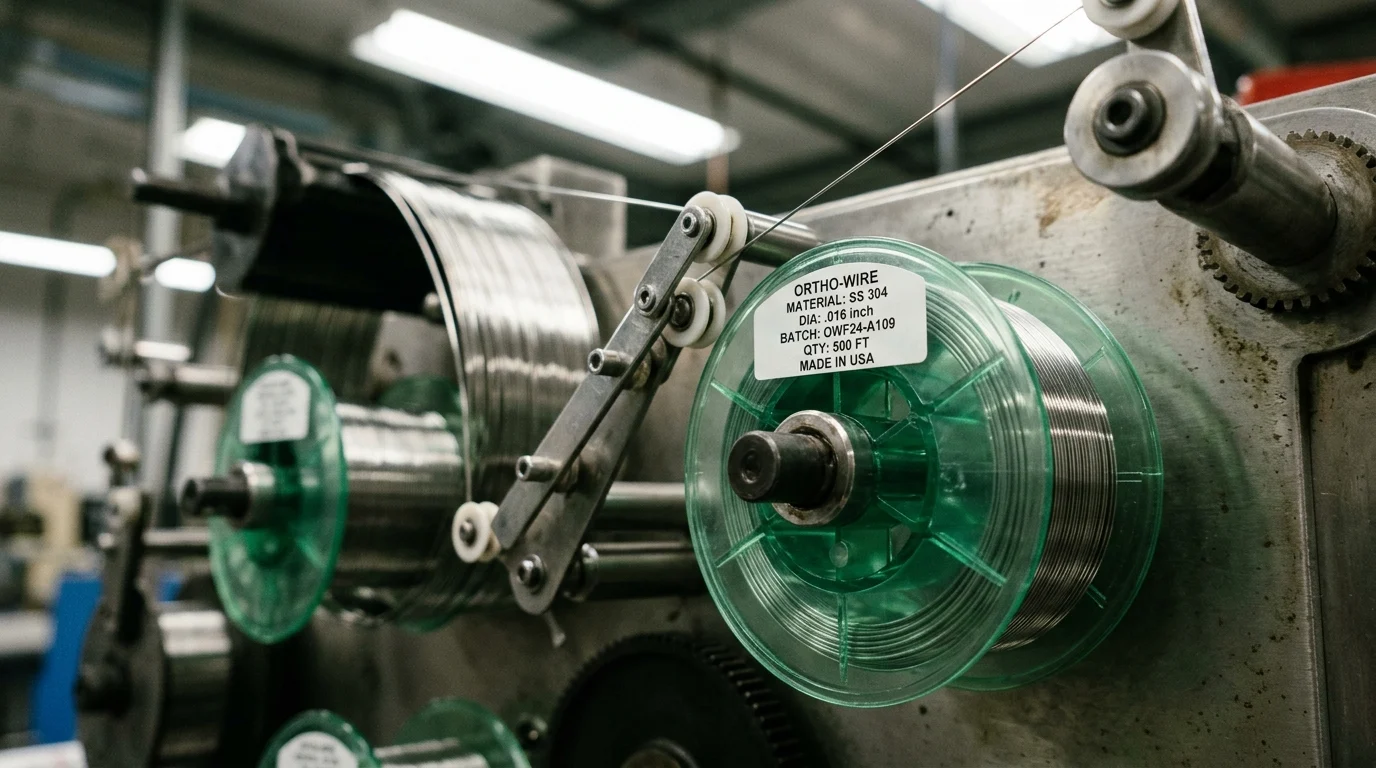
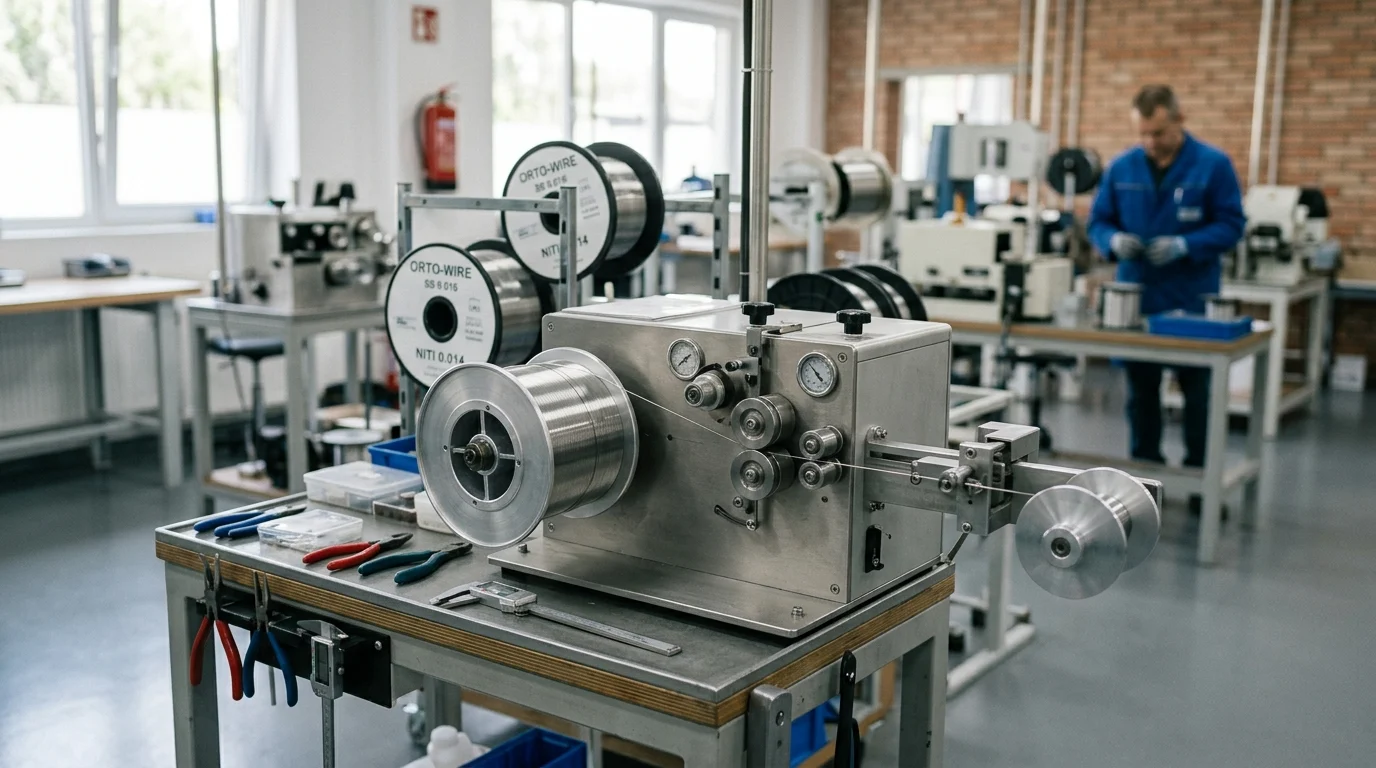
A top-tier manufacturing facility must possess a comprehensive suite of metallurgical and engineering capabilities. The ability to process diverse alloys into precise, medically safe orthodontic instruments separates premier factories from lower-tier metalworking shops.
Types of Archwires and Specialty Wires
Modern facilities produce a wide array of archwires, including superelastic NiTi, heat-activated NiTi, Stainless Steel (SS), Beta-Titanium (TMA), and Copper NiTi (CuNiTi). These wires are manufactured in various cross-sections, ranging from round wires with diameters as small as 0.012 inches for initial leveling, to heavy rectangular wires measuring 0.021 x 0.025 inches for final detailing and torque control. Specialty wires, such as Reverse Curve of Spee or multi-strand braided wires, require specialized drawing and forming equipment.
Manufacturing Processes, Tolerances, and Finishing
The manufacturing process involves precision wire drawing, proprietary heat treatments to set memory shapes, and rigorous surface finishing. Electropolishing and mechanical tumbling are critical to achieving a high-gloss, low-friction surface. High-quality factories maintain strict dimensional tolerances of ±0.0005 inches. Detailed product specifications and laser-etched midline markings must be executed with absolute precision to ensure the clinician can accurately place the wire within the bracket slot.
Material Comparison for Nickel Titanium and Stainless Steel
Understanding the metallurgical properties of different wires is essential when assessing factory output. The table below highlights the primary differences between the most common orthodontic wire materials.
| Material | Yield Strength | Stiffness (Modulus) | Formability | Clinical Phase |
|---|---|---|---|---|
| Nickel Titanium (NiTi) | Low (100-300 MPa) | Low | Poor | Initial alignment & leveling |
| Stainless Steel (SS) | High (1000+ MPa) | High | Excellent | Finishing, detailing & space closure |
| Beta-Titanium (TMA) | Medium (800 MPa) | Medium | Good | Intermediate mechanics & detailing |
How to Compare Orthodontic Wire Factories
Evaluating potential suppliers requires a systematic approach to ensure the chosen factory aligns with the buyer’s quality standards, regulatory requirements, and budgetary constraints. A structured comparison prevents costly supply chain disruptions and compliance failures.
Key Supplier Comparison Criteria
Key criteria for supplier comparison must include stringent quality management certifications. An acceptable factory must hold ISO 13485 certification for medical device manufacturing. Additionally, depending on the target market, the factory must possess FDA 510(k) clearances or CE marking under the EU Medical Device Regulation (MDR). Top-tier manufacturers consistently demonstrate a defect rate of less than 0.5% and provide comprehensive batch traceability from raw ingot to finished archwire.
Regional Sourcing Differences
Regional differences play a significant role in sourcing strategies. Asian factories often provide a 15% to 25% cost advantage on standard NiTi and stainless steel wires due to economies of scale and mature supply chains. Conversely, some European and North American facilities specialize in niche, highly complex proprietary alloys or offer lower MOQs for experimental product lines, albeit at a premium unit cost. Buyers must weigh these regional logistics, shipping costs, and import tariffs against the baseline unit price.
Factory Profile Comparison Table
To streamline the evaluation process, buyers can categorize factories into different tiers based on their operational scale and capabilities.
| Factory Tier | Typical MOQ | Key Certifications | Customization & OEM Level | Average Lead Time |
|---|---|---|---|---|
| Tier 1 (Enterprise) | >10,000 units | ISO 13485, FDA, CE | Full OEM/ODM, custom alloys | 30 – 45 days |
| Tier 2 (Mid-Market) | 2,000 – 5,000 units | ISO 13485, CE | Moderate (standard shapes/sizes) | 45 – 60 days |
| Tier 3 (Local/Niche) | <1,000 units | Local regulatory only | Low (off-the-shelf only) | 15 – 30 days |
Sourcing and Qualification Process
The sourcing and qualification process is a multi-stage effort designed to mitigate regulatory, financial, and clinical risks. Rushing this process can lead to severe product recalls and damage to a brand’s reputation.
Step-by-Step Supplier Vetting
A rigorous supplier vetting cycle typically spans 3 to 6 months. It begins with a Request for Quotation (RFQ) and initial document verification, where buyers assess the validity of the factory’s ISO certificates. This is followed by a preliminary physical or virtual factory audit to inspect the drawing machinery, heat-treatment ovens, and quality control labs. Initiating this vetting process requires direct communication with the factory to establish technical expectations and audit schedules.
Sample, Packaging, Labeling, and Sterilization Review
Sample evaluation is a critical phase. Buyers must request production-grade samples to test for transformation temperatures (using Differential Scanning Calorimetry) and tensile strength. Concurrently, packaging and sterilization protocols must be reviewed. Archwires are typically packaged in medical-grade paper/plastic pouches. If the wires are supplied sterile, the factory must validate its sterilization process, commonly utilizing gamma irradiation at a standard dose of 25 kGy to ensure a Sterility Assurance Level (SAL) of 10^-6.
Common Contract Failure Points
Common contract failure points often stem from poorly defined specifications and hidden costs. Tooling fees for custom arch forms can range from $1,500 to $5,000, which are sometimes omitted from initial quotes. Another frequent failure point is inconsistent raw material sourcing; a factory might substitute premium 304V vacuum-melted stainless steel with standard commercial-grade 304 steel, drastically reducing the wire’s fatigue resistance. Contracts must explicitly lock in raw material sources and stipulate penalties for unauthorized substitutions.
How to Choose the Best Orthodontic Wire Factory
Finalizing a partnership requires strategic alignment between the buyer’s market positioning and the factory’s core competencies. The best factory is not always the cheapest, but rather the one that offers the most reliable balance of quality and cost.
Price, Consistency, Customization, and Compliance Trade-Offs
Buyers face inevitable trade-offs between price, consistency, customization, and compliance. For instance, securing a lower piece price of $0.60 instead of $1.10 might come at the expense of wider dimensional tolerances or higher variance in the NiTi transformation temperature (e.g., ±3°C instead of ±1°C). For brands targeting premium clinical markets, paying the higher unit cost is mandatory to ensure the predictable force delivery that orthodontists demand.
Supplier Scorecards and Negotiation
To finalize the selection, buyers should implement a weighted supplier scorecard. A standard scorecard might allocate 40% to Quality/Compliance, 30% to Pricing, 20% to Lead Time/Reliability, and 10% to Communication. During negotiations, buyers should establish Service Level Agreements (SLAs) targeting a 98% on-time delivery rate and a maximum 1% return rate for defects. By utilizing these metrics, supply chain managers can confidently select an orthodontic wire factory capable of supporting long-term commercial growth.
Further reading:
Key Takeaways
- The most important conclusions and rationale for orthodontic wire factory
- Specs, compliance, and risk checks worth validating before you commit
- Practical next steps and caveats readers can apply immediately
Frequently Asked Questions
What OEM options should an orthodontic wire factory offer?
Look for custom arch forms, wire sizes, transformation temperatures, coatings like rhodium or Teflon, branding, and private-label packaging.
What MOQ is typical for custom orthodontic wire OEM orders?
For highly customized archwires, many factories start around 5,000 to 10,000 units per specification, depending on alloy and packaging needs.
How can direct factory sourcing improve margins and lead times?
Buying from a factory can improve margins by roughly 20% to 35% and shorten lead times to about 30 to 45 days for common wire sizes.
Which wire types should a reliable orthodontic wire factory produce?
A strong supplier should handle NiTi, heat-activated NiTi, stainless steel, Beta-Titanium, CuNiTi, and specialty forms like reverse curve or braided wires.
How can buyers evaluate orthodontic wire quality on DenRotary?
Check DenRotary product specifications, available wire materials, size tolerances, surface finishing, OEM support, and request samples before placing bulk orders.

Post time: Jun-18-2026