

Introduction
Buccal tubes have become a practical alternative to traditional molar bands, helping orthodontic teams reduce chair time, simplify bonding, and improve patient comfort during appliance placement. Their role extends beyond convenience: design features, bond strength, wire control, and tube selection all influence treatment efficiency and clinical reliability. This article explains how buccal tubes fit into modern orthodontic workflows, where they offer clear advantages, and what factors matter when choosing and placing them. By the end, readers will have a concise understanding of their clinical value, common applications, and the tradeoffs that shape everyday use in contemporary practice.
Why Buccal Tubes Matter in Modern Orthodontic Practice
The transition from traditional molar banding to direct-bonded molar attachments represents one of the most significant workflow optimizations in modern orthodontics. Historically, securing the posterior dentition required the use of circumferential stainless steel bands, a process that necessitated the placement of orthodontic separators and multiple patient visits. Today, the adoption of advanced direct-bond molar attachments allows clinicians to secure the archwire directly to the buccal surface of the molar, streamlining the initial bonding phase.
This shift is driven by measurable improvements in clinical efficiency and patient comfort. Direct bonding eliminates the need for separation appointments, effectively reducing the initial appliance setup time by 15 to 20 minutes per patient. Furthermore, modern designs mitigate the periodontal risks associated with subgingival band seating, offering a more hygienic solution that preserves the integrity of the interproximal papilla while maintaining the mechanical control necessary for complex tooth movements.
Impact on chair time and bonding efficiency
The most immediate advantage of direct-bonded molar attachments is the drastic reduction in chair time. By bypassing the separation phase and the trial-fitting of bands, practitioners can bond a full arch, including molars, in a single continuous protocol. Clinical data indicates that utilizing self-ligating or low-profile attachments can reduce wire-ligation time by up to 30%, allowing for higher patient throughput without compromising the precision of appliance delivery.
Bonding efficiency is further enhanced by the integration of pre-coated adhesive systems and customized base morphologies. When the attachment base accurately mirrors the developmental grooves of the molar, the risk of sliding during the curing process is minimized. This precision ensures that the prescribed torque and angulation are expressed accurately, reducing the need for wire-bending compensations during the finishing stages of treatment.
Best-fit practice models for direct-bond and convertible options
Selecting the appropriate attachment model depends heavily on the specific biomechanical demands of the practice. High-volume clinics focusing on straightforward Class I malocclusions often standardize on single-tube, direct-bond models to maximize efficiency and minimize inventory overhead. These low-profile options offer excellent patient comfort and require minimal manipulation once bonded.
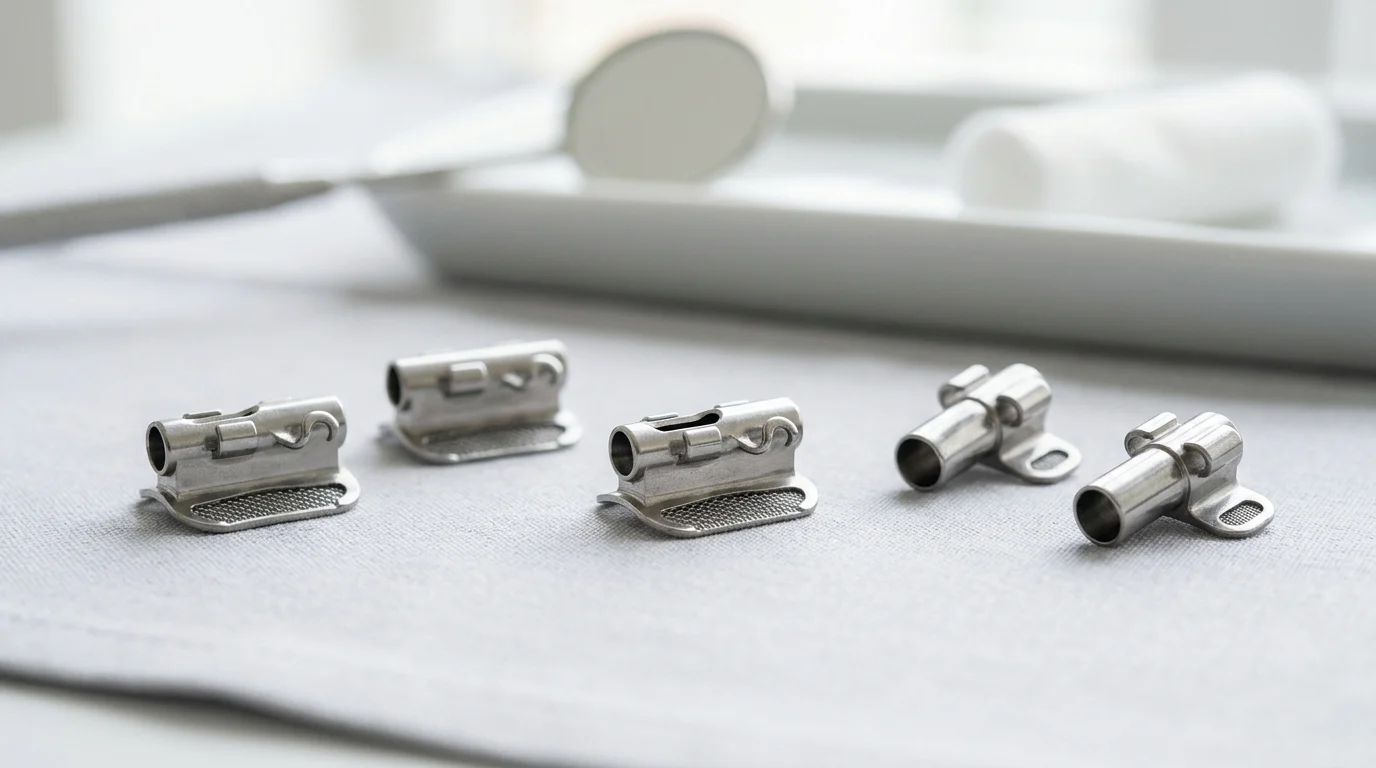
Conversely, practices that frequently manage complex extraction cases, orthognathic surgery preparations, or mixed-dentition interceptive treatments benefit from convertible options. Convertible designs feature a removable cap that transforms the closed slot into an open bracket, facilitating the engagement of heavy rectangular wires or the integration of auxiliary appliances like headgear. Understanding the operational capabilities of various Buccal Tubes allows orthodontists to tailor their supply chain to their dominant clinical methodologies.
How to Evaluate Buccal Tube Specifications
Evaluating the technical specifications of molar attachments is critical for ensuring predictable clinical outcomes. The physical dimensions, material composition, and base engineering directly dictate how well the appliance will withstand the heavy occlusal forces of the posterior segments. Orthodontists must scrutinize slot dimensions—typically either 0.018-inch or 0.022-inch systems—and ensure that the manufacturing tolerances do not compromise the prescribed biomechanics.
Precision in manufacturing is non-negotiable. Slot tolerances should ideally be maintained within ±0.001 inches. Deviations beyond this threshold introduce excessive wire play, which can lead to a loss of torque control and unwanted rotational relapse. Consequently, selecting attachments with rigorous quality control standards is essential for minimizing mid-treatment adjustments.
Base design, fit, and retention features
The base design is the primary defense against bond failure. Modern attachments utilize sophisticated retention mechanisms, most commonly an 80-gauge foil mesh pad or a laser-etched micro-retentive surface. The 80-gauge mesh provides an optimal surface area for adhesive penetration, consistently yielding shear bond strengths between 10 and 15 MPa. This range is strong enough to withstand masticatory forces but remains within the safe threshold to prevent enamel fracture during the debonding phase.
Fit is equally determined by the anatomical contouring of the base. Premium designs feature an indented developmental groove that acts as a physical guide for placement, locking the attachment onto the mesiobuccal cusp of the first or second molar. This anatomical conformity reduces the thickness of the adhesive layer, which in turn minimizes polymerization shrinkage and enhances the overall stability of the bond.
Single, double, and convertible tube trade-offs
The choice between single, double, and convertible configurations involves balancing profile height against mechanical versatility. Single configurations offer the lowest profile, reducing occlusal interference, but limit the use of auxiliary mechanics. Double configurations provide an auxiliary slot for secondary wires or uprighting springs, essential for complex molar protraction.
| Tube Type | Primary Advantage | Clinical Trade-off | Typical Profile Height |
|---|---|---|---|
| Single Non-Convertible | Maximum patient comfort, lowest debond rate | Cannot accept heavy auxiliary wires easily | ~2.0 mm – 2.5 mm |
| Double Non-Convertible | Allows dual-wire mechanics (e.g., overlay wires) | Increased profile, higher risk of food impaction | ~3.0 mm – 3.5 mm |
| Convertible (Single/Double) | Cap can be removed to seat heavy rectangular wires | Cap may accidentally dislodge under heavy forces | ~2.8 mm – 3.6 mm |
Convertible designs offer the highest degree of flexibility, allowing the clinician to drop in a heavy finishing wire without threading it through a closed orifice. However, the convertible cap mechanism introduces a potential failure point if subjected to excessive shearing forces from the opposing dentition.
Material quality, tolerances, and bond-failure risk
Material quality significantly influences both the frictional resistance and the durability of the attachment. High-grade cast stainless steel (such as 17-4 PH) has long been the industry standard due to its high yield strength and resistance to deformation. However, Metal Injection Molding (MIM) technology has revolutionized manufacturing by allowing for smoother contours and highly accurate slot dimensions.
MIM technology can reduce the coefficient of friction by up to 25% compared to traditional casting, facilitating more efficient sliding mechanics during space closure. Furthermore, the metallurgical integrity of MIM components reduces the risk of slot deformation under the torque of heavy stainless steel wires, thereby lowering the overall risk of appliance failure and the subsequent need for emergency replacement appointments.
Cost, Sourcing, and Inventory Planning
Effective inventory management and strategic sourcing of molar attachments are vital components of a profitable orthodontic practice. Because molars endure the highest occlusal forces, the attachments used here require premium engineering, making them one of the more expensive consumable brackets in the clinic. On average, molar attachments can account for 10% to 15% of a practice’s total orthodontic bracket budget.
Balancing the upfront cost of these components with their clinical reliability requires a systematic approach to procurement. Practices must look beyond the unit price and evaluate the total cost of ownership, which includes shipping logistics, supplier reliability, and the financial impact of defective or easily debonded components.
Main cost drivers
The primary cost drivers for molar attachments involve the manufacturing process, material composition, and proprietary design features. Basic cast stainless steel models represent the lower end of the cost spectrum, typically ranging from $2.50 to $5.00 per unit. In contrast, precision-manufactured MIM attachments, particularly those featuring patented self-ligating mechanisms or specialized convertible caps, can range from $10.00 to $15.00 per unit.
Volume purchasing and long-term contracts can mitigate these costs, but clinicians must also factor in the hidden costs of cheap materials. An attachment that saves $3.00 at the point of purchase but suffers from a high rate of base delamination will ultimately cost the practice significantly more in wasted chair time and adhesive materials.
How to assess supplier consistency and support
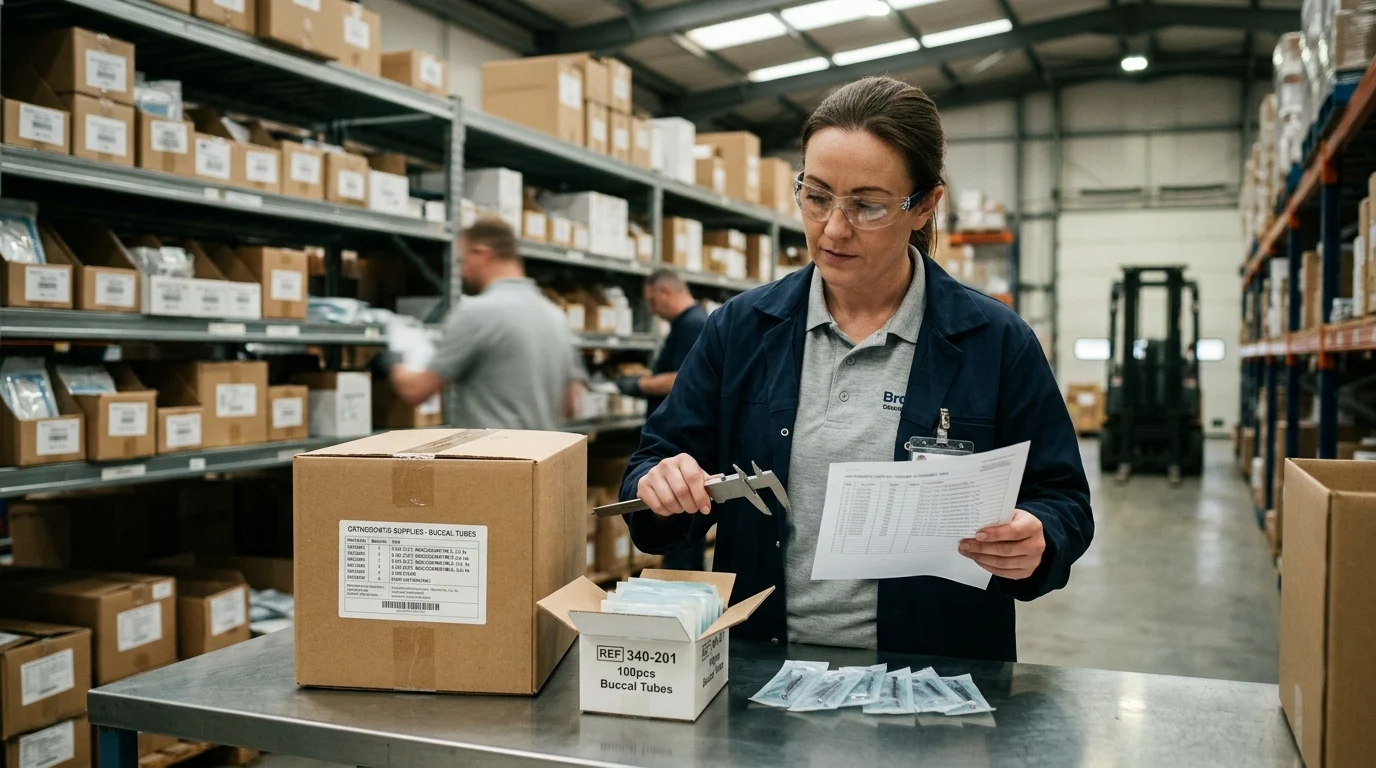
Assessing supplier consistency is just as critical as evaluating the product itself. A reliable supply chain prevents the clinical disruptions associated with backordered prescriptions. When evaluating a vendor, key performance indicators should include a Minimum Order Quantity (MOQ) that aligns with the practice’s cash flow, lead times consistently under 14 days, and a documented defect rate below 0.5%.
Clinicians should also gauge the level of technical support and return policies offered by the distributor. Establishing a direct line of communication for sourcing inquiries regarding Buccal Tubes ensures that any manufacturing anomalies are addressed swiftly, preventing a bad batch from impacting multiple patients.
Inventory steps for standardization
Implementing standardized inventory protocols is the most effective way to control costs and reduce waste. By adopting a Kanban or two-bin inventory system, practices can automate reordering processes and prevent the overstocking of rarely used prescriptions. Standardization involves critically reviewing the practice’s clinical philosophy and consolidating the number of distinct SKUs.
For example, a practice might decide to standardize exclusively on a specific MBT or Roth prescription, thereby reducing the required inventory SKUs by up to 30%. Limiting the variety of torque values and eliminating redundant double-slot attachments for routine cases simplifies the workflow for dental assistants and minimizes the capital tied up in the supply closet.
Clinical Use, Bonding, and Compliance Protocols
The clinical success of molar attachments relies heavily on the strict execution of bonding protocols and adherence to regulatory standards. The posterior segment of the mouth presents a uniquely challenging environment for direct bonding due to limited access, high salivary flow, and the robust musculature of the cheeks and tongue. Consequently, moisture control and precise chemical preparation of the enamel are paramount.
Historically, debonding rates for molar attachments have hovered between 5% and 8%. However, by implementing rigorous isolation techniques and standardized placement protocols, high-performing practices can drive this failure rate down to under 3%. This reduction not only accelerates treatment timelines but also drastically cuts overhead costs associated with emergency visits.
Regulatory, sterilization, and documentation requirements
Orthodontic attachments are classified as Class II medical devices by the FDA and must comply with stringent international standards, such as ISO 13485 and the European Medical Device Regulation (MDR 2017/745). These regulations ensure that the alloys used are biocompatible and free from toxic trace elements that could leach into the oral environment.
Furthermore, practices must adhere to strict sterilization and cross-contamination protocols. While most direct-bond attachments are sold as single-use items, any instruments used during their placement—such as positioning gauges and tweezers—must undergo validated autoclaving processes. Maintaining accurate batch documentation in the patient’s record is also a regulatory necessity, enabling rapid tracing in the rare event of a manufacturer recall.
Bonding and placement steps to reduce debonding
The foundation of a reliable bond is immaculate enamel preparation. The protocol begins with thorough prophylaxis using a non-fluoridated pumice, followed by isolation utilizing dry angles and high-volume evacuation to control parotid gland secretions. The enamel is then etched with 37% phosphoric acid for 15 to 30 seconds, rinsed thoroughly, and dried until a frosty white appearance is achieved.
Applying a moisture-tolerant primer can provide an additional safeguard against minor salivary contamination. During placement, the use of a specialized positioning gauge ensures vertical accuracy—typically measuring 4.0mm or 4.5mm from the mesiobuccal cusp tip, depending on the chosen prescription. Firm pressure must be applied to extrude excess adhesive, which must be meticulously removed with a scaler before light-curing to prevent plaque accumulation and subsequent gingival inflammation.
Managing common complications and replacements
Despite best efforts, bond failures and clinical complications can occur. Managing these efficiently requires a systematic troubleshooting approach to identify the root cause—whether it be moisture contamination, occlusal interference, or inadequate adhesive curing.
| Complication | Primary Cause | Clinical Solution / Mitigation |
|---|---|---|
| Clean Enamel Debond | Moisture contamination during bonding | Enhance isolation (e.g., use cheek retractors with tongue guards); re-etch and use moisture-tolerant primer. |
| Adhesive on Enamel Debond | Heavy occlusal shearing forces | Check occlusion; add posterior bite turbos or bite ramps to disarticulate the molars. |
| Gingival Hypertrophy | Excess flash left around the base | Meticulously scale all flash before curing; emphasize interproximal hygiene to the patient. |
| Wire Slippage | Insufficient retention / broken convertible cap | Replace attachment; consider a non-convertible model if heavy mechanics are not required. |
When a replacement is necessary, the residual adhesive must be carefully removed using a fluted tungsten carbide bur to avoid enamel scarring.
Further reading:
A Practical Framework for Choosing Buccal Tubes
Key Takeaways
- The most important conclusions and rationale for Buccal Tubes
- Specs, compliance, and risk checks worth validating before you commit
- Practical next steps and caveats readers can apply immediately
Frequently Asked Questions
What is the main advantage of direct-bond buccal tubes over molar bands?
They skip separators and band fitting, often saving 15–20 minutes at the initial appointment while improving patient comfort and hygiene.
How do I choose between single, double, and convertible buccal tubes?
Use single tubes for routine Class I cases, double tubes when extra auxiliaries are common, and convertible tubes for extraction, surgery, or mixed-dentition workflows.
Which slot size should a practice select for buccal tubes?
Match the tube to your bracket system: 0.018 for lighter finishing mechanics or 0.022 for broader wire progression and heavier rectangular-wire control.
What base features improve buccal tube bond reliability?
Look for an anatomically contoured base with 80-gauge mesh or laser-etched retention; these help seating accuracy and support strong, safer bond strength.
Where can clinics review buccal tube options from DenRotary?
Clinics can explore orthodontic product options at denrotary.com/products/ and compare company information at denrotary.com/about-us/.

Post time: Jun-19-2026