

Introduction
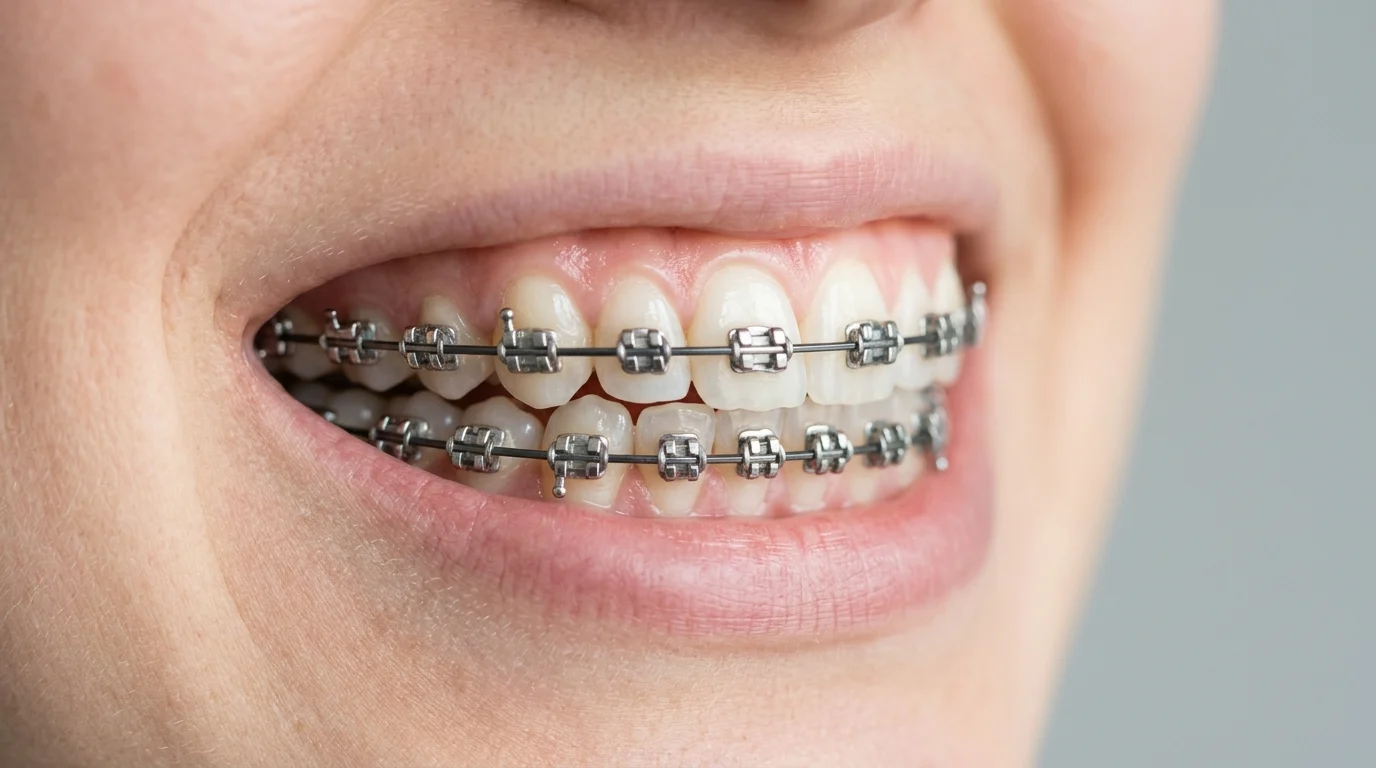
Self-ligating metal braces are a modern type of orthodontic appliance that uses built-in clips or doors to hold the archwire in place instead of elastic ties. That design changes how force is delivered, often reducing friction between the wire and bracket and allowing teeth to move with lighter, more consistent pressure. For patients, this can mean a different treatment experience, including shorter adjustment visits and easier cleaning around the brackets. This article explains what self-ligating metal braces are, how their mechanics differ from traditional braces, and what those differences may mean for comfort, efficiency, and treatment planning.
Why Self-Ligating Metal Braces Are Gaining Attention
The orthodontic landscape has undergone significant technological advancements over the past two decades, shifting from purely mechanical force applications to more biologically compatible systems. The evolution of self-ligating metal braces represents a fundamental shift in how clinicians approach tooth movement and arch development. By eliminating the need for traditional elastic or wire ligatures, this modality fundamentally alters the frictional dynamics between the bracket and the archwire.
As clinical research continues to emphasize the benefits of low-friction environments in orthodontics, self-ligation has moved from a niche alternative to a primary treatment choice in many practices. This surge in attention is driven by measurable improvements in clinical efficiency, with studies showing a potential 20% to 30% reduction in overall chair time for routine adjustments.
How they align with modern orthodontic goals
Modern orthodontic goals prioritize biological efficiency, aiming to move teeth rapidly but with minimal trauma to the periodontal ligament and surrounding alveolar bone. Traditional braces often apply higher initial forces due to the binding effect of elastic ties, which can impede blood flow to the supporting tissues. Self-ligating systems align perfectly with contemporary protocols by utilizing a passive sliding mechanism that allows the archwire to glide freely within the bracket slot.
This low-friction environment permits the use of lighter, continuous forces. Clinically, this translates to more efficient cellular responses during bone remodeling. By maintaining forces closer to the optimal biological threshold of 20 to 26 grams per square centimeter of root surface area, practitioners can achieve consistent tooth movement while minimizing the risk of root resorption and tissue ischemia.
Patient expectations and treatment trends
Patient demographics and expectations are rapidly shifting, with a growing demand for treatments that accommodate busy lifestyles without compromising clinical outcomes. One of the most significant trends driving the adoption of self-ligating systems is the extension of appointment intervals. Because there are no elastomeric ties to degrade, stretch, or lose their elasticity over a typical 4-week period, the active force of the archwire remains consistent for much longer.
Consequently, clinicians can safely extend adjustment intervals to 8 to 10 weeks, effectively halving the number of required office visits during the initial alignment phases. This reduction in mandatory appointments not only satisfies patient desires for convenience but also allows orthodontic practices to optimize their scheduling and increase overall patient capacity.
What Self-Ligating Metal Braces Are and How They Work
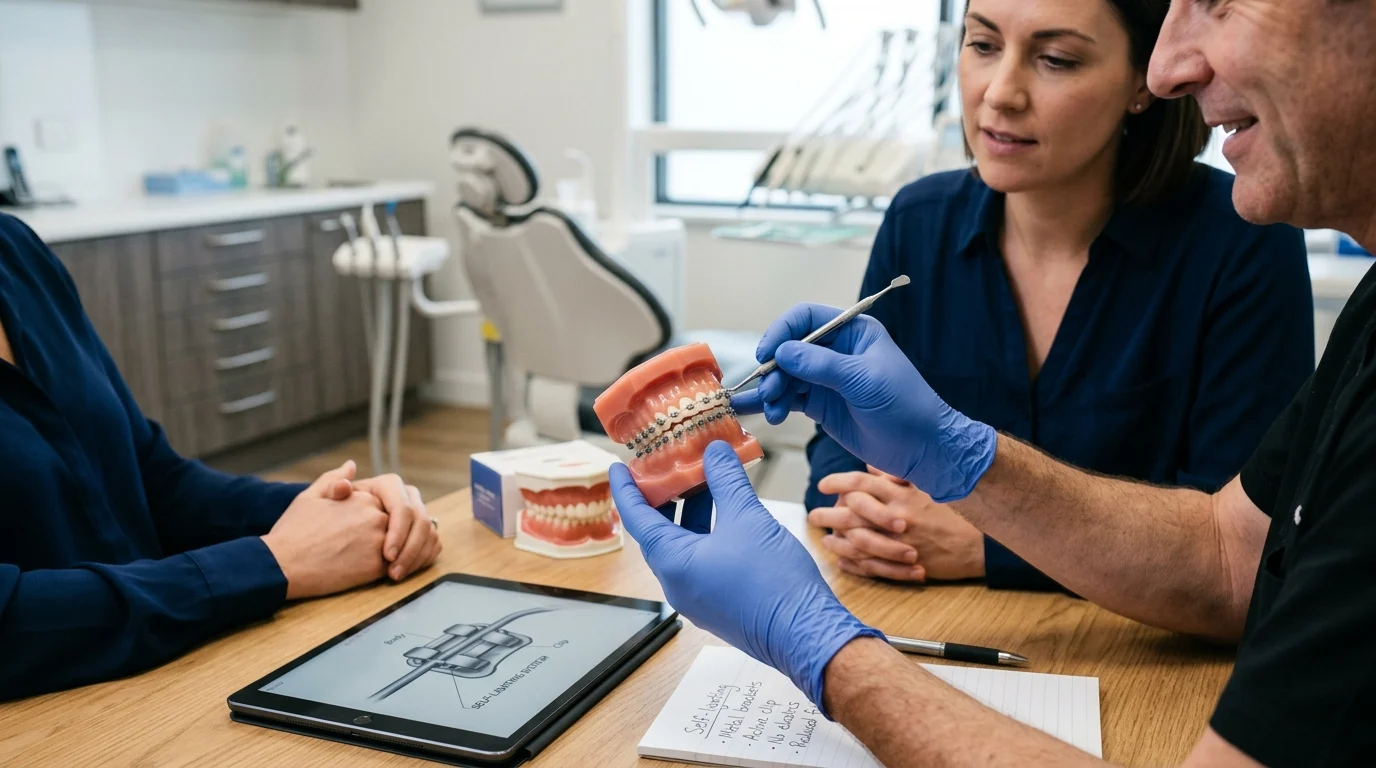
To understand the mechanical advantages of these systems, one must look closely at their structural engineering. While they share the same fundamental goal as conventional braces—applying controlled pressure to move teeth into proper alignment—the mechanism of securing the archwire is entirely different. When evaluating the components of self-ligating metal braces, the absence of elastomeric ties is the defining characteristic that alters the entire force-delivery system.
Key components and bracket design
The core innovation lies in the bracket architecture itself. Instead of relying on external ligatures, self-ligating brackets feature a built-in mechanical door, clip, or slide. This integral closure mechanism securely traps the archwire within the bracket slot while still allowing it a degree of freedom to slide laterally. These brackets are typically manufactured from high-grade stainless steel or titanium alloys, ensuring durability and resistance to the corrosive environment of the oral cavity.
During the initial stages of treatment, orthodontists typically utilize highly flexible nickel-titanium (NiTi) archwires ranging from 0.014 to 0.018 inches in diameter. The precision-milled clips of the self-ligating brackets hold these lightweight wires securely, allowing the shape-memory properties of the NiTi to exert a constant, gentle pressure without being bound or locked into place by friction-inducing rubber bands.
How they move teeth
Tooth movement in a self-ligating system relies on the interplay between the archwire’s desire to return to its original shape and the bracket’s low-friction hold. These systems are generally categorized into two types: passive and active. Passive self-ligation uses a sliding door that does not press against the archwire, ideal for the initial leveling and aligning phases where minimizing friction is paramount. Active self-ligation features a spring clip that presses directly against thicker archwires during the later detailing phases to provide enhanced rotational and torque control.
By removing the elastic ties, self-ligating brackets can reduce sliding friction by up to 50% compared to traditional setups. This dramatic reduction in resistance means that the energy exerted by the archwire is transferred directly into tooth movement rather than being wasted overcoming the binding force of a ligature. As a result, teeth can slide along the archwire more freely, often leading to faster initial uncrowding and arch expansion.
Self-Ligating vs Traditional Metal Braces
Comparing self-ligating systems directly against traditional metal braces highlights several operational and physiological distinctions. While both modalities are highly effective at correcting complex malocclusions, the mechanics of how they are managed over the lifecycle of a patient’s treatment differ significantly. These differences impact everything from the practitioner’s workflow to the patient’s daily oral hygiene routine.
Key differences in treatment and maintenance
The most immediate difference in maintenance involves oral hygiene. Traditional elastomeric ties are notorious for trapping food particles and harboring bacterial plaque. The porous nature of the rubber makes it difficult for patients to keep the brackets entirely clean, often leading to localized gingivitis or decalcification (white spot lesions). Self-ligating brackets, with their smooth metal doors and absence of rubber ties, have been shown in clinical evaluations to reduce plaque retention by approximately 30%.
From a treatment protocol perspective, chairside adjustments are fundamentally altered. In a traditional setup, the clinician must manually remove and replace up to 24 individual elastic ties during every visit—a process that can take 10 to 15 minutes. Self-ligating brackets feature specialized mechanisms that can be opened and closed with a simple specialized tool in a matter of seconds, drastically reducing the time the patient spends in the dental chair.
Side-by-side comparison
A side-by-side evaluation reveals clear operational thresholds that differentiate the two orthodontic approaches. The table below outlines the primary comparative metrics standard to both systems.
| Feature / Metric | Traditional Metal Braces | Self-Ligating Metal Braces |
|---|---|---|
| Ligation Method | Elastomeric ties or steel wire | Built-in sliding door or spring clip |
| Adjustment Interval | Every 4 to 6 weeks | Every 8 to 10 weeks |
| Friction Level | High (due to elastic binding) | Low to Moderate (up to 50% less friction) |
| Average Chair Time | 15–30 minutes per adjustment | 10–20 minutes per adjustment |
| Plaque Retention Risk | Higher (porous elastics trap bacteria) | Lower (smooth metal surfaces) |
This comparison underscores why practices focused on high throughput and reduced biological strain often favor self-ligating options. While the end results regarding dental alignment are comparable, the journey to achieve that alignment is demonstrably more streamlined with the self-ligating approach.
Clinical and Practical Considerations
While highly effective, the clinical application of self-ligating systems requires careful case selection and patient education. They are not a universal panacea for all orthodontic challenges, but they do offer distinct advantages for specific anatomical conditions. Consulting with an orthodontist about self-ligating metal braces ensures that both the biomechanical limitations and the practical realities of the treatment timeline are fully understood before appliances are bonded.
Best-fit cases and limitations
Self-ligating braces excel in cases requiring significant arch expansion and the resolution of severe crowding. Because the low-friction environment allows teeth to move outward along the path of least resistance, clinicians can often achieve 1.0 to 2.0 mm of arch expansion without the need for rapid palatal expanders or the extraction of healthy premolars. This makes them highly suitable for patients with narrow dental arches or borderline extraction cases.
| Clinical Condition | Effectiveness with Self-Ligation | Primary Biomechanical Benefit |
|---|---|---|
| Severe Crowding | Excellent | Unrestricted sliding mechanics allow rapid unravelling. |
| Narrow Arches | Excellent | Gentle lateral forces promote transverse bone adaptation. |
| Severe Rotations | Good to Excellent | Active clips provide necessary torque in later stages. |
| Surgical Impactions | Moderate | May require auxiliary attachments for heavy directional pulling. |
However, limitations exist. In cases requiring maximum anchorage or complex surgical extractions where high friction is actually desired to prevent unwanted adjacent tooth movement, traditional ligatures or hybrid setups may be preferred. The sliding mechanics that make self-ligation efficient can sometimes make it challenging to hold a tooth absolutely rigidly in a specific position during complex space-closure mechanics.
What patients can expect during treatment
Patients undergoing this treatment should expect an adjustment period, though it is generally reported to be milder than that of conventional braces. Following the initial bonding and subsequent wire changes, patients typically experience localized pressure and discomfort lasting 3 to 5 days. Because the forces applied are continuous and lighter, the sharp spikes in pain often associated with freshly tightened elastic ties are largely mitigated.
Practically, patients must also be aware of appliance care. While the brackets are robust, the internal sliding doors and clips are precision-machined micro-mechanisms. Biting into excessively hard or sticky foods can damage the door mechanism, necessitating a complete bracket replacement. Fortunately, with proper dietary adherence and standard care, the bracket failure and debonding rate generally remains securely under the clinical baseline of 5%.
How to Decide if Self-Ligating Metal Braces Are Right
The decision to invest in advanced orthodontic systems requires balancing clinical needs, lifestyle preferences, and economic considerations. For both the practitioner designing the treatment plan and the patient committing to the process, evaluating the total value proposition of self-ligating brackets goes beyond simply looking at the appliance itself. It involves a holistic assessment of treatment duration, comfort, and financial outlay.
Cost, value, and decision factors
Economic factors play a substantial role in the decision-making process. Because the brackets themselves are precision-engineered with moving parts, the raw material and manufacturing costs are higher than those of traditional single-piece metal brackets. Consequently, patients can expect a cost premium. In most regional markets, self-ligating systems carry an additional cost of $500 to $1,500 over traditional braces, bringing the total estimated treatment cost to a range of $4,000 to $8,500 depending on case complexity.
However, value must be calculated beyond the initial invoice. The reduction in office visits yields significant indirect savings. For working adults or parents taking time off to bring children to appointments, eliminating 6 to 10 visits over a two-year treatment plan recovers dozens of hours in lost wages and travel time. Furthermore, the potential for a slightly shortened overall treatment timeline—often reduced by 2 to 4 months in crowding cases—adds considerable intangible value to the patient experience.
When they are the right choice
Self-ligating metal braces are typically the right choice for patients who prioritize treatment efficiency and have schedules that make frequent clinic visits burdensome. They are exceptionally well-suited for individuals presenting with moderate to severe crowding who wish to avoid tooth extractions, as the system’s arch-expanding capabilities are highly reliable.
Ultimately, the decision rests on a thorough diagnostic evaluation. When the clinical objective demands low-friction mechanics, rapid initial alignment, and improved oral hygiene conditions, self-ligating hardware provides a scientifically backed, high-performance solution that modernizes the traditional orthodontic journey.
Further reading:
Key Takeaways
- The most important conclusions and rationale for self-ligating metal braces
- Specs, compliance, and risk checks worth validating before you commit
- Practical next steps and caveats readers can apply immediately
Frequently Asked Questions
What makes self-ligating metal braces different from traditional braces?
They use a built-in clip or door to hold the archwire instead of elastic ties, which lowers friction and can make adjustments more efficient.
How do self-ligating metal braces move teeth?
A flexible archwire slides through low-friction brackets and applies light, continuous force, helping guide teeth into alignment more smoothly.
Do self-ligating metal braces require fewer appointments?
Often yes. Because there are no elastic ties to wear out, many patients can go about 8 to 10 weeks between routine adjustments.
Are self-ligating metal braces suitable for all orthodontic cases?
Not always. They work well for many alignment needs, but an orthodontist should evaluate your bite, crowding, and treatment goals first.
Can I learn more about self-ligating metal braces from DenRotary?
Yes. Visit denrotary.com to explore orthodontic product information and learn more about bracket design and treatment-related solutions.

Post time: Jun-27-2026