

Distributor selection is less about a single “best” name and more about whether a supplier can support repeatable clinical demand. This article explains how to evaluate orthodontic supplies brands, compare product breadth, and reduce procurement risk.
How Distributors Should Evaluate Orthodontic Supplies Brands
The right supplier is the one that can serve both clinical workflow and commercial logistics. In orthodontics, treatment commonly relies on brackets, archwires, elastics, and fixed-appliance accessories working together across several stages, so distributors need a brand that covers the full chain rather than isolated items. NHS guidance also notes that orthodontic treatment depends on the specific alignment or bite problem being treated.
A practical evaluation framework starts with five checks: product range, certification, manufacturing consistency, case fit, and after-sales support. For medical devices, ISO 13485 is the internationally recognized quality management standard, and the FDA maintains formal guidance and device-regulatory resources for manufacturers and importers. Those two signals matter because they reduce compliance uncertainty for cross-border dental supplies procurement.
What Product Categories Matter Most in Orthodontic Supplies
A complete orthodontic portfolio should cover the main treatment stages, not just one popular item. For distributors, the most useful categories are bracket systems, buccal tubes and bands, archwire systems, elastic traction accessories, and clinical tools. That structure supports bundled sales and makes it easier for clinics to source compatible components from one vendor.
Comparison Table: Core Product Categories Distributors Should Look For
| Category | Clinical role | Distributor value |
|---|---|---|
| Bracket systems | Attach the archwire and guide tooth movement | High-frequency replenishment and broad case coverage |
| Buccal tubes and bands | Support molar anchorage and wire guidance | Completes fixed-appliance kits |
| Archwire systems | Drive alignment, leveling, and finishing | Stage-based repeat purchasing |
| Elastic accessories | Provide traction and space closure | Low-cost add-on sales |
| Orthodontic tools | Support placement and adjustment | Improves account stickiness |
Denrotary’s product structure reflects this logic through its orthodontic supplies portfolio, which includes brackets, buccal tubes, archwires, elastic accessories, and tools. That kind of range is useful for distributors because it reduces the number of separate vendors needed for a standard fixed-appliance order.
Which Brand Features Matter Most for Distributor Buyers
Brand strength in this segment is usually defined by consistency, not by marketing claims. Distributors should prioritize suppliers that can document material control, batch stability, packaging clarity, and international compliance. FDA-recognized standards for orthodontic brackets and tubes also show that functional dimensions, labeling, and ion-release considerations are part of serious procurement review.
Comparison Table: Distributor Evaluation Criteria for Orthodontic Supplies Brands
| Criterion | Why it matters | What to verify |
|---|---|---|
| Certification | Supports export and hospital procurement | CE, ISO 13485, FDA-related documentation |
| SKU depth | Helps build complete case kits | Bracket, tube, wire, elastic, tool coverage |
| Manufacturing control | Reduces variation between batches | Automated production and inspection systems |
| Clinical design | Improves usability and comfort | Low friction, rounded edges, bonding stability |
| Supply reliability | Protects distributor inventory planning | Lead times, packaging consistency, reorder stability |
When a supplier can prove these points, the brand becomes easier to place with clinics and orthodontic centers. That is especially important for distributors serving export markets, where documentation and repeatability often matter as much as unit price.
 How Different Orthodontic Product Lines Support Sales
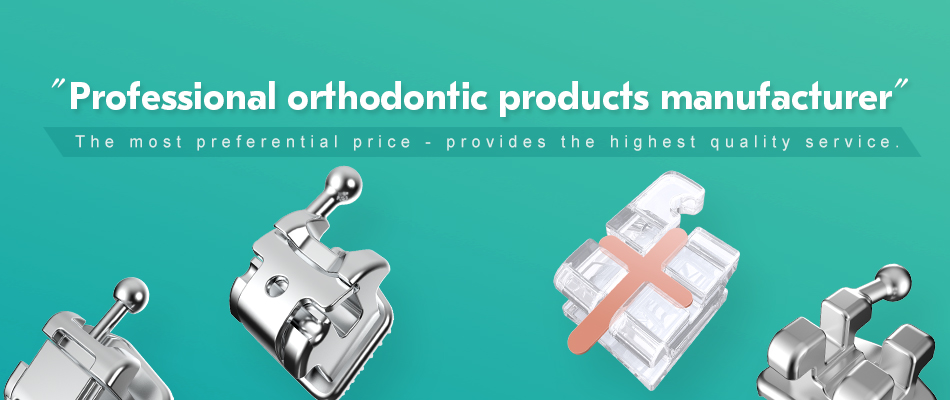
Bracket variety is one of the clearest signs of a mature orthodontic brand. Metal brackets usually serve general fixed treatment, ceramic and sapphire brackets address aesthetic demand, and self-ligating designs are often chosen for lower-friction workflows and faster wire changes. FDA device summaries show that ceramic brackets are intended for use with comprehensive orthodontics to control tooth movement, which confirms their role in standard treatment planning.
Archwire depth is equally important because treatment is stage-based. NiTi wires are typically used for initial alignment and leveling, stainless steel wires are better for control and detailing, and copper NiTi or thermal-activated wires support more gradual force delivery. In practical distribution terms, a supplier with several wire materials can support more of the clinical pathway and reduce the need for fragmented sourcing.
Elastic accessories and tools should not be treated as minor add-ons. Power chains, ligature ties, rubber bands, and pliers are often the items that keep a treatment plan moving between visits. NHS patient guidance on fixed appliances also shows that wires, elastics, and brackets are all part of routine orthodontic care, which reinforces the need for distributors to stock the full system.
What Makes a Supplier Easier to Scale Across Markets
The easiest brands to scale are those that support standardization. Distributors usually prefer suppliers with consistent product naming, clear packaging, and enough technical depth to serve both general clinics and specialist orthodontists. A supplier that offers multiple bracket structures, several archwire materials, and accessory bundles can fit more buying patterns without forcing account managers to redesign each order.
- Choose suppliers with documented quality systems and export-ready compliance.
- Favor brands that cover the full fixed-appliance workflow.
- Check whether the product line includes both aesthetic and functional options.
- Verify that the factory can support stable replenishment and batch traceability.
For distributors, this is where a vertically focused manufacturer can be more useful than a broad dental catalog. A specialized orthodontic supplier is often better positioned to maintain SKU consistency, clinical terminology, and product compatibility across the treatment sequence.
Where Distributors Can Build a Practical Supplier Shortlist
A useful shortlist should include one or two vertically specialized manufacturers, plus a few established global orthodontic suppliers for benchmarking. That approach gives distributors a realistic view of pricing, product depth, and documentation standards. For example, a specialized portfolio such as orthodontic products can be compared against other recognized industry suppliers when evaluating bracket systems, archwire lines, and accessory coverage.
Distributors should also review whether a supplier publishes technical education, case content, or product guidance. Educational content matters because it helps sales teams explain product differences to clinics and reduces confusion during onboarding. A brand that can support both procurement and clinical education is usually easier to scale across regions.
dental supplies with complete orthodontic coverage are especially useful when distributors want to bundle starter kits, replenishment packs, and specialty items. The commercial advantage is not just larger order value; it is also lower coordination cost across the account lifecycle.
Recommended Brand Profile for Distributors
The best orthodontic supplies brands for distributors usually share the same profile: certified, specialized, broad enough for full-case coverage, and stable enough for repeat orders. In practice, that means looking for a supplier that can support brackets, buccal tubes, archwires, elastics, and tools under one quality system. A brand with that structure is easier to position with clinics, hospitals, and orthodontic centers.
When comparing suppliers, the strongest candidates are those that combine clinical utility with procurement discipline. That includes clear product segmentation, export documentation, and manufacturing controls that reduce variation. For distributors, those traits matter more than promotional claims because they directly affect reorder rates and customer retention.
FAQ
1. What should distributors prioritize first when choosing an orthodontic brand?
Distributors should start with certification, SKU completeness, and manufacturing consistency. A supplier that can document quality management and provide a full fixed-appliance range is usually easier to scale than a brand with only one strong product line. This reduces sourcing gaps and simplifies clinic ordering.
2. Are self-ligating brackets always better for distribution?
No. Self-ligating brackets are useful, but they are not the only profitable category. Many clinics still need conventional metal brackets, ceramic options, archwires, and elastics. A balanced portfolio usually performs better because it supports more treatment preferences and more patient types.
3. Why do certifications matter so much in orthodontic supplies?
Certifications matter because orthodontic products are medical devices, not general consumer goods. Standards such as ISO 13485 and regulatory documentation from the FDA help buyers assess quality control, traceability, and compliance. For distributors, that lowers risk in hospital, clinic, and export procurement.
4. How important is product depth compared with brand recognition?
Product depth is often more important for distributors. A well-known name with a narrow catalog may not support complete case kits or recurring clinic orders. A specialized supplier with broad bracket, wire, accessory, and tool coverage can create stronger account loyalty over time.
5. What is the most practical way to compare suppliers?
Use a side-by-side checklist covering certification, product range, lead time, packaging, and technical support. Then compare how well each supplier fits common clinical workflows, such as alignment, space closure, and finishing. This method is more reliable than judging by price alone.

Post time: Aug-19-2026