

Introduction
For dental distributors, orthodontic labs, and private-label brands, buying orthodontic wire from China is no longer just a cost-saving move. It reflects changes in global manufacturing, where many suppliers now combine large-scale production with tighter alloy control, automated processing, and broader OEM support. This article explains why international buyers increasingly choose Chinese wholesale sources, which product and business factors matter most, and how pricing, quality consistency, certification, and customization affect purchasing decisions. It also sets up a practical look at which buyer groups benefit most and what to evaluate before selecting a supplier.
Why Global Buyers Source Orthodontic Wire from China
The global dental consumables market has undergone a significant geographic shift over the past decade, with manufacturing centers in Asia capturing an increasingly dominant share. For orthodontic practices and dental distributors, the supply chain for materials like brackets, elastomers, and archwires is highly sensitive to both cost and metallurgical precision. As a result, sourcing wholesale orthodontic wire from China has become a primary strategy for international buyers looking to optimize their procurement without compromising clinical efficacy.
Market Positioning of Chinese Orthodontic Wire
Historically, Chinese dental manufacturing was characterized by low-cost replication of legacy stainless steel products. Today, its market positioning has evolved into high-precision, technologically advanced metallurgy. Top-tier Chinese manufacturers now utilize sophisticated vacuum induction melting and automated wire-drawing technologies to produce complex alloys, including heat-activated Nickel-Titanium (NiTi) and Copper-NiTi. By capturing an estimated 40% to 50% of global mid-tier dental consumables production, these manufacturers have firmly positioned themselves as reliable OEM (Original Equipment Manufacturer) and ODM (Original Design Manufacturer) partners for international brands.
Buyer Segments That Benefit Most
The shift toward Chinese manufacturing disproportionately benefits specific buyer segments. Dental Service Organizations (DSOs) managing networks of 50 or more clinics are prime candidates, as direct wholesale sourcing can reduce their consumables expenditures by up to 30% annually. Additionally, regional distributors and private-label orthodontic brands leverage these supply chains to build their own product portfolios. By bypassing Western mega-brands, these mid-market distributors can capture higher profit margins while offering competitive retail pricing to independent orthodontic practices.
Key Advantages in Cost and Supply
The core drivers of this sourcing trend are economies of scale and deeply integrated supply chains. Chinese industrial hubs possess complete vertical integration, from the refinement of raw titanium and nickel ingots to the final electropolishing and sterile packaging of archwires. This structural advantage translates to a 25% to 40% reduction in unit costs compared to equivalent wires manufactured in North America or Europe. Furthermore, the concentration of raw material suppliers and specialized logistics providers in these hubs ensures highly resilient supply lines, allowing factories to maintain stable lead times even during global shipping disruptions.
What Defines a Competitive Orthodontic Wire Supplier
Identifying a highly competitive supplier requires looking beyond basic product catalogs. Orthodontic wires are precision medical devices that must exert continuous, predictable forces on dentition over extended periods. A top-tier supplier is defined by its mastery of metallurgy, strict adherence to dimensional tolerances, and its ability to meet stringent international packaging standards.
Material Options and Performance Differences
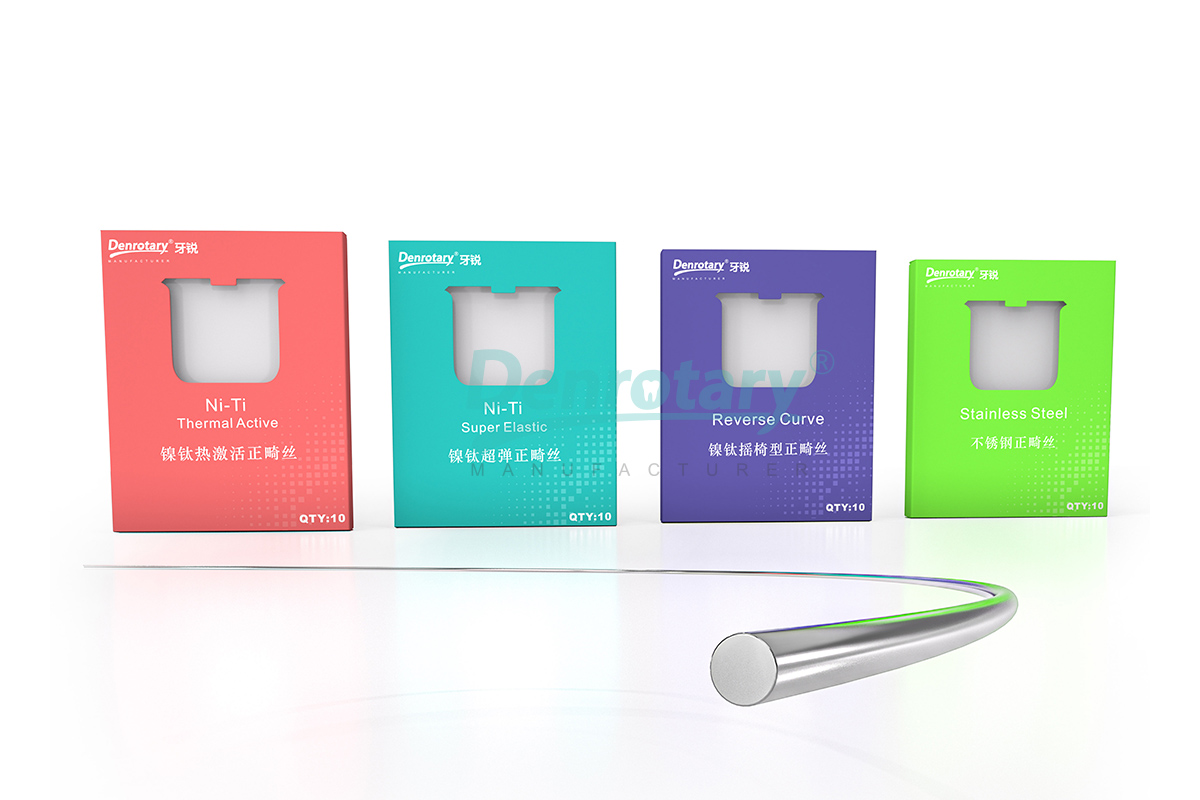
Suppliers must offer a comprehensive range of alloys to meet different phases of orthodontic treatment. The ability to reliably produce diverse materials—each with distinct mechanical properties—separates advanced manufacturers from basic metal workshops.
| Material | Yield Strength (MPa) | Springback Potential | Primary Clinical Phase |
|---|---|---|---|
| Stainless Steel | 1,000 – 1,400 | Low | Finishing / Detailing |
| Nickel-Titanium (NiTi) | 100 – 400 | Extremely High | Initial Leveling / Alignment |
| Beta-Titanium (TMA) | 700 – 900 | Moderate | Intermediate Space Closure |
Buyers should verify that a supplier can manipulate these alloys to exact specifications, particularly the thermal transformation temperatures of martensitic NiTi, which determine when the wire becomes active in the patient’s mouth.
Specifications, Tolerances, and Packaging Requirements
Dimensional accuracy is paramount; a deviation of even a few thousandths of an inch can alter the force applied to a tooth, stalling clinical progress. Competitive manufacturers maintain strict tolerances, typically ±0.0005 inches on the diameter or cross-section of rectangular wires. Beyond the metal itself, packaging requirements are rigorous. Archwires must be supplied in pre-formed shapes (e.g., Roth or MBT forms) and packaged in medical-grade, individually sealed pouches or continuous 10-meter spools. The packaging must preserve sterility and prevent environmental degradation, particularly for reactive alloys.
How to Compare Suppliers Effectively
To effectively evaluate and compare orthodontic wire vendors, buyers should request technical data sheets detailing the Austenite finish (Af) temperature for heat-activated wires. A standard specification requires an Af of 35°C ± 2°C to ensure the wire activates at body temperature. Furthermore, comparing the surface friction coefficients and the consistency of the electropolished finish under microscopic examination will reveal the true manufacturing capability of the supplier. Requesting blind samples from multiple factories for independent laboratory testing is a standard best practice.
How Buyers Evaluate Quality and Manufacturing Reliability
Because orthodontic wires are classified as Class II medical devices in major jurisdictions (such as under the US FDA and the European MDR), due diligence is non-negotiable. Evaluating a supplier’s quality control framework and manufacturing reliability is a critical step in mitigating clinical and regulatory risks.
Certifications, Testing, and Traceability
The baseline requirement for any reputable medical wire supplier is an active ISO 13485:2016 certification. Depending on the target market, the supplier must also hold a valid CE mark (MDR 2017/745 compliance) or an FDA 510(k) clearance. Traceability is an equally critical component of regulatory compliance. Buyers must ensure the factory implements a robust lot-tracking system, where every individual pack of wire is printed with a unique batch number. This traceability must extend backward through the supply chain, linking finished wires to the specific raw material ingots and the metallurgical test reports of that batch.
How to Audit Orthodontic Wire Factories
Conducting a factory audit, whether in-person or via a third-party inspection agency, should focus heavily on the wire drawing and finishing processes. Auditors should examine the condition of the diamond dies used for drawing the wire, as worn dies lead to dimensional inconsistencies. The electropolishing lines must be evaluated for chemical consistency and environmental controls. A high-quality facility will demonstrate an internal defect rate of less than 0.5% for surface imperfections, utilizing automated laser micrometers and optical comparators to inspect wires continuously as they move down the production line.
Price, Quality, and Risk Trade-Offs
Procurement professionals must navigate the delicate balance between unit cost and clinical risk. Ultra-low wholesale prices often indicate the use of lower-purity alloy blends or rushed annealing processes. These shortcuts compromise the wire’s structural integrity, leading to fracture rates exceeding 2% during clinical use—a catastrophic failure that damages brand reputation and poses patient safety risks. Buyers should establish a target price band, for example, $0.50 to $0.80 per premium NiTi archwire, understanding that prices falling significantly below this threshold likely carry hidden risks in metallurgical stability or regulatory compliance.
What Sourcing and Landed Cost Factors Buyers Must Consider
Securing a competitive ex-works (EXW) or Free On Board (FOB) price is only the first step in wholesale procurement. To accurately forecast profitability, global buyers must calculate the total landed cost, factoring in supply chain intermediaries, logistics, tariffs, and payment security.
Direct Factory vs Trading Company Sourcing
A fundamental decision in the sourcing process is choosing between a direct manufacturer and a trading company. Direct factories offer superior technical support, customization capabilities, and lower Minimum Order Quantities (MOQs) for bespoke wire sizes—often accepting runs as low as 5,000 pieces for custom dimensions. Conversely, trading companies provide convenience by bundling archwires with brackets, buccal tubes, and elastomerics into a single shipment. However, this consolidation typically incurs a 15% to 20% markup over direct factory pricing and obscures the original manufacturing source, complicating quality audits.
Sampling, Negotiation, and Payment Risk Control
Risk control during the initial procurement phases relies on structured sampling and secure payment terms. Buyers should mandate a pre-production sample run of at least 100 pieces for clinical and mechanical evaluation before authorizing mass production. Standard payment terms in the Chinese wholesale market involve a 30% T/T (Telegraphic Transfer) deposit upon order confirmation, with the remaining 70% balance due after a successful third-party pre-shipment inspection. Utilizing Letters of Credit (L/C) for orders exceeding $50,000 adds an additional layer of financial security.
Cost Drivers Beyond Unit Price
Unit price is only a fraction of the financial equation. Total landed cost is heavily influenced by logistics, regulatory fees, and international trade policies.
| Cost Component | Typical Share of Landed Cost | Mitigation Strategy |
|---|---|---|
| Ex-Works Unit Price | 65% – 70% | Negotiate volume tiers (>50k pieces) |
| Air Freight & Insurance | 10% – 15% | Consolidate shipments quarterly |
| Import Duties / Tariffs | 5% – 20% | Verify HS codes and origin certificates |
| Regulatory & Clearance | 5% – 10% | Utilize supplier’s existing FDA/CE files |
For lightweight, high-value items like orthodontic wire, air freight is the standard transport method. However, buyers importing into the United States must account for Section 301 tariffs, which can add a 25% duty on specific medical components imported from China, significantly altering the cost calculus.
How to Build a Structured Supplier Selection Strategy
Transitioning from ad-hoc purchasing to a resilient supply chain requires a formalized strategy. Haphazardly selecting suppliers based solely on Alibaba listings or trade show encounters exposes buyers to inconsistent quality and supply disruptions. Implementing a structured selection methodology ensures long-term stability and continuous product improvement.
Supplier Evaluation Frameworks
A robust supplier evaluation framework utilizes a weighted scorecard to objectively rank potential manufacturing partners. An effective model might allocate 40% of the total score to clinical performance metrics (such as springback efficiency and surface friction), 30% to quality consistency and ISO compliance, 20% to overall landed cost, and 10% to production lead times. A standard, acceptable lead time for wholesale orthodontic wire production is 3 to 4 weeks. Buyers should initiate pilot orders with the top two scoring vendors, using these initial runs to stress-test communication, logistical efficiency, and responsiveness to technical feedback before committing to a singular source. For more on initiating structured vendor assessments, buyers can reference standard orthodontic wire procurement guidelines.
Balancing Price, Quality, and Service
The ultimate goal of a structured sourcing strategy is to establish a strategic partnership rather than a transactional vendor relationship. While aggressively negotiating price is necessary, it must not jeopardize service levels or product integrity. Buyers who commit to annual volume contracts—such as purchasing 100,000 or more pieces per year—can unlock significant advantages, including tiered pricing, priority production slots during peak seasons, and collaborative R&D for proprietary wire shapes or alloy blends. Balancing price with uncompromising quality and responsive service is the definitive formula for successfully navigating the global dental supply chain.
Further reading:
Key Takeaways
- The most important conclusions and rationale for orthodontic wire
- Specs, compliance, and risk checks worth validating before you commit
- Practical next steps and caveats readers can apply immediately
Frequently Asked Questions
Why do global buyers source orthodontic wire from China?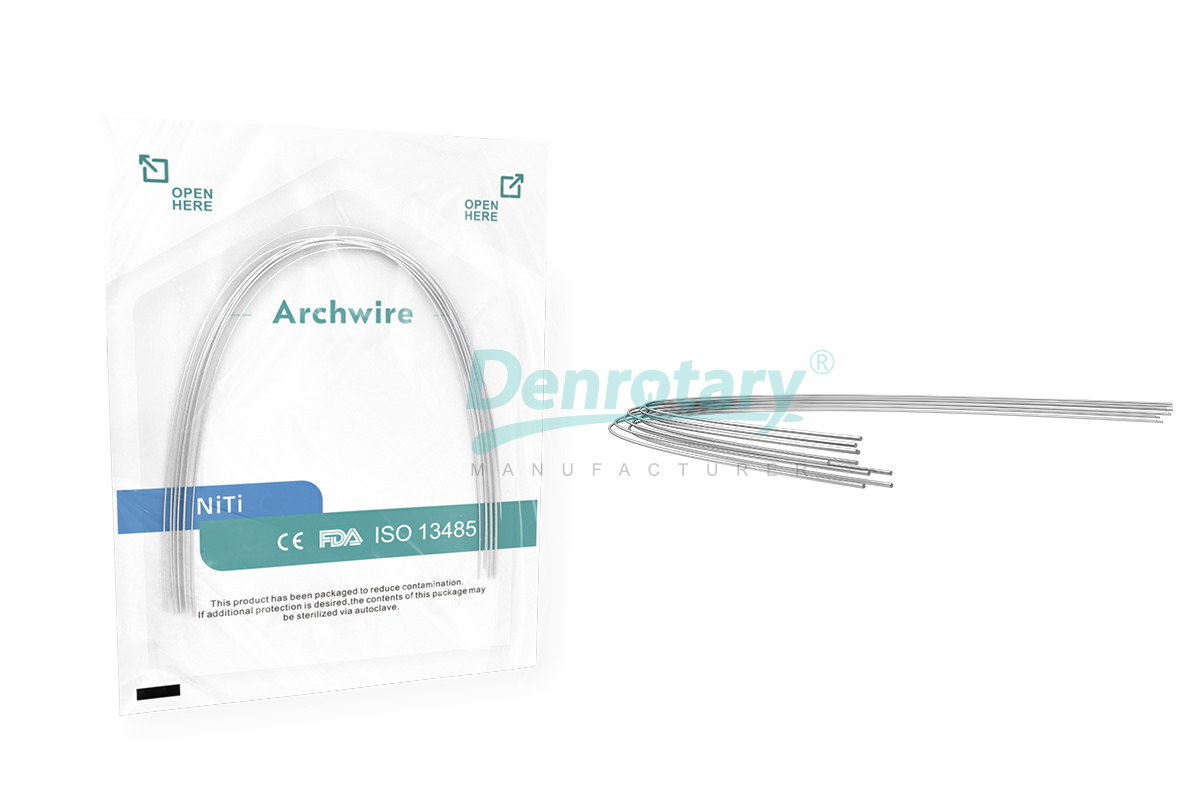
They gain 25%–40% lower unit costs, broad alloy options like NiTi and stainless steel, and stable lead times from vertically integrated manufacturing hubs.
What orthodontic wire materials should a supplier offer?
A strong supplier should provide stainless steel for finishing, NiTi for initial alignment, and beta-titanium for intermediate control, with consistent mechanical performance.
How can I verify orthodontic wire quality before ordering wholesale?
Ask for material specifications, tolerance data such as ±0.0005 inches, packaging details, and samples to confirm force consistency, finish, and shape accuracy.
What packaging options are common for wholesale orthodontic wire?
Most buyers choose individually sealed medical-grade pouches for clinic use or 10-meter spools for bulk distribution, depending on sterilization and inventory needs.
Can Denrotary support OEM or private-label orthodontic wire orders?
Yes, buyers can typically discuss OEM or private-label requirements directly with Denrotary, including wire type, preformed shape, packaging, and branding preferences.

Post time: Jun-04-2026