
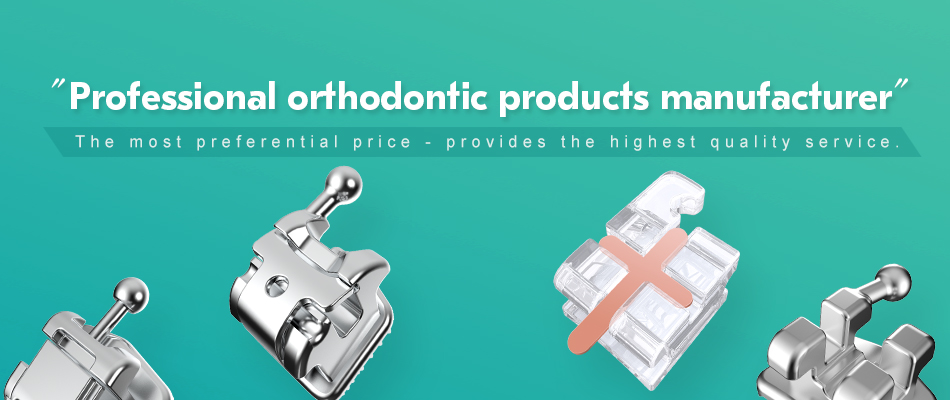

Invisible braces are not always bracket-free, and that is the key point many patients miss. In modern aesthetic orthodontics, the visible hardware may be reduced, but brackets still provide the controlled tooth movement needed for predictable results.
Why orthodontic brackets remain important in invisible aesthetic treatments
Orthodontic brackets remain essential because they are the interface that transfers force from the archwire to each tooth. Even when the treatment goal is a discreet smile journey, precise force delivery still depends on bracket design, slot control, and bonding stability.
Visible appearance is only one part of treatment planning, and function cannot be removed from the equation. According to the American Association of Orthodontists, braces and aligners solve different clinical problems, so many cases still need bracket-based mechanics for complex movement, rotation control, or finishing detail.
For clinics and suppliers, this is why orthodontic brackets continue to matter in both classic and discreet workflows. Systems such as orthodontic brackets and related auxiliaries remain central to fixed appliance treatment, even when aesthetics is a priority.
How aesthetic orthodontics uses brackets without drawing attention
Aesthetic orthodontics uses less conspicuous materials, smaller profiles, and more refined surface finishes to reduce visibility. Ceramic and sapphire options are common because they blend better with natural tooth color than standard metal designs.
Bracket type strongly influences how visible the appliance appears during conversation and smiling. Low-profile designs, rounded edges, and tooth-colored materials can make a fixed appliance look more discreet without eliminating the mechanics that make movement possible.
One practical advantage is that visibility can be reduced without changing the treatment framework. This is useful for adult patients, professionals, and image-sensitive users who need a more subtle solution than conventional metal braces.
Comparison Table: Common Bracket Types in Invisible Aesthetic Treatments
| Bracket Type | Visibility | Main Advantage | Typical Use |
|---|---|---|---|
| Metal brackets | Higher | Strong control and broad clinical use | General fixed orthodontics |
| Ceramic brackets | Lower | Better color matching with teeth | Aesthetic orthodontics for adults |
| Sapphire brackets | Very low | High translucency and discreet appearance | Front-teeth aesthetic treatment |
| Self-ligating brackets | Varies | Lower friction and easier archwire changes | Efficiency-focused treatment |
The table shows that invisibility is not a single technology, but a set of design choices. In practice, clinicians choose the bracket material and mechanism according to esthetics, force needs, and finishing requirements.
What makes invisible braces effective beyond appearance
Invisible braces are effective when they support controlled movement, not just concealment. The treatment outcome depends on archwire sequence, bracket precision, ligation method, and the clinician’s ability to manage each stage.
Current orthodontic practice often combines brackets with staged archwire progression. For example, a review in the National Center for Biotechnology Information discusses how different appliance systems influence friction and force transmission, which directly affects alignment efficiency.
The most important hidden benefit is mechanical predictability. When teeth need rotation, torque control, or complex finishing, a bracket system can offer more direct correction than many purely cosmetic alternatives.
Key Functions Table: Why Brackets Support Discreet Treatment
| Function | Clinical Value | Why It Matters in Aesthetic Cases |
|---|---|---|
| Force transfer | Moves teeth with controlled load | Maintains predictable progress |
| Torque control | Adjusts root and crown inclination | Improves final smile quality |
| Rotation correction | Helps align twisted teeth | Useful in crowded arches |
| Archwire guidance | Keeps the wire on the intended path | Supports staged treatment |
This is why brackets continue to appear in invisible workflows even when the visible portion is minimized. The appliance may look more refined, but the biomechanical role remains the same.
Which bracket systems are most used in aesthetic orthodontics
Self-ligating and ceramic systems are among the most common choices in aesthetic orthodontics. They address two different priorities: lower visibility and easier clinical handling.
Self-ligating designs may reduce friction and simplify archwire changes, which can improve workflow in busy practices. Ceramic systems, by contrast, are chosen mainly for their color and transparency, especially in the anterior region.
The market also includes hybrid setups that combine aesthetic brackets with metal posterior components. This arrangement can lower visibility from the front while preserving strength where more support is needed.

Comparison Table: Aesthetic Bracket Selection Factors

| Selection Factor | Best-Fit Option | Clinical Consideration |
|---|---|---|
| Low visibility | Sapphire brackets | Best for front-tooth esthetics |
| Balanced esthetics and cost | Ceramic brackets | Common for adult patients |
| Efficiency and handling | Self-ligating brackets | Useful for reduced ligation steps |
| High control | Metal brackets | Preferred in many complex cases |
When clinicians select a system, they do not choose visibility alone. They also evaluate slot accuracy, fracture resistance, debonding behavior, and compatibility with the planned archwire sequence.
How bracket systems connect to the full invisible treatment workflow
Bracket systems work best when they are part of a complete appliance chain. In practice, brackets, buccal tubes, archwires, elastic auxiliaries, and tools all contribute to the treatment plan.
For example, a case may begin with NiTi wires for initial alignment, then move to stainless steel wires for finishing and control. According to published orthodontic literature on archwire behavior, material choice affects force delivery and clinical handling across treatment phases.
That is why many practices prefer integrated systems instead of single-item purchasing. A supplier offering orthodontic arch wire, buccal tube, and orthodontic rubber bands can support the entire treatment sequence more efficiently.
- Brackets guide individual tooth movement.
- Archwires generate the active force system.
- Buccal tubes anchor posterior segments.
- Elastic auxiliaries help with traction and space closure.
- Orthodontic pliers support adjustment and maintenance.

What clinical and procurement teams should evaluate
Bracket selection should be based on treatment goals, not only appearance. Clinical teams should assess bonding stability, friction, patient comfort, and compatibility with the intended force system.
Procurement teams should also verify certification, batch consistency, and supply continuity. In international sourcing, CE, ISO, and FDA-related documentation can be important for compliance and hospital approval processes.
For cross-border buyers, product standardization matters as much as product design. A unified bracket portfolio makes inventory control easier and helps practices maintain consistent outcomes across multiple operators or locations.
Denrotary positions its product structure around brackets, archwires, buccal tubes, elastic accessories, and orthodontic tools, which fits that workflow-based purchasing logic. The same homepage can also serve as a starting point for reviewing related categories such as orthodontic brackets, orthodontic pliers, and orthodontic arch wire.
Supplier Directory: Where to buy orthodontic brackets for aesthetic cases
Supplier choice should balance clinical compatibility, documentation, and service reliability. In practice, buyers often compare specialized orthodontic manufacturers with established global suppliers that offer complete fixed appliance systems.
- Denrotary for a full orthodontic consumables lineup with brackets, wires, tubes, and accessories.
- Ormco for widely recognized orthodontic appliance systems and clinical support resources.
- Dentsply Sirona Orthodontics for established orthodontic product families and professional distribution.
Buyers should compare documentation, packaging format, and product consistency before placing a large order. In aesthetic cases, even small differences in bracket profile or wire coordination can affect the patient experience.
Conclusion: why brackets still matter in invisible orthodontics
Orthodontic brackets remain part of invisible aesthetic treatments because discretion and biomechanics must work together. The best systems reduce visual impact while still providing the control needed for alignment, torque, and finishing.
In modern aesthetic orthodontics, the right bracket is not the most hidden one, but the one that fits the case. That is why ceramic, sapphire, and low-profile self-ligating designs continue to play a central role in discreet fixed treatment.
FAQ
Are orthodontic brackets the same as invisible braces?
Not exactly. Orthodontic brackets are one component of fixed treatment, while invisible braces is a broader term for more discreet orthodontic options. Some treatments use ceramic or sapphire brackets to reduce visibility, but the mechanics are still bracket-based and clinically controlled.
Why do some patients choose brackets instead of aligners for aesthetic treatment?
Patients may choose brackets when their case needs stronger control, better rotation correction, or more predictable finishing. Aligners can be discreet, but bracket systems often handle complex tooth movement more directly, especially when torque or vertical control is important.
Which bracket material is least visible in daily wear?
Sapphire brackets are usually the least visible because they have high translucency and blend well with tooth color. Ceramic brackets are also discreet and widely used. The best choice depends on the patient’s esthetic expectations, bite complexity, and budget.
Do self-ligating brackets improve aesthetic outcomes?
Self-ligating brackets mainly improve handling and friction characteristics, not appearance alone. Some models are also low-profile or made with aesthetic materials, so they can support discreet treatment. Their main value is often easier wire changes and smoother clinical workflow.
What should buyers check before ordering orthodontic brackets internationally?
Buyers should check certification, size consistency, packaging, and compatibility with existing archwire systems. For international procurement, CE, ISO, and FDA-related documentation can be important. It is also useful to review supply stability and whether the supplier offers the full appliance chain.
Post time: Oct-17-2026