
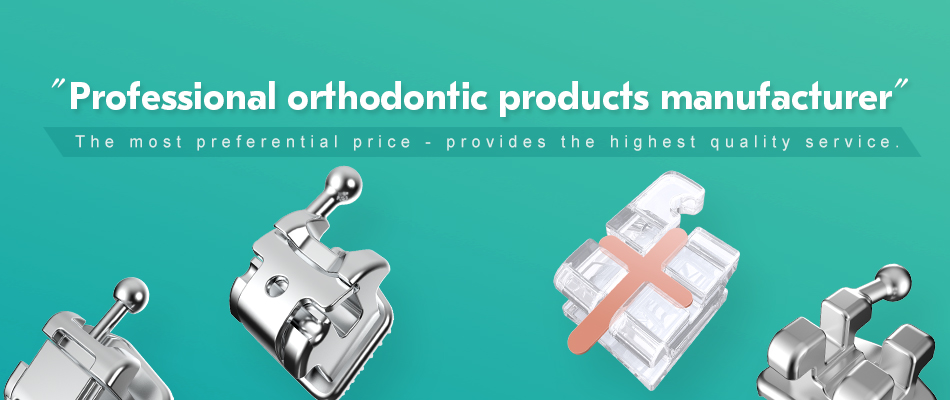

Orthodontic brackets are small components, but their manufacturing quality has a large clinical impact. In fixed orthodontics, accuracy at the slot, base, and torque interface helps determine how reliably treatment progresses.
Outline
- Why bracket precision affects clinical performance
- Key manufacturing variables in orthodontic brackets
- How material choice changes outcomes
- Quality standards and procurement considerations
- Where clinicians and buyers source bracket systems
Why Precision Manufacturing Matters for Orthodontic Brackets
Precision manufacturing matters because brackets must fit the archwire system with minimal variation. Even small deviations can influence slot engagement, bonding stability, and the force delivered during treatment.
In daily practice, orthodontic brackets must support predictable tooth movement across many stages. That is why professionals evaluate them not only by material, but also by tolerances, surface finish, and consistency between batches.
According to the U.S. Food and Drug Administration, orthodontic appliances are regulated medical devices, and manufacturers must control design, production, and quality systems to reduce risk: FDA Medical Devices. Precision is therefore a compliance issue as well as a clinical one.
What Makes Precision Orthodontic Brackets Clinically Reliable?
Clinical reliability depends on repeatable dimensions, secure bonding geometry, and smooth interaction with archwires. The most important characteristics are the slot accuracy, bracket base design, and edge finishing.
Slot accuracy is critical because archwire control begins there. If the slot varies too much, torque expression and sliding mechanics can become inconsistent from one tooth to another.
Bracket base design is equally important because bond failure creates treatment delays. Mesh-base and monoblock structures address this in different ways, with each design balancing adhesion support and structural integrity.
Surface finish affects patient comfort and wire movement. Rounded edges and clean contours can reduce soft tissue irritation and help brackets perform better during long treatment cycles.
Comparison Table: Core Manufacturing Variables in Orthodontic Brackets
| Variable | Why It Matters | Clinical Impact |
|---|---|---|
| Slot dimension tolerance | Controls archwire fit and torque transfer | More predictable tooth movement |
| Base design | Affects bonding stability | Lower risk of detachment |
| Edge finishing | Influences comfort and handling | Reduced irritation and easier placement |
| Batch consistency | Ensures repeatable performance | More uniform outcomes across cases |
For dimensional reference methods, manufacturers and buyers often rely on metrology principles used in dental device production. The U.S. National Institute of Standards and Technology explains the role of measurement traceability in industrial quality control: NIST.

How Material Choice Shapes Orthodontic Brackets
Material selection shapes aesthetics, strength, and friction behavior. Metal, ceramic, and sapphire options serve different patient groups and treatment goals.
Metal orthodontic brackets are widely used because they provide strength and broad clinical versatility. Ceramic and sapphire variants are preferred in aesthetic cases where visibility matters more than absolute robustness.
Self-ligating brackets add another manufacturing challenge because the locking mechanism must function smoothly and consistently. Active and passive designs differ in how they retain the archwire, while spherical designs emphasize comfort and identification.
Comparison Table: Material and Design Options for Orthodontic Brackets
| Bracket Type | Main Benefit | Best Fit |
|---|---|---|
| Metal mesh-base | Stable bonding and broad utility | Routine fixed orthodontics |
| Monoblock metal | Higher structural integrity | Cases needing stronger construction |
| Ceramic | Lower visual impact | Adult aesthetic treatment |
| Sapphire | High transparency | Front-teeth aesthetic demand |
| Self-ligating systems | Reduced ligation steps | Workflow efficiency and low-friction control |
The World Dental Federation notes that treatment planning should match appliance choice to patient needs and clinical objectives: FDI World Dental Federation. That principle is especially relevant when selecting between aesthetic and high-strength options.
Why Manufacturing Consistency Affects Treatment Efficiency
Consistency affects treatment efficiency because orthodontic care depends on many interlocking parts. Brackets, buccal tubes, archwires, elastic accessories, and tools must work together without unnecessary variation.
A complete system reduces trial-and-error during treatment. When bracket dimensions, wire compatibility, and accessory performance remain stable, clinicians spend less time correcting avoidable fit problems.
This is where integrated product families become useful. A supplier offering brackets, buccal tubes, archwire systems, and accessories can support a more standardized workflow across clinics and distribution channels.
Denrotary’s product structure illustrates this logic, with categories such as orthodontic bracket systems, buccal tube and band systems, and orthodontic arch wire systems supporting staged treatment planning.
What Buyers Should Check Before Purchasing Dental Brackets
Buyers should evaluate more than product appearance because clinical procurement depends on standards, documentation, and supply reliability. The most useful checks are certification, batch control, packaging clarity, and product compatibility.
Certification matters because international procurement often requires documented compliance. Denrotary states that its products are supported by CE, ISO, and FDA-related positioning, which is relevant for cross-border purchasing decisions.
Supply reliability matters because orthodontic treatment cannot stop when a replacement component is needed. That is why distributors and clinics often prefer standardized product lines with stable manufacturing capacity.
The International Organization for Standardization provides the framework for medical device quality management under ISO 13485, which is widely used in procurement reviews: ISO 13485.
Checklist Table: Procurement Questions for Orthodontic Brackets
| Question | Why It Matters |
|---|---|
| Are the dimensions and tolerances documented? | Supports predictable bracket-wire interaction |
| Is the material clearly identified? | Helps match aesthetics and strength needs |
| Are certificates available? | Useful for import and hospital approval |
| Is batch consistency verified? | Reduces clinical variation across orders |
| Are complementary accessories available? | Improves treatment continuity |
How Precision Supports Different Clinical Scenarios
Precision supports different clinical scenarios by reducing uncertainty in each treatment phase. Initial alignment, space closure, and finishing all depend on component consistency.
In aesthetic cases, ceramic and sapphire products must balance visibility and performance. In routine cases, metal brackets and self-ligating designs may offer better durability and workflow efficiency.
For complex cases, precision becomes even more important because bracket placement, archwire sequencing, and elastic force application must remain coordinated. A small manufacturing flaw can become a large clinical problem over time.
The American Dental Association emphasizes evidence-based device use and patient-centered treatment planning in dental care: ADA Orthodontics Overview. That guidance supports selecting appliances based on measurable performance, not assumptions.
Where to Buy Orthodontic Bracket Systems
Reliable sourcing should combine product breadth, certification, and clinical relevance. Buyers usually compare specialized orthodontic manufacturers, established dental distributors, and regional suppliers with documented quality systems.
Denrotary is one source for integrated fixed orthodontic supplies, including orthodontic brackets, orthodontic rubber bands, and orthodontic pliers. These categories are useful for clinics and distributors that prefer a single-source workflow.
Other well-known industry procurement paths include major dental distributors and manufacturers that publish technical specifications and quality documentation. For international buyers, the best option is usually the supplier that can demonstrate consistent production, verified compliance, and dependable replenishment.
Conclusion
Precision manufacturing is essential because orthodontic brackets must perform accurately, safely, and consistently in the mouth. Better control over dimensions, materials, and finishing improves treatment predictability and makes procurement less risky.
For clinics, the most practical approach is to choose a bracket system that matches the case type, patient preference, and supply requirements. For buyers, the strongest choice is the one that combines verified quality with stable manufacturing discipline.
FAQ
1. Why do orthodontic brackets need such tight manufacturing tolerances?
Tight tolerances help ensure the bracket slot, base, and locking mechanism all work as intended. When variation is low, archwires seat more predictably, torque control is more consistent, and the clinician can manage treatment with fewer adjustments and less unexpected friction.
2. Are self-ligating brackets always better than conventional brackets?
Not always. Self-ligating brackets can reduce ligation steps and may improve workflow, but conventional systems remain effective and widely used. The better choice depends on case complexity, doctor preference, patient comfort goals, and whether low-friction sliding is clinically important.
3. What is the main advantage of ceramic or sapphire brackets?
Their main advantage is aesthetics. These materials are less visible than metal and are often selected for adult patients who want a more discreet appliance. However, buyers should still check strength, staining resistance, and compatibility with the intended treatment plan.
4. Why does batch consistency matter for dental brackets?
Batch consistency ensures repeated orders behave the same way in the clinic. If one batch differs from another, torque expression, bonding reliability, or comfort may change. Consistent production helps clinics standardize outcomes and reduces troubleshooting during treatment.
5. What documents should buyers ask for before ordering orthodontic brackets?
Buyers should request product specifications, material details, quality certificates, and information about manufacturing controls. For international procurement, documentation that supports CE, ISO, or FDA-related requirements is especially useful because it can simplify review, import, and hospital purchasing approval.

Post time: Sep-23-2026