

TL;DR
- Dental distributors should choose an orthodontic brackets manufacturer when quality control, certificates, OEM support, and long-term supply stability matter more than short-term convenience.
- A trading company can be useful for mixed small orders, but it usually has weaker control over slot accuracy, bonding base consistency, batch traceability, and after-sales responsibility.
- The best supplier for serious distributors is usually a factory with export experience, CE/FDA/ISO documentation, sample support, stable lead time, and clear quality inspection records.
- Before placing a bulk order, distributors should verify production capability, certificates, sample quality, MOQ, packaging options, and batch-level traceability.
Quick Answer: Which Is Better for Dental Distributors?
For most dental distributors, buying directly from an orthodontic brackets manufacturer is better than buying from a trading company when the goal is long-term, repeatable, and brand-protecting supply. A manufacturer controls production, tooling, quality inspection, material selection, packaging, and batch records. That control matters because orthodontic brackets are not simple commodity items; small variations in slot accuracy, surface finish, bonding base design, and self-ligating mechanism stability can affect clinical handling and customer complaints.
A trading company may still be useful when a distributor needs many mixed dental products in small quantities, wants faster product sourcing, or is testing a new category. However, because the trader does not usually own the production line, it may have limited control over defect analysis, technical customization, private labeling, and urgent batch replacement.
In practical terms, choose a manufacturer when you need stable orthodontic bracket quality, certificates, OEM packaging, and repeat orders. Choose a trading company only when product variety and short-term convenience are more important than production control.
Why This Decision Matters More Than Price
Many new dental distributors start by asking one question: “Who gives the lowest price?”
Honestly, that is the wrong first question.
In orthodontic supplies, the cheapest first order can become the most expensive supply-chain mistake if the supplier cannot control quality consistently. A distributor does not only sell brackets. It sells trust to clinics, orthodontists, dental schools, and local dealers. If a batch has poor bonding strength, inconsistent slot dimensions, rough tie wings, weak mesh base welding, or unreliable self-ligating clips, the distributor pays the real cost through returns, complaints, and damaged reputation.
Because orthodontic brackets are precision medical dental components, supplier selection should prioritize quality consistency, documentation, and accountability before unit price. A lower unit price saves money only if the bracket performs consistently across batches.
What Is an Orthodontic Brackets Manufacturer?
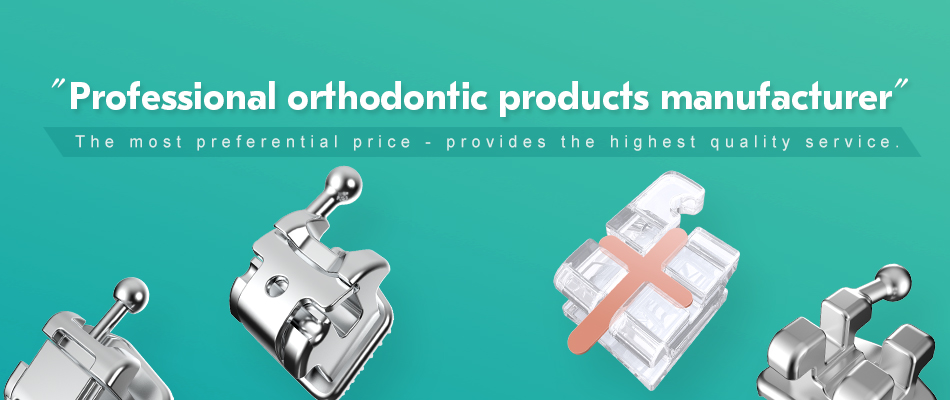
An orthodontic brackets manufacturer is a company that owns or directly operates the production system used to make brackets, such as MIM metal bracket production, machining, welding, polishing, surface treatment, assembly, inspection, and packaging. A real manufacturer should be able to explain how products are made, what materials are used, how tolerances are checked, and how defective batches are handled.
For dental distributors, this matters because a manufacturer can usually provide better answers to technical questions. If you ask about 17-4 stainless steel, mesh base retention, passive self-ligating mechanism design, slot control, or CE/FDA/ISO documentation, a serious factory should not need to “ask another supplier” for every answer.
A manufacturer is usually better positioned to provide:
- Stable product quality across repeat orders.
- Better control of raw materials and production processes.
- Faster technical feedback when quality issues appear.
- OEM and private label support.
- More transparent certification and batch documents.
- Lower long-term procurement cost when order volume grows.
What Is a Trading Company?
A trading company is a sourcing and export intermediary that buys products from one or more factories and resells them to overseas buyers. In the dental industry, some trading companies are professional and useful. They can consolidate many products, communicate quickly, handle mixed orders, and provide export support for buyers who do not yet know the market.
The problem is not that trading companies are always bad. The problem is that they usually do not control the production process.
If a bracket batch has slot inconsistency or bonding base issues, the trading company must go back to the actual factory. If the factory does not cooperate, the trader may not be able to provide a technical root-cause report or corrective action plan. That delay can create frustration for distributors who need fast answers for their own customers.
A trading company is useful for flexible sourcing, but it is usually weaker than a manufacturer in technical accountability, OEM development, and batch-level quality control.
Manufacturer vs Trading Company: Key Comparison Table
| Comparison Factor | Orthodontic Brackets Manufacturer | Trading Company | Why It Matters for Dental Distributors |
|---|---|---|---|
| Quality Control | Direct control over production and inspection | Depends on third-party factories | Reduces batch variation and complaint risk |
| Technical Support | Can explain materials, process, and testing | Often relays factory information | Helps distributors answer clinic questions |
| Certificates | Usually provides original CE/FDA/ISO documents | May provide documents from different factories | Prevents import and registration problems |
| OEM Support | Better for logo, packaging, and product customization | Limited by factory cooperation | Important for private label growth |
| Price | Often better for stable volume orders | May be higher due to margin layer | Affects long-term distributor profitability |
| MOQ Flexibility | May require higher MOQ for custom orders | Often flexible for mixed small orders | Useful for testing new markets |
| Lead Time | More predictable if production planning is stable | Depends on supplier network | Affects inventory planning |
| Problem Solving | Faster root-cause analysis | Slower, depends on factory response | Critical when clinics report defects |
7 Checks Before Choosing an Orthodontic Brackets Supplier
1. Can the Supplier Prove It Controls Production?
Ask for production photos, workshop details, equipment list, and inspection steps. For orthodontic brackets, the supplier should be able to explain whether the bracket is made by MIM technology, welding, monoblock construction, or another process.
A real orthodontic brackets manufacturer should explain its production process in specific terms, not only say “high quality” or “factory direct price.” If the supplier cannot explain how slot accuracy, base retention, and surface finish are controlled, the distributor should be cautious.
2. Are Certificates Product-Relevant and Market-Relevant?
For international dental distributors, certificates are not decoration. They affect customs clearance, product registration, customer confidence, and distributor risk.
Common documents may include CE, FDA registration-related documentation, ISO quality management documents, test reports, product specifications, and material declarations. The exact requirement depends on the destination market.
According to the U.S. FDA medical device import guidance, medical device importers are responsible for ensuring that products meet applicable U.S. regulatory requirements. For EU markets, the European Commission Medical Devices Regulation overview explains that conformity documentation may be required depending on device classification and regulatory pathway.
Because dental distributors sell into regulated healthcare channels, certificates should be checked by product model, not only by company name. A general company certificate does not automatically prove that every bracket model is suitable for your target market.
3. Can the Supplier Support Sample Testing?
Sample testing is not just about looking at appearance. Distributors should test handling, packaging, bracket identification, base design, customer feedback, and compatibility with common clinical workflows.
A sample order should answer practical questions:
- Are the brackets easy to identify and handle?
- Is the surface smooth enough for patient comfort?
- Is the bonding base consistent?
- Are product labels clear?
- Does the packaging look suitable for your local market?
- Is the supplier’s communication fast after sample delivery?
A supplier that handles samples professionally is more likely to handle bulk orders professionally. Sample quality, sample documentation, and response speed all reveal future cooperation quality.
4. Is MOQ Suitable for Your Market Stage?
MOQ should match the distributor’s business stage. A new distributor may need low MOQ for testing, while an established distributor may accept higher MOQ in exchange for better unit price, custom packaging, or exclusive market support.
Trading companies are often more flexible with mixed small orders. Manufacturers may be more competitive when the buyer can place repeat orders or build a focused product line.
Low MOQ is useful for market testing, but stable repeat supply matters more after the distributor has validated demand. The best supplier should support both sample testing and scalable bulk purchasing.
5. Can the Supplier Provide OEM or Private Label Support?
For distributors planning to build their own brand, OEM capability is a major advantage. Private label orthodontic brackets require more than printing a logo. The supplier must manage packaging files, product codes, label information, batch numbers, shelf-life information, and consistent visual identity.
A manufacturer usually has stronger OEM support because it controls packaging and production planning more directly. A trading company may support packaging customization, but it often depends on the actual factory’s willingness and MOQ requirements.
Choose a manufacturer if your long-term goal is to build a private label orthodontic product line instead of only reselling generic products.
6. How Does the Supplier Handle Defective Products?
Every serious supply chain needs a defect-handling process. The question is not whether a supplier claims “zero defects.” The real question is what happens when a defect appears.
Ask the supplier:
- What is your inspection process before shipment?
- Do you keep batch records?
- What evidence is required for a defect claim?
- Do you replace defective batches?
- Can you provide a corrective action report?
- How fast do you respond to quality complaints?
A reliable orthodontic brackets supplier should have a written defect-handling process, because verbal promises are not enough when a distributor faces clinic complaints.
7. Does the Supplier Understand Distributor Business?
A good supplier should understand that distributors need more than products. They need sales materials, product photos, technical descriptions, certificates, packaging options, and stable communication.
The best manufacturers help distributors sell. They provide catalog files, specification sheets, model comparison, sample kits, and clear product positioning.
For dental distributors, the best orthodontic supplier is not only a producer; it is a supply-chain partner that supports local sales growth.
When a Manufacturer Is the Better Choice
Choose an orthodontic brackets manufacturer when:
- You plan to buy the same bracket models repeatedly.
- You need CE/FDA/ISO-related documentation.
- You want private label or OEM packaging.
- Your customers care about clinical handling and product consistency.
- You need stable lead time and predictable inventory planning.
- You want better pricing after volume increases.
- You need direct technical answers.
This is especially important for distributors selling to orthodontic clinics, dental schools, hospitals, or multi-location clinic groups. These customers tend to notice quality inconsistency quickly.
When a Trading Company May Still Make Sense
Choose a trading company when:
- You need many dental products from different categories in one order.
- You are testing a market with very small quantities.
- You do not yet know which products will sell.
- You value sourcing convenience more than technical control.
- Your current order is not focused on private label or long-term volume.
A trading company can be a practical starting point. But once a distributor finds a product category with stable demand, moving closer to the actual manufacturer usually improves margin, control, and long-term competitiveness.
Practical Supplier Evaluation Scorecard
Dental distributors can use the following scoring system before choosing a supplier:
| Evaluation Item | Weight | What to Check |
|---|---|---|
| Product Quality | 25% | Samples, surface finish, bonding base, slot consistency |
| Certificates | 20% | CE/FDA/ISO documents, model relevance, target market fit |
| Supply Stability | 15% | Lead time, capacity, repeat order performance |
| OEM Support | 15% | Logo, packaging, labeling, SKU control |
| Communication | 10% | Response speed, technical clarity, export experience |
| Price Competitiveness | 10% | Unit price, MOQ, freight, long-term pricing |
| After-Sales Process | 5% | Defect replacement, batch tracking, complaint handling |
A supplier scoring high on quality, certificates, and supply stability is usually more valuable than a supplier offering the lowest first-order price.
How Denrotary Fits This Buying Logic
Denrotary focuses on orthodontic products such as self-ligating brackets, metal brackets, buccal tubes, power chains, and orthodontic elastic products. The company states that it has been dedicated to orthodontic products since 2012, with CE, ISO, and FDA-related certification claims, modern workshop facilities, German testing instruments, and automatic orthodontic bracket production lines.
For dental distributors, the most relevant strengths are not just product variety. The important points are manufacturing focus, orthodontic category specialization, sample support, and the ability to discuss brackets as technical products rather than generic dental items.
Distributors should still verify certificates, sample quality, MOQ, lead time, and packaging details before placing a bulk order. That is normal professional procurement.
Final Recommendation
If you are a dental distributor looking for long-term orthodontic bracket supply, start with manufacturers before trading companies. A trading company may help you explore the market, but a manufacturer is usually the better partner for repeat orders, quality control, OEM packaging, and brand protection.
The safest sourcing strategy is to request samples from a qualified orthodontic brackets manufacturer, verify certificates by product model, test handling and bonding performance, then scale gradually into bulk orders. This approach protects both your margin and your reputation.
External References
- According to the U.S. FDA medical device import guidance, importers are responsible for ensuring imported medical devices meet applicable U.S. requirements.
- According to the European Commission Medical Devices Regulation overview, medical device suppliers must consider conformity and documentation requirements for EU markets.
- According to ISO 13485 medical device quality management guidance, quality management systems are central to medical device manufacturing consistency.
FAQ
1. Is an orthodontic brackets manufacturer always cheaper than a trading company?
Not always for very small mixed orders. However, a manufacturer is often more cost-effective for repeat orders, focused SKUs, OEM packaging, and growing distributor volume because there is no extra trading margin layer.
2. How can I know if a supplier is a real manufacturer?
Ask for production process details, workshop photos, equipment information, inspection workflow, product-specific certificates, and batch traceability records. A real manufacturer should answer technical questions directly and consistently.
3. Should dental distributors buy from China orthodontic brackets manufacturers?
China orthodontic brackets manufacturers can be a strong option when they provide stable quality, export experience, CE/FDA/ISO documentation, sample support, and reliable communication. Buyers should verify each supplier carefully before bulk purchasing.
4. What documents should I request before ordering orthodontic brackets?
Request product specifications, certificate copies, material information, packaging details, sample invoice, MOQ terms, lead time, and defect-handling policy. For regulated markets, confirm local import requirements with a qualified regulatory advisor.
5. Is OEM packaging important for dental distributors?
OEM packaging is important when a distributor wants to build a private label brand, improve local market recognition, or sell through dealer networks. It also helps create a more professional product line.
6. What is the biggest risk of buying from a trading company?
The biggest risk is limited control over production quality and technical problem solving. If a batch issue appears, the trading company may depend on the actual factory for answers and corrective actions.
7. What is the best first step before placing a bulk order?
The best first step is to request samples and certificates, test the products with selected customers, evaluate communication quality, and confirm MOQ, packaging, and lead time before scaling into bulk purchase.
Related Denrotary Resources

Post time: May-09-2026