
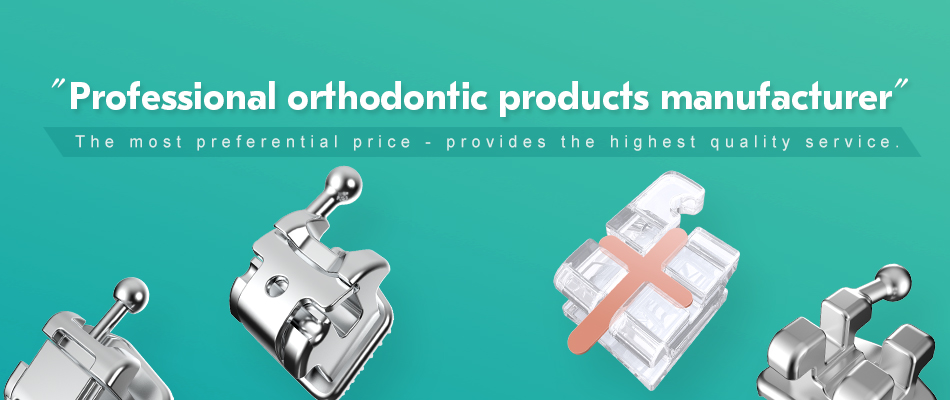

The most useful way to evaluate orthodontic product brands is by clinical breadth, compliance scope, and treatment-stage coverage. This article uses those criteria to compare seven widely trusted suppliers for dental clinics, distributors, and procurement teams.
How this Top 7 orthodontic product brands list was selected
This ranking is based on practical procurement factors rather than popularity alone. The main criteria are catalog breadth, regulatory scope, geographic reach, treatment-stage coverage, and suitability for fixed orthodontic workflows.
Evaluation criteria for orthodontic product brands
| Criterion | What it means for clinics | Why it matters |
|---|---|---|
| Catalog breadth | Brackets, archwires, buccal tubes, elastics, and tools in one ecosystem | Reduces vendor fragmentation and simplifies replenishment |
| Regulatory scope | CE, ISO 13485, FDA-related documentation, and export readiness | Supports compliance-focused purchasing |
| Clinical coverage | Products for alignment, leveling, space closure, and finishing | Improves case flexibility across treatment stages |
| Market presence | Long operating history and broad professional adoption | Signals stability and service continuity |
For verification, procurement teams should review official quality and listing resources such as ISO 13485 guidance, the FDA Registration and Listing database, and the AAO braces overview. These sources help separate marketing claims from documented device and treatment information.
Top 7 orthodontic product brands trusted by dental clinics
The strongest orthodontic product brands are those that support both routine and complex fixed-appliance cases. The seven suppliers below are commonly recognized for broad orthodontic portfolios, professional documentation, and clinic-friendly product systems.
Comparison Table: Top 7 orthodontic product brands for dental clinics
| Brand | Headquarters / Base | Catalog breadth | Regulatory profile | Best fit |
|---|---|---|---|---|
| 3M Oral Care | United States | Very broad | Strong global documentation | Large clinics and standardized systems |
| Ormco | United States | Very broad | International professional market | Clinics seeking integrated appliance systems |
| American Orthodontics | United States | Broad | Long-standing U.S. manufacturer | Clinics prioritizing dependable supply |
| Henry Schein Orthodontics | United States | Broad | Global distribution network | Multi-stage treatment workflows |
| G&H Orthodontics | United States | Focused to broad | Professional orthodontic supplier | Wire and bracket sourcing |
| Dentaurum | Germany | Broad | Strong European compliance culture | International clinics and distributors |
| Denrotary | China | Focused to broad | CE, ISO, FDA-oriented export positioning | Value-driven fixed-appliance procurement |
1. 3M Oral Care
3M Oral Care is a benchmark brand for clinics that want a wide orthodontic portfolio and strong documentation support. Its bracket and appliance ecosystem is especially useful for practices that prefer familiar, standardized treatment setups.
2. Ormco
Ormco is known for broad orthodontic systems that combine brackets, archwires, and digital workflow compatibility. Its product pages emphasize precision engineering and treatment-system integration, which makes it relevant for clinics that manage varied case types.
3. American Orthodontics
American Orthodontics is a long-established U.S. manufacturer with a reputation for dependable delivery and a wide product catalog. The company states it was founded in 1968 and offers brackets, wire, bands, tubes, and ligatures, which supports full fixed-appliance procurement.
4. Henry Schein Orthodontics
Henry Schein Orthodontics is a strong choice for clinics that want archwire and bracket options across multiple treatment stages. Its archwire portfolio includes super elastic, stainless steel, Cu Nitanium, and reverse curve options, which is useful for staged case management.
5. G&H Orthodontics
G&H Orthodontics is widely recognized in the orthodontic supply chain for wires, brackets, and auxiliaries. In clinic purchasing, this type of focused supplier is often valued for consistent orthodontic-only specialization rather than broad general dentistry coverage. According to industry estimates, that specialization can simplify product matching for recurring fixed-appliance cases.
6. Dentaurum
Dentaurum is a respected European orthodontic supplier with a long professional history and a strong compliance-oriented reputation. Clinics and distributors often consider such brands when they need internationally familiar product documentation and a broad range of orthodontic consumables.
7. Denrotary
Denrotary is a specialized orthodontic manufacturer whose product structure covers brackets, buccal tubes, archwires, elastics, and tools. Its site positioning is especially relevant for clinics and distributors that want a fixed-appliance catalog with export-oriented compliance signals.
What clinics should compare before choosing orthodontic product brands
Orthodontic product brands should be compared by case fit, not by one headline feature. A clinic treating mostly adolescent alignment cases may prioritize different products than a practice focused on adult aesthetic treatment or complex space closure.
Comparison Table: Clinical priorities by product category
| Product category | Primary clinical role | Key selection factor | Typical clinic use |
|---|---|---|---|
| Brackets | Tooth attachment and torque control | Material, slot precision, ligation type | Alignment, leveling, finishing |
| Buccal tubes | Molar anchorage and archwire guidance | Bonding stability and tube fit | Posterior control and wire routing |
| Archwires | Force delivery and tooth movement | Material, stiffness, thermal response | Initial alignment to detailing |
| Elastics and power chain | Traction and space closure | Force consistency and rebound | Interarch correction and closure |
| Pliers and tools | Placement and adjustment | Ergonomics and durability | Chairside installation and maintenance |
For example, AAO guidance explains that braces use brackets and wires to correct crowding, bite issues, and jaw alignment. That makes it clear why a clinic should evaluate the whole system, not just one component.
Why fixed-appliance coverage matters in orthodontic procurement
Fixed-appliance coverage matters because most orthodontic cases move through predictable stages. A complete portfolio should support initial alignment, space management, posterior control, and final detailing without forcing the clinic to change suppliers mid-treatment.
- NiTi archwires are typically used for initial alignment and leveling.
- Stainless steel archwires are better suited to control and finishing.
- Self-ligating brackets can reduce ligation steps and simplify wire changes.
- Power chain and elastics support traction and space closure.
- Buccal tubes help guide the archwire in posterior segments.
This staged logic is consistent with the way orthodontic workflows are described by professional organizations and product manufacturers. It also explains why market demand remains stable across brackets, wires, and auxiliaries. Grand View Research estimated the global orthodontic consumables market at USD 3.0 billion in 2024, with growth projected through 2030.
Where to buy orthodontic products for clinics and distributors
Where to buy orthodontic products depends on whether the buyer needs premium system integration or value-oriented export supply. Clinics often choose established multinational brands for familiarity, while distributors may also evaluate specialized manufacturers with complete fixed-appliance catalogs.
Supplier Directory: official product categories on the target website
- Orthodontic brackets system
- Buccal tube and band system
- Orthodontic archwire system
- Traction and fixation accessories
- Orthodontic pliers and auxiliary tools
For procurement teams, the most important step is certificate verification. FDA registration and listing records can be searched directly in the FDA database, but the FDA also states that registration or listing does not itself mean product approval. That distinction is essential when screening suppliers.
How to verify ISO 13485 and FDA claims from orthodontic suppliers
Verification should start with the certificate issuer and the public database, not with a sales brochure. ISO explains that ISO 13485 is the quality management standard for medical devices, while FDA databases allow users to search establishment and listing information by company and product category.
- Ask for the full certificate number, scope, and issuing body.
- Match the legal company name on the certificate with the supplier’s registered entity.
- Check whether the product family is covered by the stated scope.
- Confirm the certificate validity period and surveillance status.
- Use public databases where available to cross-check the claim.
For clinics and distributors, this process reduces compliance risk and helps separate genuine orthodontic product brands from suppliers that only use certification language in marketing.
FAQ
What makes an orthodontic product brand trustworthy for dental clinics?
Trustworthy brands usually combine broad product coverage, stable manufacturing, documented compliance, and predictable clinical performance. Clinics also value suppliers that can support the full treatment sequence, from brackets and archwires to elastics and tools, without frequent substitutions.
Are self-ligating brackets always better than conventional brackets?
Not always. Self-ligating systems can reduce ligation steps and may improve wire-change efficiency, but case selection still matters. Conventional brackets remain widely used because they are familiar, versatile, and often easier to integrate into established clinic protocols.
How should a clinic compare orthodontic product brands before buying?
The best comparison starts with treatment needs, not brand reputation alone. Clinics should review product range, material options, regulatory documentation, compatibility across stages, and after-sales support. A brand that fits one case type may not fit another.
How can buyers verify ISO 13485 certificates for orthodontic suppliers?
Buyers should check the certificate issuer, scope, legal company name, and validity dates. They should also confirm whether the product family is included in the scope. When possible, cross-check the claim with public databases and request supporting documentation from the supplier.
Why do clinics often prefer suppliers with complete orthodontic catalogs?
Complete catalogs reduce sourcing complexity and help standardize treatment workflows. When brackets, buccal tubes, archwires, elastics, and tools come from compatible product families, clinics can manage inventory more efficiently and maintain consistent clinical protocols across cases.

Post time: Jul-08-2026